


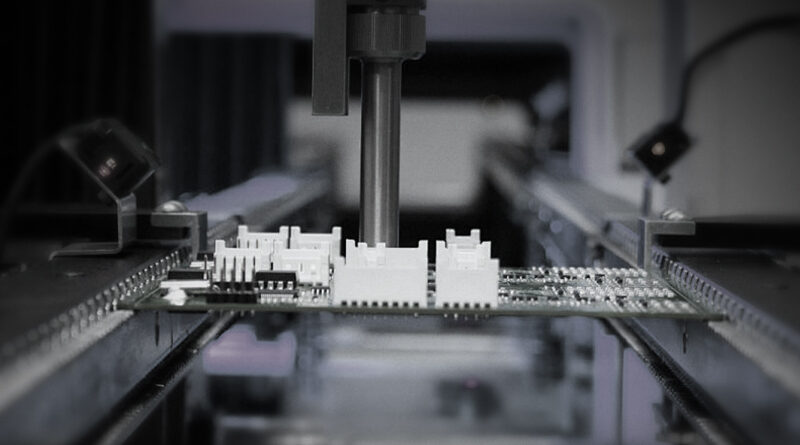
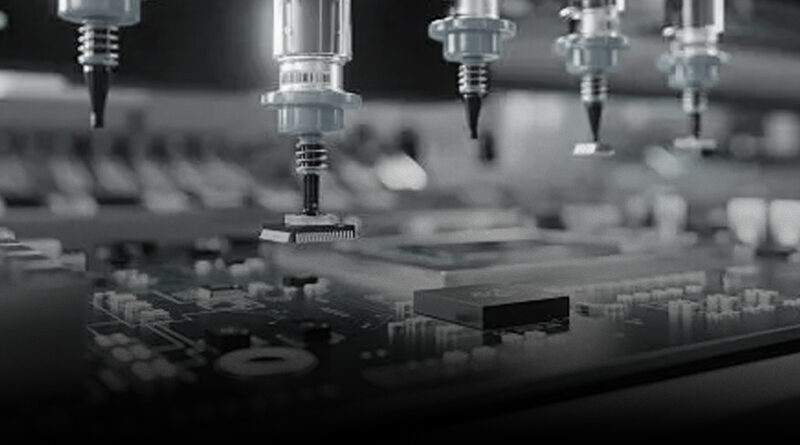
In today’s fast-moving electronics manufacturing environment, the phrase “pick-and-place” no longer conjures images of a simple robotic gripper chasing a component. It evokes a high-precision integration of robotics, optics, and intelligent sensing—the pulse of an SMT line that can place tiny resistors, capacitors, and ICs in fractions of a second with micron-scale accuracy. The engine behind this transformation is machine vision: the array of cameras, lighting, optics, and algorithms that identify, locate, and verify parts as they flow from feeders to the soldering iron or reflow oven. This article dives into how machine vision redefines pick-and-place, what technologies matter most, and how a holistic SMT solution provider—like NECTEC—can help you unlock higher throughput, lower defects, and greater yield across your production line.
What is a pick-and-place machine vision system?
A pick-and-place (PnP) machine vision system is an integrated solution that enables a robotic picker to identify each component’s identity, position, orientation, and, in some cases, its health or eligibility for placement. The vision system augments a robot’s mechanical precision with visual intelligence: it answers questions such as “Which component is this?,” “Where is it located on the tray or feeder?,” “How is it rotated, and what is its orientation for accurate placement?” and “Is this site ready for deposition?” In high-mix, high-speed environments, vision serves as the difference between a capricious cycle time and a consistently stable output that meets tight tolerances.
Successful vision-enabled PnP is not a single device but a tightly integrated stack: high-resolution cameras, smart lighting, calibration targets, robust software, and synchronized control that communicates with feeders, nozzle heads, and the PCB board conveyor. The result is an inline system that can adapt to different package sizes, varying board layouts, and evolving product families without a halt in production to retool. In practice, vision-driven PnP can significantly reduce misplacements, improve first-pass yield, and provide traceability for quality assurance and compliance reporting.
Core technologies driving vision in pick-and-place
To understand why modern PnP systems outperform older setups, it helps to dissect the core technologies that underpin them. These include 2D and 3D imaging, lighting strategies, camera calibration, real-time analysis, and AI-driven defect detection. Each layer adds a level of robustness to handle real-world variability—different PCB materials, reflective surfaces, tiny solder joints, and complex packages.
2D vs 3D vision
- 2D vision: The traditional backbone of many PnP lines, enabling fast recognition of component shape, label, and presence. 2D systems excel for uniform, high-volume packages with simple orientation, and they tend to be cost-effective for straightforward tasks.
- 3D vision: A more advanced approach that captures depth information to determine exact part geometry, height, and orientation in space. 3D vision is essential when dealing with tall components, stacked packages, or boards with uncertain gravity centers. It also helps detect occlusions or misfeeds that 2D may miss.
- Hybrid approaches: Many lines blend 2D and 3D data to balance speed and accuracy. For example, 2D may quickly identify a part, while a targeted 3D check confirms critical geometry before placement.
Lighting and optics
Lighting shapes visibility in a machine vision system. The right illumination solves many ambiguities caused by glare, cm-scale tolerances, or reflective leads. Choices include bright-field, dark-field, coaxial lighting, and structured light. Structured light, in particular, complements 3D vision by projecting known patterns onto the component, allowing the camera to reconstruct accurate depth maps even on shiny surfaces. Optics selection—lens focal length, aperture, field of view—affects resolution and depth of field, which are critical when placing tiny passives or fine-pitch devices.
Calibration and accuracy
Calibration aligns the camera coordinate system with the machine’s physical world. Precise calibration accounts for lens distortion, camera pose, board warpage, and thermal drift. Manufacturers often use calibration boards, fiducials on the PCB, and repetitive validation to maintain alignment over time. In high-volume environments, automated calibration routines with self-checks help ensure sustained positional accuracy, typically in the 2–20 micron range, depending on the camera resolution and lens choice. Calibration is not a one-time event; it’s a continuous discipline that underpins traceability and repeatability across shifts and lines.
Algorithmic intelligence and AI
Modern PnP vision systems rely on advanced computer vision algorithms to recognize components, determine exact coordinates, and detect anomalies. Classical template matching, feature-based recognition, and robust edge detection are complemented by AI techniques—convolutional neural networks (CNNs) and transfer learning—that can adapt to new packages with minimal retraining. AI enables:
- Part verification: distinguishing genuine components from counterfeit or damaged ones.
- Whats-on-board checks: confirming pads align with the intended placement footprint.
- Anomaly detection: spotting bent leads, missing leads, or misoriented components that could jeopardize solder joints.
- Ongoing improvement: self-learning from placement outcomes to fine-tune vision thresholds and reduce false rejects.
OCR and serialization
Traceability is increasingly mandatory in electronics manufacturing. Optical character recognition (OCR) enables reading lot numbers, date codes, and serial identifiers on reels or packages. When integrated with the PCB’s own serialization or a centralized MES/ERP system, OCR helps create end-to-end traceability, linking every device to its build history. This capability is especially valuable for high-reliability applications and for suppliers who need to demonstrate control over lot quality and revision status.
How vision enhances placement quality and throughput
Vision-enabled PnP systems impact two critical performance metrics: placement accuracy and cycle time. The relationship between them is not a simple linear trade-off; rather, vision can expand feasible operating windows, push higher speeds without increasing defect rates, and enable sophisticated inline quality checks that catch issues early.
Improved accuracy and yield
Sub-10 micron placement accuracy is common for modern SMT lines, and even small improvements can translate into meaningful yield gains, especially on fine-pitch components. Vision systems reduce the risk of misplacements that cause rework, dtaging, or voids. They also detect orientation faults early in the cycle, allowing the robot to regrip before proceeding to the soldering stage or reflow, thereby saving time and reducing the operational cost per board.
Reduced downtime through live inspection
Inline visual inspection complements placement verification by catching misplaced components or misfeeds before the board advances. Real-time feedback allows robotic controllers to pause and correct trajectories, reorient parts, or alert operators to a feeder issue. This reduces the need for line-wide stoppages and minimizes scrap accumulation in sensitive lines, especially in mixed-technology boards where package variety is high.
Traceability for quality management
With OCR and data-rich imaging, each placement event can be logged with precise coordinates, pose, and part identity. This data becomes a valuable asset for statistical process control (SPC), yield analysis, and compliance reporting. The traceability layer also supports supplier performance reviews, enabling you to correlate part quality with specific machine vision configurations and lines.
Practical considerations for implementation
Bringing a vision-driven PnP system into an existing line requires a holistic approach. The following considerations help ensure a smooth integration that delivers the promised gains in accuracy and throughput.
System architecture and integration
- Choose a vision stack that aligns with your line’s complexity: simple 2D for high-volume, uniform packages or 3D for mixed-package boards and tall components.
- Ensure seamless communication between the vision station, the robot controller, feeders, and the PCB conveyance system. Protocol compatibility, latency, and synchronization are critical for real-time placement.
- Plan for future scalability: modular camera modules and upgradeable AI models reduce total cost of ownership during product evolution.
Lighting strategy and environmental controls
- Implement robust lighting that minimizes shadowing and glare across different board geometries. Consider adjustable lighting intensity for extreme package variants.
- Control ambient light and temperature to minimize drifts in sensor performance. Environmental stability supports consistent vision quality over long production runs.
Calibration routines and maintenance
- Establish regular calibration schedules with automated checks, ensuring the camera-to-robot alignment remains within tolerance.
- Maintain a spare parts and consumables plan: replacement lenses, lighting elements, and calibration tools help avoid unplanned downtime.
Data management and security
- Define data retention policies for inspection logs, placement coordinates, and OCR records. Secure storage supports compliance and audits.
- Integrate vision data with MES/ERP for end-to-end traceability and productivity analytics. Real-time dashboards help operators monitor line health and performance.
Cost considerations
Cost is a multi-faceted equation, balancing equipment price, installation time, and the anticipated savings in scrap and rework. While 3D vision and AI-infused systems may require higher upfront investment, the long-term returns—improved yield, faster changeovers, and tighter quality control—can justify the expense, particularly for mid-to-high mix production environments where board complexity regularly changes.
Applications across industries
Vision-enabled PnP finds broad relevance across electronics manufacturing, packaging, and beyond. Here are representative scenarios:
- <strongElectronics and PCB assembly: Fine-pitch device placement (0402s, 0201s, BGA ladders), oversized components, and mixed packages demand accurate pose estimation and orientation verification to prevent placement defects and solder joint issues.
- <strongFood & beverage packaging: Vision-guided robots pick and place consumer items into secondary packaging, guided by object recognition under challenging lighting. AI can identify items, sort by category, and ensure correct packaging order while maintaining speed.
- <strongIndustrial automation: Assembly lines for sensors, connectors, and power modules benefit from reliable component verification and alignment for subsequent soldering and sealing steps.
Case studies and practical outcomes
Industry leaders have demonstrated the tangible value of vision-guided PnP. For example, vendors have highlighted how a dedicated pick-and-place vision system can tailor to packaging machines and support robotic workflows, enabling more consistent throughput. In food and beverage packaging, vision systems have matured to reliably identify varied product shapes and sizes, enabling fast, flexible lines while protecting down-time. In SMT contexts, 3D vision has become a critical component for accurate placement of tiny, high-pin-count packages, reducing rework and enabling tighter control of solder joints.
In real-world terms, some customers have reported reductions in misplacement rates by an order of magnitude after switching to a vision-driven PnP solution, along with shorter changeover times thanks to robust part recognition and alignment. The improvements extend beyond simply placing parts: inline inspection catches misfeeds early, supporting higher overall line throughput and more predictable cycle times. These outcomes align with the trend toward knowledge-driven manufacturing, where existing SMT lines become smarter, faster, and more resilient to product variability.
Choosing a vision partner for pick-and-place
When evaluating a vendor for machine vision-enabled PnP, consider the following criteria:
- Domain expertise: A partner with deep SMT experience, PCB handling, soldering, and inspection capabilities is better positioned to deliver end-to-end optimization.
- Technology breadth: Look for a stack that supports both 2D and 3D vision, robust lighting options, AI-driven defect detection, and OCR/traceability integration.
- System integration: The ability to interface with existing feeders, robots, conveyors, and MES/ERP systems minimizes disruption and accelerates ROI.
- Service and support: 24/7 pre-sales assistance, comprehensive post-sales service, and proactive maintenance planning reduce downtime and maximize uptime.
- Case studies and references: Real-world performance metrics, including placement accuracy, yield improvements, and changeover times, provide credible validation.
NECTEC: Your one-stop SMT partner for vision-enabled PnP
At NECTEC, we are committed to delivering comprehensive SMT solutions that span PCB handling, placing, soldering, printing, inspection, conformal coating, and peripheral consumables. Our value proposition centers on three pillars:
- End-to-end capability: From pre-sales consultation to post-purchase support, we provide a fully integrated path to a robust PnP vision system tailored to your line.
- Quality and reliability: We emphasize strict quality control at every stage of production, ensuring durability and repeatability for high-volume operations.
- Responsive support: Our pre-sales team is available 24/24 to assist with purchasing decisions, while our post-sales service maintains and enhances your operating performance.
Whether you are upgrading an existing line or designing a new one, NECTEC’s approach focuses on aligning vision technology with your operational goals—minimizing scrap, improving first-pass yield, and delivering traceable data that feeds continuous improvement. We collaborate with top vision system suppliers and component manufacturers to provide a flexible, scalable solution that grows with your production needs.
Future trends in pick-and-place vision systems
The next wave of advancement in machine vision for pick-and-place will likely emphasize three themes: greater autonomy, deeper integration, and smarter data. Autonomous calibration routines, self-healing algorithms, and adaptive lighting systems will reduce manual intervention and keep lines running at peak efficiency. Deeper integration with factory data ecosystems will enable cross-line optimization, letting insights travel from the shop floor to the planning desk in real time. Finally, smarter data analytics will transform raw placement logs into actionable strategies for process control, predictive maintenance, and supplier quality management.
As more electronics lines adopt AI-driven defect detection and more precise 3D tooling, the synergy between machine vision and robotics will become even more pronounced. The result will be faster changeovers, more accurate placements on a wider variety of boards, and more robust quality control that keeps pace with the ever-evolving demands of technology and consumer expectations.
Takeaways for designers, operators, and buyers
- Vision is not a luxury in modern pick-and-place—it is a core capability that unlocks precision and productivity across high-speed SMT lines.
- A balanced combination of 2D and 3D vision, smart lighting, and AI-driven analysis provides robust performance against variability in part types and board layouts.
- Calibration, maintenance, and data management are not optional but essential to sustained line performance and traceability.
- Choosing a partner with end-to-end SMT expertise, scalable technology, and strong service support reduces risk and accelerates ROI.
For teams planning to upgrade or build a vision-enabled PnP line, a staged approach can help manage risk and demonstrate value quickly. Begin with a pilot on a representative board family to quantify gains in placement accuracy and yield. Use the data from this pilot to justify a broader roll-out, and keep a close eye on uptime, changeover times, and traceability metrics. Finally, ensure your solution remains adaptable as packaging technologies evolve, as this is where the real return on investment emerges—when vision systems keep pace with design changes and keep your line competitive in an increasingly demanding market.
Glossary of terms you’ll encounter
- Pick-and-place (PnP): A machine that picks components from feeders and places them onto a PCB with precise alignment.
- Machine vision: The use of cameras, lighting, and software to enable visual recognition and measurement by a machine.
- 3D vision: Vision that captures depth information to determine the spatial location and orientation of objects.
- OCR: Optical character recognition used to read serial numbers and codes from components or packaging.
- Calibration: The process of aligning the vision system’s coordinates with the physical world to ensure accuracy.
In summary, machine vision is redefining what is possible on a pick-and-place line. It moves the workflow from a simple mechanical operation toward a data-rich, autonomous, and highly adaptable process. The benefits span not only improved accuracy and speed but also enhanced traceability, better quality control, and a foundation for future automation that can scale with your business. If you’re evaluating options for your SMT line, consider how a partner that offers integrated SMT solutions with a strong vision capability can help you achieve a more reliable, efficient, and future-ready manufacturing operation.
Key takeaways:
- Vision-enabled pick-and-place is essential for high-mix, high-precision SMT lines.
- 3D vision, advanced lighting, and AI-supported algorithms address complex placement challenges and improve yield.
- Inline inspection and OCR provide robust traceability and quality control throughout production.
- Partnering with a complete SMT provider like NECTEC ensures seamless integration, ongoing support, and scalable growth.
Ready to explore how vision-driven pick-and-place can transform your manufacturing line? Contact NECTEC’s pre-sales team any time to discuss your unique PCB handling, placement, soldering, printing, inspection, and conformity coating needs. Our global supplier network and in-house quality controls guarantee you access to the most reliable components and systems, backed by 24/7 support and a commitment to your long-term success.