


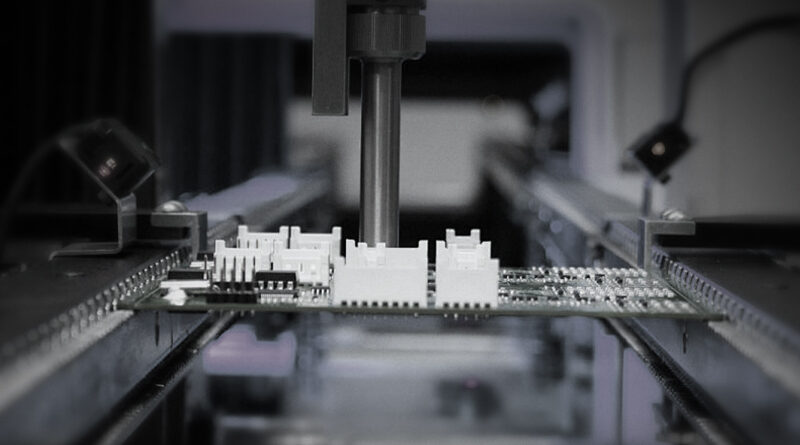
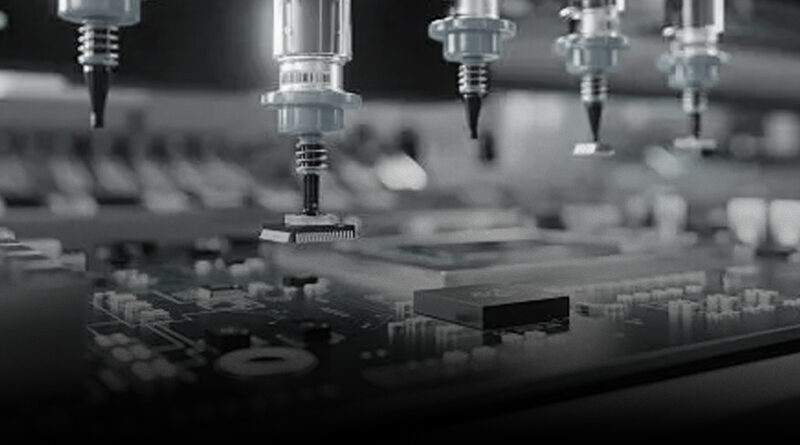
In the fast-paced world of electronics manufacturing, throughput is king. The demand for compact devices, smart wearables, automotive electronics, and industrial IoT hinges on the ability to move a PCB from bare board to finished product with minimal cycle time and maximal precision. This is where high-speed SMT (surface mount technology) machines come into play. They are no longer just tools for placing components; they are the heartbeat of a modern, competitive PCB assembly line. From high-speed pick-and-place to precision jet printing, the best systems combine speed, accuracy, and reliability to keep your line running lean and your products on the market ahead of the curve.
What makes a high-speed SMT machine truly high-speed?
Speed in SMT is expressed in several intertwined ways. You may see numbers like CPH (components per hour) or CPPR (corners per rotation) thrown around. But the real measure of a high-speed machine is how it sustains throughput without compromising accuracy or yield. A world-class high-speed SMT machine often features:
- Multiple placement heads or a high-capacity gantry system to simultaneously place different component families.
- High-speed feeders with rapid pick-up and minimal repositioning, enabling continuous operation with fewer stoppages.
- Advanced vision alignment and compact nozzles that reduce misplacement caused by substrate warpage or flex.
- Jet printing or precision stencil alternatives for solder paste deposition on dense BGA and fine-pitch boards.
- Modular design allowing quick changeovers to different product families and minimizing downtime.
When you combine these elements with robust software, real-time monitoring, and dependable after-sales service, you achieve a line that not only runs fast but also runs smart. In the sections below, we break down how the leading solutions stack up and what buyers should look for when evaluating a high-speed SMT machine.
Real-world leaders shaping the high-speed SMT landscape
Several names recur in conversations about high-speed SMT under production pressure. While each system has its niche, the common thread is a relentless focus on speed, accuracy, and adaptability to diverse workflows. Here are some emblematic players reshaping the field and what sets them apart:
- MC889 High Speed Pick & Place — purpose-built for fast, accurate assembly in large batch production environments. It emphasizes precise alignment across a wide variety of SMDs, enabling high throughput without sacrificing placement quality.
- Mycronic SMT machines — known for jet printing capability and precision solder paste printing. Their high-speed jet printers provide a fast alternative to traditional screen printing and are designed for a broad range of assembly fluids, enabling quick changeovers and flexible production.
- ASM SIPLACE TX Series — renowned for very high speed, with the TX2i achieving up to approximately 96,000 CPH in some configurations and exceptional accuracy (3σ around 25 µm for certain heads). This lineage emphasizes throughput for large-volume, high-mix environments.
- Essemtec Cobra — presented as a modern, high-speed pick-and-place solution with a strong balance of speed, accuracy, and modularity, suitable for midsize to large boards and varied components.
- iTECH WS-8Y High Speed SMT Pick & Place — an eight-head system designed to handle multiple components simultaneously, delivering impressive throughput on complex boards while maintaining placement precision.
Each of these platforms demonstrates a different emphasis—some excel in multi-head parallelism, others in jet printing or in the precision of extremely fine-pitch components. The right choice depends on your product mix, board size, and target throughputs. At NECTEC, we study these platforms and align them with your production goals, backed by a one-stop service that covers the entire PCB assembly line lifecycle.
Choosing the right high-speed SMT machine for your line
Investing in a high-speed SMT machine is a strategic decision that impacts yield, uptime, and total cost of ownership. Here are the main criteria to consider when evaluating machines for a high-throughput environment:
- Throughput targets — Are you aiming for tens of thousands of CPH or a broader range across different products? Define the top-line target and verify it under realistic test conditions with your typical mix of components.
- Component variety and pitch — For boards with a wide variety of SMDs, you need a machine with flexible feeders, fast head changovers, and precise alignment across different footprints.
- Accuracy and repeatability — 3σ accuracy in the tens-of-microns range is common for high-end systems. For fine-pitch components (01005 or 0201) and BGA placements, sub-30 µm accuracy is often essential.
- Placement head architecture — Multiple heads, or high-speed 8- to 12-head configurations, enable simultaneous placement of varied components and reduce idle time.
- Feeder management and changeover — Quick-change feeders, tape-and-reel options, and automatic feeder setup reduce downtime during product runs with short lifecycles.
- Jet printing vs. stencil printing — Jet printing provides rapid paste deposition with reduced setup times and is particularly advantageous for fine-pitch or variable paste volumes. Solder paste deposition quality directly influences solder joint reliability.
- Software ecosystem — Intuitive programming, real-time process monitoring, and offline programming capabilities speed up changeovers and optimize yield across runs.
- Reliability and service — A machine is only as good as the support behind it. Look for vendor and distributor networks that offer rapid spare parts, remote diagnostics, and proactive maintenance.
- Footprint and integration — Space constraints and compatibility with your existing line, including printers, soldering systems, and inspection equipment, matter a great deal for total line efficiency.
For many manufacturers, the path to higher throughput begins with a clear process map: what is the target CPH for each product family, what is the acceptable yield, and what is the maximum downtime the line can tolerate between runs? A well-chosen high-speed SMT machine integrates seamlessly with the rest of the line—printing, placement, soldering, inspection, conformal coating, and peripheral consumables—creating a cohesive, efficient ecosystem rather than a collection of disparate tools.
NECTEC: a one-stop SMT partner for speed and quality
NECTEC positions itself as more than a supplier of SMT machines. We are a one-stop destination that brings together the most valuable suppliers globally to solve every stage of the PCB assembly line. Our offering spans PCB handling, placing, soldering, printing, inspection, conformal coating, and a broad range of peripheral consumables. The goal is to give you a complete, reliable stack that enables high-speed production with consistent quality.
What sets NECTEC apart is our commitment to strict quality control at every stage of production. From pre-sales engagement through post-sales support, we aim to remove barriers to purchase and ensure you get the best possible outcome. Our pre-sales team is available 24/13 to assist you in overcoming purchasing hurdles, while our post-sales support is designed to maintain and enhance customer satisfaction through ongoing assistance. This dual approach is especially important in high-speed lines where downtime is costly and process drift can quickly erode yield.
In practice, this means:
- Consultative pre-sales support to understand your line layout, product family mix, and throughput goals, then tailor a solution that fits your budget and timeline.
- End-to-end integration services that align printing, placing, soldering, inspection, and coating into a single robust workflow.
- Quality-first mindset with supplier-backed warranties, traceability, and service agreements designed to maximize uptime and product quality.
- Global reach with local support ensuring you get parts and expertise when you need them, without excessive downtime.
For customers upgrading from legacy equipment or expanding to high-speed, high-mix production, NECTEC provides a clear path—from assessment and feasibility through deployment and continuous improvement. We blend the capabilities of industry-leading machines with our own disciplined quality processes to create a robust, scalable production line that keeps pace with evolving demand.
The workflow of a high-speed SMT line: a practical perspective
To illustrate how high-speed SMT machines fit into a complete production line, consider a practical workflow. The end-to-end process includes several critical stages, each with distinct optimization opportunities:
- Printing — For many boards, solder paste deposition is the first bottleneck. High-speed jet printers or precision stencil printers must deliver accurate paste volumes across complex geometries while minimizing paste SCM (stencil carryover and smearing).
- Placement — In the pick-and-place stage, the machine’s head count, feeder strategy, and alignment capabilities determine how quickly components land on the board. The best systems perform continuous, rapid placement with real-time correction to prevent defects from line-to-line variation.
- Reflow soldering — Soldering must handle a wide array of component sizes and thermal profiles. A well-tuned reflow oven ensures consistent joints across boards in a batch, preserving throughput gains achieved in the placement stage.
- Inspection and quality control — Post-placement inspection uses AOI or X-ray systems to validate joints and detect anomalies early. Feedback loops can instantly correct process drift, protecting yield and preventing scrap.
- Conformal coating and peripherals — For boards exposed to harsh environments, conformal coating systems work in tandem with the SMT line. Peripheral consumables—flux, solvents, cleaning agents, and tools—must be managed to minimize downtime and waste.
Each stage is an opportunity to push throughput further. The most productive lines treat these stages as a tightly coupled system rather than isolated steps. In practice, a successful high-speed line is not just about speed; it’s about precision scheduling, predictive maintenance, and data-driven optimization that keeps the entire line aligned with product demand.
Real-world optimization: an adaptive approach for high-mix, high-speed production
Many manufacturers run a high-mix portfolio with frequent product changes. A static, single-configuration line struggles to keep pace with demand shifts. An adaptive approach to high-speed SMT is to combine:
- Modular hardware that can be reconfigured quickly for different boards and families.
- Intelligent software capable of offline programming, fast changeovers, and real-time process control.
- Flexible feeders and head configurations allowing you to switch from one board family to another with minimal downtime.
- Adaptive process control that learns from production data and tunes parameters for optimal yield without manual intervention.
NECTEC supports this adaptive approach by offering a cohesive suite of machines, software, and services designed to minimize downtime and maximize throughput. Our team can help plan a staged upgrade path that preserves production during migration, ensuring that your most valuable lines stay productive throughout the transition.
A practical buyer’s checklist for high-speed SMT machines
Before committing to a high-speed SMT system, use this checklist to surface critical questions and compare options:
- Throughput target and realistic test results under your product mix.
- Pitch and footprint; decide whether jet printing or stencil-based deposition best suits your boards.
- Head count and feeder strategy for your expected mix of chips, resistors, and connectors.
- Alignment and inspection integration to catch defects early without slowing the line.
- Changeover time and ease of reconfiguration for new products.
- Reliability and service including remote diagnostics, on-site support, and spare parts availability.
- Total cost of ownership including consumables, maintenance, and energy usage over the machine’s life.
- Vendor ecosystem and the ability to scale your line with complementary equipment (soldering ovens, conformal coating, and inspection).
By anchoring your decision around these criteria, you optimize for throughput, quality, and long-term flexibility. It is not only about achieving the highest initial speed; it is about sustaining that speed across product changes, with reliable support and predictable maintenance.
Future-proofing your line with NECTEC’s integrated SMT solutions
As electronics evolve, so do manufacturing needs. The next wave of high-speed SMT deployments will increasingly rely on:
- Hybrid systems that pair jet printing for paste deposition with traditional placement for components that demand precise alignment and speed.
- AI-driven process optimization that detects drift, predicts failures, and suggests proactive adjustments to keep yield high.
- End-to-end data connectivity across the line to enable zero-defect manufacturing and rapid traceability for customers and regulators.
- Flexible supply chains with rapid access to spare parts, consumables, and service expertise to minimize downtime.
NECTEC is well-positioned to guide you through this evolution. Our one-stop service model ensures you have access to the best machines, integrated software, and ongoing support that keeps your line competitive. We bring together suppliers with proven track records and pair them with our own rigorous quality controls to deliver a system that scales with your business needs.
Case-style scenario: upgrading to a high-speed line without disruption
Imagine you operate a mixed-assembly facility manufacturing consumer electronics with a demand spike on a particular product family. You need to boost throughput quickly without compromising quality or causing long downtime for retooling. A practical upgrade path could look like this:
- Assessment — Analyze current bottlenecks (printing, placement, or inspection) and quantify target throughput for each product family.
- Pilot integration — Introduce a modular high-speed SMT solution to a subset of lines, testing key variables such as paste quality, alignment accuracy, and cycle time.
- Changeover optimization — Implement quick-change feeders and software-assisted offline programming to reduce set-up times for new boards.
- Data-driven tuning — Use a closed-loop feedback system to minimize rework and improve first-pass yield across the line.
- Scale and sustain — Once the pilot proves its value, roll out to the remaining lines, all while securing spare parts and service coverage to minimize downtime.
In this scenario, NECTEC would coordinate the upgrade, ensuring compatibility with printing, placement, soldering, and inspection while providing 24/13 pre-sales support and persistent post-sales service. The result is a higher-throughput line that remains adaptable for future product families, with less risk and faster payback than a full replacement approach.
Final thoughts: designing a high-speed SMT machine strategy for the long term
High-speed SMT machines are a cornerstone of modern electronics manufacturing, but speed alone does not guarantee success. The wisest approach blends cutting-edge hardware with smart processes, robust software, and a trusted partner for service and ongoing support. By prioritizing throughput, accuracy, adaptability, and lifecycle support, you can build a production line that meets today’s demand while staying resilient for whatever the future brings.
NECTEC is dedicated to helping you achieve this balance. With a global supplier network, a comprehensive suite of SMT capabilities, and a commitment to rigorous quality control, we are positioned to help you create lines that are not only fast but also reliable and scalable. If you’re considering a high-speed SMT upgrade or a greenfield line, start with a conversation about your goals, then explore a solution that aligns your hardware, software, and services into a cohesive system that keeps your business competitive in a rapidly changing market.