


In the fast-paced world of electronics manufacturing, the SMD (surface mount device) pick-and-place machine sits at the heart of the PCB assembly line. From rapid prototyping to high-volume production, these machines translate digital designs into tangible boards with speed, precision, and repeatability. For buyers navigating a complex vendor landscape—whether they’re sourcing from NECTEC’s global supplier network or evaluating a standalone system—the decision hinges on understanding how a pick-and-place solution fits your process, your parts mix, and your downstream workflow.
This guide provides a practical, no-nonsense view of SMD pick-and-place machinery. You’ll find the core components, the metrics that matter, decision criteria for different production stages, and a look at how a one-stop SMT solution partner—like NECTEC—can simplify procurement, integration, and ongoing support. But first, a quick orientation: what the machine actually does, and why it is indispensable for modern electronics.
Understanding the SMD pick-and-place workflow
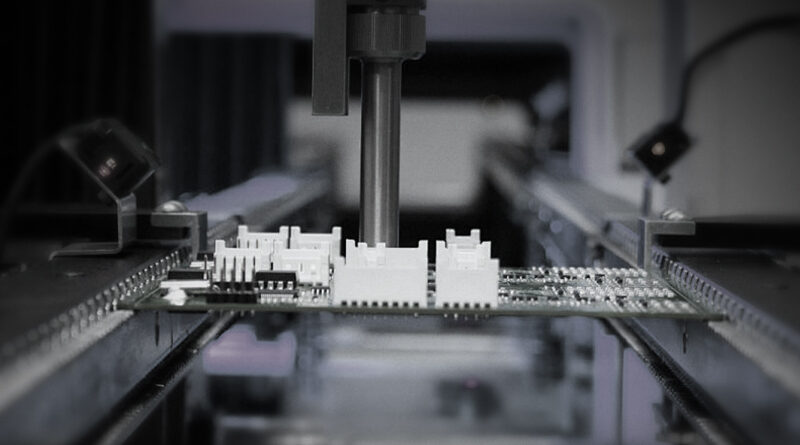
At its core, an SMD pick-and-place machine automates the precise placement of tiny components onto a solder paste-coated printed circuit board (PCB). The process typically follows these steps:
- Feeder loading: reels, sticks, or tray feeders supply resistors, capacitors, ICs, LEDs, and other components. High-end systems manage dozens of feeders with rapid magazine changes to minimize downtime.
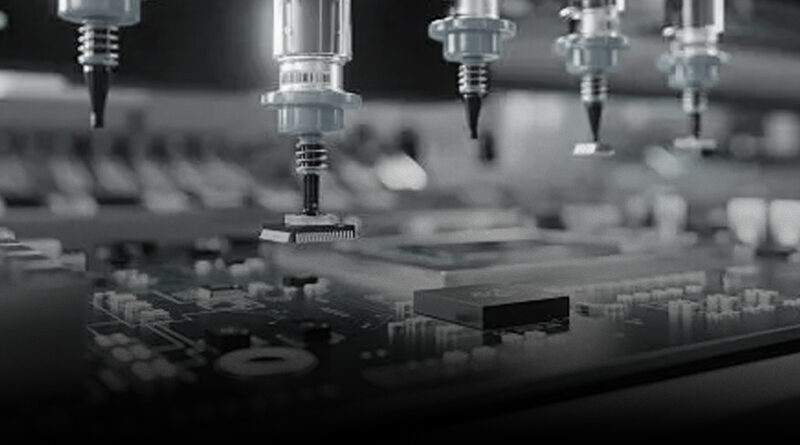
- Component pickup: a vacuum nozzle (or multiple nozzles) attaches to the component, lifting it from the feeder with controlled suction.
- Vision alignment: onboard cameras and software verify part orientation, position, and polarity against the PCB’s reference marks. If needed, the system corrects alignment before placement.
- Placement: the machine places the part with micron-level precision onto solder paste or an inspection-defined pad pattern.
- Inline inspection: many lines integrate solder paste inspection (SPI), automatic optical inspection (AOI), and X-ray systems to ensure quality before reflow soldering.
In a modern line, the pick-and-place machine is not a lone island but a node within a broader SMT workflow. The outputs of component feeders, the accuracy of the placement, and the speed at which boards move through the line all influence throughput, defect rates, and uptime. The best machines are designed to minimize bottlenecks while handling a wide variety of components—from 0201 chips to large chip packages, and from standard reels to oddball parts that require specialized nozzles or grip mechanisms.
Key specifications that shape your choice
Selecting the right SMD pick-and-place machine means looking beyond price. The most impactful specifications fall into a few practical categories:
- Placement speed: measured in components per hour (cph) or boards per hour. High-end systems routinely exceed tens of thousands of cph, but real-world speeds depend on component mix, nozzle changes, and board size.
- Accuracy and repeatability: typically in the micron range. This determines how reliably the machine places tiny 0603 or 0201 components, as well as larger BGA or QFN packages.
- Component range and feeders: number of feeders supported, feeder types (tape & reel, tray, tube), and compatibility with common part families. A broad range reduces manual handling and increases uptime.
- Nozzle technology: nozzle diameter, vacuum control, and quick-change capabilities. Multi-nozzle heads enable high-speed placement of mixed parts without frequent tool changes.
- Vision and alignment: camera resolution, alignment algorithms, 3D sensing, and PCB fiducial recognition. Superior vision minimizes misplacements on warped or misregistered boards.
- PCB size and flexibility: accepted board dimensions, thickness tolerance, and whether the machine can handle double-sided or multi-layer boards with complex routing.
- Software ecosystem: programming interface, library of templates, offline programming, and integration with CAM/ECAD tools. A well-supported software suite saves setup time and reduces errors.
- Inline inspection and process control: SPI, AOI, X-ray options, and traceability features to track components, feeders, and board IDs through the line.
When you evaluate these specs, map them to your production realities: the mix of parts you assemble, expected annual volumes, the need for quick changeovers, and the tolerance for downtime during line upgrades. A small prototyping line may prioritize flexibility and rapid setup over raw speed, while a production line will weigh throughput, long-term reliability, and maintenance access.
Desktop and production-grade: different paths, different needs
SMT pick-and-place machines come in a spectrum of footprints and capabilities. Understanding the two broad trajectories helps you align a tool with your goals:
- Desktop/benchtop or compact systems: ideal for prototyping, R&D, and small-batch production. They typically feature fewer feeders, slower placement speeds, and simpler software. The advantage is lower upfront cost and quick ROI for startups, hobbyists, or design houses that require flexible testing of new boards.
- Production-grade or inline systems: designed for continuous operation, high throughput, and longer uptime. These machines support large feeder banks, fast changeovers, advanced vision, multi-head configurations, and robust software integrations. They excel in contract manufacturing environments, consumer electronics, and automotive/industrial applications where defect rates directly impact margins.
NECTEC’s approach reflects this spectrum. Whether you need a compact SMD pick-and-place solution for rapid prototyping or a scalable line component of a full SMT solution, NECTEC can tailor a configuration that matches your production plan. The value proposition isn’t just the machine; it’s the one-stop service that includes PCB handling, soldering, printing, inspection, conformal coating, and consumables, all backed by 24/9 pre-sales support and ongoing post-sales service.
Anatomy of a modern SMD pick-and-place system
While designs vary by manufacturer, the core anatomy remains remarkably consistent. Here’s a closer look at the typical components you’ll encounter:
- Head architecture: multi-head platforms with 2–6 heads are common in production lines. Each head can be configured for different nozzle sizes, enabling simultaneous placement of a range of components.
- Feeder system: advanced systems support large feeder arrays, feeder relays, and servo-controlled tray handling. High throughput is achieved by optimizing feeder pick rates and minimizing nozzle change times.
- Nozzle set: interchangeable nozzles enable placement of chips from 01005 up to 1512 balls or larger packages. Regular maintenance ensures consistent suction and prevents part damage.
- Vision system: stereo or single-camera setups with LED lighting. The software uses image recognition to confirm part orientation and pad alignment, catching skewed or reversed components before placement.
- Motion and control: high-precision linear stages, torque-limited spindles, and vibration-damped gantries. Precision control reduces misplacements due to board flex or temperature fluctuations.
- Pickup and placement logic: firmware coordinates suction, nozzle movement, and placement trajectory, optimizing for shortest path, collision avoidance, and dwell times on the pad.
In addition to hardware, the software layer ties everything together: component libraries, board design data import (often via IPC-2581, ODB++ or Gerber/XY data), and real-time job tracking. A robust software ecosystem is the difference maker when you scale from 10 boards a day to 10,000.
Performance metrics that matter in real life
Beyond headline specs, the practical performance of an SMD pick-and-place line is dictated by real-world metrics. Here are the key levers you should monitor:
- Yield vs. cycle time: a balance between placing fast and ensuring low defect rates. Reducing misplacements and tombstoning is as important as hitting a target throughput.
- Changeover time: how quickly the machine can switch from one part family to another. This is critical for high-mix, low-volume production or new product introductions.
- Downtime and maintenance: reliability of feeders, vacuum systems, nozzle changes, and calibration routines. Predictive maintenance features help prevent unexpected stoppages.
- First-pass yield (FPY): the percentage of boards that pass inspection without rework. FPY is a strong ROI indicator for line health and operator training adequacy.
- Inline inspection integration: the effectiveness of SPI/AOI/X-ray in catching defects early and enabling quick feedback to operators and engineers.
When assessing a system, request a demonstration or a factory acceptance test (FAT) that mirrors your real parts mix and PCB sizes. This is the most direct way to confirm that the machine meets your throughput targets and quality standards.
NECTEC: a one-stop SMT solution partner
NECTEC positions itself as more than a supplier; it’s a turnkey partner for SMT success. The philosophy centers on integration, quality control, and ongoing support—from pre-sales assistance to post-installation service.
Key differentiators include:
- Global supplier integration: access to a wide range of component feeders, nozzles, and peripheral equipment aligned with your production needs.
- End-to-end service: beyond the pick-and-place machine, NECTEC offers PCB handling, soldering, printing, inspection, coating, and consumables, consolidating procurement risk and supply chain complexity.
- Responsive pre-sales support: 24/9 guidance to unblock sourcing hurdles, clarify specifications, and tailor a configuration before purchase.
- Dedicated post-sales support: ongoing maintenance, software updates, calibration, and on-site service to maintain line uptime and product quality.
In practice, this means a smoother path from initial specification to final production. It also means a clearer escalation path when issues arise, faster parts replacement, and an overall reduction in total cost of ownership through lifecycle coverage and optimized line layout. For teams evaluating SMD pick-and-place machines, partnering with a provider that can handle supply chain, integration, and after-sales service is often more valuable than a marginally higher initial price.
A practical road map: from specification to runtime
If you’re exploring a new SMD pick-and-place solution, here’s a practical blueprint to align engineering, procurement, and production teams:
- Define your use case: list the components you place most often, your typical PCB size, and the required throughput. Include any high-reliability needs (e.g., automotive-grade or medical devices).
- Estimate the part mix: quantify the distribution of part sizes, polarity-sensitive items, and any oddball components requiring special handling (cutting-edge ICs, BGA packages, or large LEDs).
- Set future-proofing goals: plan for line expansion, quick-changeover, and multi-head configurations to accommodate product family growth.
- Assess software and data flows: ensure CAM data compatibility, offline programming, and integration with your MES/ERP systems for traceability and scheduling.
- Plan for integration: coordinate with solder paste printers, reflow ovens, AOI, and X-ray machines. Consider a holistic layout that minimizes travel time and reduces handling risks.
- Model the total cost of ownership: include purchase price, maintenance, spares, training, energy usage, and the value of extended warranties or service contracts.
With NECTEC’s portfolio, the emphasis is on a consultative approach. The team can translate your board-level requirements into a system configuration, then align the purchase with a support structure that reduces risk at every step—from installation through to steady-state production.
Case-style scenarios: aligning machines to production goals
Consider these realistic scenarios to illustrate how a choice in SMD pick-and-place tooling translates into outcomes:
- Prototype and low-volume products: you’ll benefit from a flexible, compact machine with easy setup, rapid feeder reconfiguration, and strong offline programming. Emphasis on intuitive software, reliable vision for mixed components, and a short ramp-up time.
- Mid-volume consumer electronics: a production-capable line with multi-head capability, fast changeover, and integrated SPI/AOI for inline quality control helps you hit weekly throughput targets while maintaining low defect rates.
- High-reliability, high-mix manufacturing: a scalable system with extensive feeder banks, robust error recovery, traceability, and strong post-sales support. The aim is steady uptime and predictable lead times for complex PCBs.
NECTEC’s model supports these pathways by offering configurations that span the spectrum—from small-footprint machines designed for agile development to larger, multi-head systems designed for continuous, high-mix production. The decision often comes down to the right balance of flexibility, speed, and total cost of ownership across your product lifespan.
Common pitfalls and how to avoid them
Even seasoned manufacturers can trip over common missteps when selecting or deploying SMD pick-and-place equipment. Here are practical mitigations:
- Underestimating changeover times: invest in nozzle kits, standardized pickup heads, and an organized feeder management plan. Build changeover into your line layout so you can switch part families without disrupting throughput.
- Ignoring data integration: ensure the machine’s software can import board data directly from your design files and is compatible with your tracking systems for yield analysis and traceability.
- Overlooking maintenance needs: schedule preventive maintenance for vacuum systems, nozzles, and feeders. Build a spare parts strategy with minimum lead times to avoid line stoppages.
- Overfitting to ideal boards: request real-world demonstrations with your own boards and a variety of parts. Vendors often showcase optimized scenarios that may not reflect your mix.
- Neglecting the downstream impact: if solder paste printing, reflow, or inspection systems are mismatched to your placement capabilities, you’ll lose throughput and face quality challenges. Align the entire line for harmonized performance.
By planning for these realities with a provider like NECTEC, you can reduce risk and maximize the probability that your new SMD pick-and-place investment delivers expected returns across the product lifecycle.
Future trends: what’s on the horizon for SMD pick-and-place
Several trends are shaping the evolution of SMD pick-and-place machines and their role in modern PCB manufacturing:
- AI-assisted vision and defect detection: enhanced accuracy and faster fault detection with machine learning-driven alignment and part recognition. Expect smarter cameras and adaptive pick strategies that reduce misplacements on challenging boards.
- Multi-function lines and modularity: lines designed to reconfigure quickly for different product families, enabling rapid ramp-ups for new devices without major capital expenditure.
- Remote diagnostics and IoT connectivity: predictive maintenance, real-time performance dashboards, and remote service to minimize downtime and shorten repair cycles.
- Energy efficiency and sustainability: energy-aware motion planning, smarter vacuum control, and reduced waste in rework and scrap through better process control.
For teams evaluating technology paths, these trends translate into a preference for scalable, serviceable, and software-rich systems. Partners that provide a complete SMT ecosystem—including component handling, soldering, inspection, and coating—are well-positioned to deliver long-term value as manufacturing demands evolve.
Frequently asked questions
Q: How do I know if I need a desktop or production-grade SMD pick-and-place system?
A: Assess your daily board count, part variety, and future growth. Prototyping teams and startups can benefit from flexible, lower-cost desktop systems, while contract manufacturers and high-volume lines typically require production-grade configurations with robust changeover and extended service support.
Q: Can NECTEC help with integration into an existing line?
A: Yes. NECTEC focuses on end-to-end SMT solutions, coordinating PCB handling, printing, soldering, inspection, coating, and consumables. Their team can plan the layout, software integration, and project manage the transition to ensure consistent line performance.
Q: What should I expect during the initial FAT or installation?
A: Expect a practical demonstration with your boards and components, validation of placement accuracy, and a test run of typical production cycles. Training and documentation are usually included, with a clear checklist for ongoing maintenance and operator readiness.
Q: How important is the software ecosystem in selecting a machine?
A: Extremely important. A strong software stack reduces setup time, improves assembly quality, enables advanced process control, and simplifies data exchange with your MES/ERP systems. Ask for offline programming demos and a library of common components to gauge compatibility.
Take the next steps
Choosing the right SMD pick-and-place machine is more than a hardware decision. It’s a strategic choice that affects product quality, throughput, and the agility of your entire production line. A partner with a proven track record, a broad supplier network, and a commitment to comprehensive support can turn a capital purchase into a long-term improvement in manufacturing efficiency.
If you are planning an upgrade or a new SMT line, explore NECTEC’s capabilities. A consultative approach, deep domain expertise, and a focus on quality control at every production stage can help you accelerate time-to-market, reduce risk, and optimize total cost of ownership. Reach out for a tailored evaluation, a FAT with your actual components, and a roadmap that aligns with your long-term goals. Your next generation PCB production line could start with a single, well-chosen SMD pick-and-place system and a partner who can grow with you.