


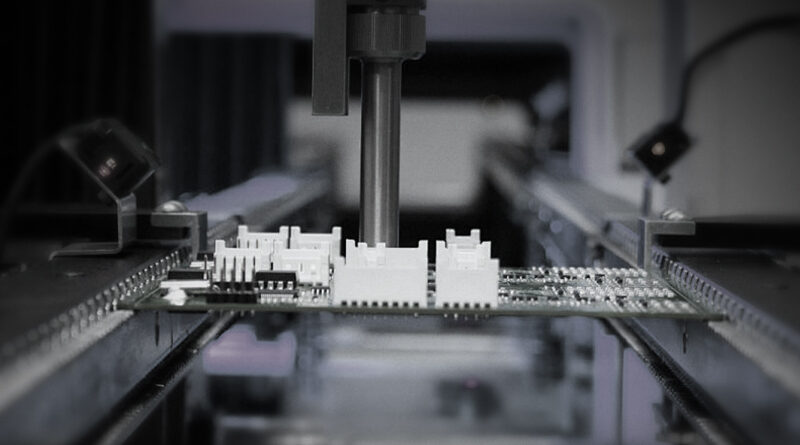
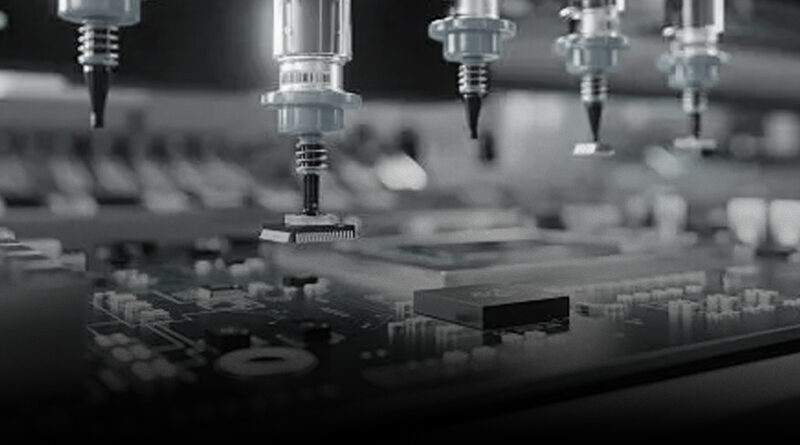
In the fast-moving world of electronics design, the ability to move from concept to validated product quickly is a decisive competitive edge. Small batch PCB assembly machines sit at the heart of that capability, offering a compact, affordable, and capable path to prototyping, product refinement, and limited production runs. Whether you are a hardware startup, a maker engineer, or a boutique contract manufacturer, a well-chosen small batch SMT (surface mount technology) system can dramatically shorten development cycles while preserving quality and repeatability. This article dives into what makes these machines valuable, what features truly matter, how to design an efficient workflow around them, and how a solutions partner like NECTEC can help you navigate the landscape from first inquiry to ongoing support.
Before we dive into the specifics, it helps to frame the typical use cases. Small batch PCB assembly machines are designed for runs that are too large for manual assembly yet too small to justify an expensive mid- to high-volume line. The sweet spot includes rapid prototyping boards, pilot manufacturing for new products, design validation with real boards, and initial production for early customers or limited distribution. The goal is to achieve consistent solder joints, accurate component placement, and reliable electrical performance in a setup that fits modest budgets and space constraints. If your project requires flexible changeovers, frequent design iterations, or short lead times, a sturdy small batch system becomes a core strategic asset rather than a temporary workaround.
In practice, most small batch configurations integrate several fundamentals: precise stencil printing for paste deposition, reliable pick-and-place for a wide range of components, a robust soldering process (usually reflow for surface mount), inspection and quality control, and optional post-processing steps such as conformal coating or protective encapsulation. A true one-stop solution provider, like NECTEC, can assemble these capabilities from global suppliers into a unified workflow, with software interfaces, diagnositcs, and spare parts that minimize downtime. The result is a repeatable, traceable process that supports continuous improvement rather than constant reconfiguration.
To anchor the conversation, imagine a typical workflow in a small batch environment. You begin with a design that accounts for manufacturability: component footprints, paste deposit sizes, and board tolerances. You prepare a bill of materials and assembly instructions, then load fiducials, feeders, and components into the pick-and-place deck. Paste printing applies precise quantities of solder paste to the board. The pick-and-place head positions components with high accuracy. A reflow oven then solders the joints. Finally, an inspection stage checks for solder defects, misplacements, or tombstoning, and optional post-processing stages apply protective coatings or marking. Each step needs to be reliable, traceable, and easy to adjust as the design evolves. This is where the strength of a well-composed small batch system shows itself: modularity that supports growth, not rigidity that stifles it.
What exactly is a small batch PCB assembly machine?
Small batch PCB assembly machines are compact, entry-to-mid-level SMT lines designed for limited production. They typically include:
- Stencil printer or equivalent paste deposition system for consistent solder paste distribution on pads.
- Automatic or semi-automatic pick-and-place head capable of handling a broad spectrum of surface mount components (chips, resistors, capacitors, LEDs, and small connectors).
- A reflow heat source (conveyor or chamber) tuned for the paste formulation and board material.
- Board handling and alignment tools (fiducials, camera-based vision systems) to ensure correct placement.
- Quality control options such as automated optical inspection (AOI) and solder paste inspection (SPI).
- Optional modules for conformal coating, encapsulation, or selective dispense.
What makes these systems especially appealing is the ability to scale with demand. You can start with a compact, affordable setup, then add feeders, a larger printer, more nozzles, or a second reflow stage as needed. NECTEC’s approach emphasizes integration: aligning equipment, software, and service into one cohesive package that minimizes compatibility headaches.
Why small batch machines matter for prototyping and early production
For many teams, the cost of a traditional high-volume line is prohibitive, but the risk of relying on hand assembly or outsourcing for prototype runs can introduce delays and variability. Small batch machines bridge that gap with several compelling benefits:
- Cost discipline: Initial capital investment is lower, and you can spread spending as you validate designs rather than funding a large, idle line.
- Faster iteration cycles: With on-site assembly, you can iterate boards weekly or even daily, reducing the time from concept to tested hardware.
- Process visibility: In-house assembly yields direct insights into soldering nuances, component behavior, and manufacturing tolerances, which improves design decisions.
- Quality control: Early-stage AOI and SPI feedback helps catch defects early, reducing costly re-spins downstream.
- Risk management: Small batch lines are often more manageable within evolving product requirements, supply constraints, and design changes.
Of course, there are trade-offs. Throughput will always lag behind large lines, and the incremental cost of adding features can be significant if you over-spec early. A clear product roadmap and a pragmatic evaluation of your use cases—prototype-only, pilot, or small-run production—are essential to selecting the right machine configuration. This is where a trusted partner who understands SMT workflows can help you align capabilities with needs, from component compatibility to software onboarding.
Core capabilities you should expect in a leading small batch system
As you evaluate options, keep a checklist of capabilities that directly impact your throughput, yield, and time-to-market. The following categories matter most for robust small batch PCB assembly:
Component handling and placement
A good system should handle a broad mix of components—from tiny 01005 packages to larger BGAs or connectors—without retooling. Look for:
- Feeder density and flexibility: The ability to handle a variety of package types and sizes without constant manual changes.
- Placement accuracy: Sub-0.05 mm placement tolerance for most components, with calibration routines to maintain accuracy across runs.
- Vision aids: Camera-based alignment and feature recognition to compensate for board rotation, warpage, or subtle fiducial misalignment.
Paste printing quality
Paste deposition is the foundation of reliable solder joints. A system should offer:
- Consistent stencil printing with adjustable squeegee pressure, speed, and stencil thickness.
- SPI feedback or integrated paste inspection to catch deposition anomalies before reflow.
- Interchangeable nozzle sets to support varying paste viscosities and deposit patterns.
Reflow and soldering control
Copper traces and thermal mass complicate soldering. Look for:
- Adaptive reflow profiles aligned to paste type, board material, and component mix.
- Convection or infrared options for gentle heating or rapid ramp profiles as needed.
- Temperature uniformity and inline defect detection to minimize cold joints or solder bridging.
Inspection and quality assurance
AOI and SPI integration catch issues early. Key features include:
- Inline AOI with high-resolution imaging and defect classification.
- Automated SPI to verify paste deposition before placement.
- Traceable data logging for yield analysis and process improvement.
Post-processing and reliability
Some projects require protective coatings or conformal finishing. If relevant, consider:
- Conformal coating equipment and process control to ensure selective or full-board coverage.
- Date and lot tracking to support compliance and warranty claims.
- Easy cleaning and maintenance to maximize uptime.
Software and integration
Software is the connective tissue tying hardware and workflow together. Favor systems with:
- Intuitive programming interfaces and quick job setup for different boards.
- Data export in standard formats for design-for-manufacturability (DFM) analysis and traceability.
- Remote diagnostics, cloud backups, and service portals to minimize downtime.
Designing an efficient workflow around a small batch system
Effective workflow design reduces setup time, minimizes errors, and accelerates learning curves. A typical workflow looks like this:
- Board preparation: Verify design for manufacturability, generate gerber, bill of materials, and pick-and-place files with clear fiducial placement guidance.
- Stencil printing: Prepare paste recipes, calibrate squeegee parameters, and run test prints on sacrificial boards before committing to production boards.
- Component feeding and placement: Program the feeder queue, verify nozzle sizes, and perform a dry-run to ensure correct orientation and part recognition.
- Reflow soldering: Apply a controlled thermal profile suitable for the paste and board stack-up, monitor temperature gradients, and verify joint integrity with quick inspections.
- Quality control: Run AOI/SPI checks, log defects, and feed results back into a corrective action plan for future runs.
- Post-processing: If required, apply conformal coating or protective films, then conduct functional testing and final inspection.
Documentation is a silent hero in this workflow. Clear assembly instructions, layer views, and test plans ensure that anyone on the team can reproduce a run. The best small batch systems enable data capture that illustrates yield trends across jobs, which in turn informs design tweaks and process tuning. This data-driven approach is particularly valuable when you are iterating product versions or validating new components under tight deadlines.
Choosing a small batch PCB assembly machine: what to look for
Selecting the right platform is a hybrid decision that weighs technical fit, cost, and support. Consider these criteria as you evaluate options:
- Throughput vs. flexibility: Do you need the ability to place a wide variety of components, or is tight optimization for a few footprints more important? Balance speed with adaptability.
- Component range and feeders: Ensure the system has sufficient feeder capacity and the right types for your current and future BOMs. Ask about modular expansions.
- Accuracy and repeatability: Confirm placement tolerance under real-world load and long-term stability after multiple runs.
- Software ecosystem: Look for intuitive programming, robust diagnostics, and ease of integration with your design tools and data systems.
- Maintenance and service: Understand what preventative maintenance looks like, response times for spare parts, and the availability of local support.
- Total cost of ownership: Include capital cost, consumables, energy usage, maintenance, and potential downtime costs over a typical lifecycle.
- References and case studies: Seek examples of similar boards or industries to validate performance and reliability claims.
NECTEC: a one-stop partner for small batch SMT solutions
NECTEC positions itself as a premier destination for comprehensive SMT solutions. The core promise is to bring together the most valuable suppliers globally to support you across the entire PCB assembly line. The portfolio spans PCB handling, placing, soldering, printing, inspection, conformal coating, and peripheral consumable series, enabling a streamlined, end-to-end workflow. This approach reduces the friction of shopping for individual components and helps you standardize your manufacturing platform around a single compatible ecosystem.
From the outset, NECTEC emphasizes a robust pre-sales engagement to help you overcome purchasing barriers. The stated commitment—24/7 or real-time availability for pre-sales support—means you can get technical questions answered quickly, compare options, and align features with your production goals. After purchase, the focus shifts to service and lifecycle management, ensuring that you can maintain performance with ongoing support, spare parts, upgrades, and best-practice guidance. In practice, this translates to shorter learning curves, faster time-to-value, and a more predictable path from prototype to pilot to small-batch production.
In practical terms, a NECTEC-enabled small batch line might look like this: a compact stencil printer with SPI feedback, a versatile pick-and-place head on a modular XY stage, a reflow oven with programmable profiles, an inline AOI system for defect detection, and optional conformal coating equipment. All elements connect through an integrated software suite that captures process data, flags anomalies, and generates actionable insights for continuous improvement. For teams building hardware from scratch, the value proposition is clear: you get a turnkey or near-turnkey solution with predictable performance and direct access to a network of verified suppliers and service partners.
Case study: rapid prototyping to pilot production in a consumer electronics project
Consider a startup designing a compact smart home device with a 2-inch by 2-inch board and a dense component mix comprising resistors, capacitors, inductors, small QFPs, a few BGAs, and LEDs. The engineering team needs multiple iterations: validate electrical performance, optimize thermal behavior, verify signal integrity, and finalize the PCB layout. A small batch system becomes the primary enabling technology for this cycle:
- Prototype phase: The team uses a desktop pick-and-place with an attached stencil printer to quickly assemble test boards for functional tests. They run a handful of quick-change boards to stress different routing strategies and component placements.
- Design optimization: With feedback from initial boards, they adjust footprints, paste deposition patterns, and placement sequences. The inline SPI/AOI checks help catch paste shorts and misplacements before reflow, reducing the number of failed prototypes.
- Pilot production: After design stabilization, the team transitions to a pilot batch, expanding board counts to several hundred units per month. The system’s modularity allows adding an extra feeder and upgrading the reflow profile to handle a more challenging solder paste formulation, all without a full line redesign.
- Quality assurance: The integrated data logs enable root-cause analysis for any defect trends, informing both board design and assembly settings. The result is faster iterations, more reliable boards, and a clear path toward scaled production or a decision to outsource higher-volume runs.
In such a scenario, the ability to adapt quickly, capture data, and maintain a consistent process is as valuable as the hardware itself. The NECTEC framework provides a structured backbone—combining supplier breadth, service continuity, and process excellence—that makes this kind of lifecycle feasible for a small organization.
Maintenance, reliability, and ongoing optimization
One of the least glamorous yet most critical aspects of any manufacturing setup is maintenance. Small batch systems demand disciplined upkeep because downtime erodes the value of the investment and disrupts project timelines. Practical strategies include:
- Regular calibration: Schedule routine calibration of the placement heads, camera systems, and alignment references. Small errors accumulate quickly in tight tolerances.
- Consumables management: Keep an inventory of variances in stencil fidelity, nozzle sets, and paste syringes, plus a plan for cleaning solvents and replacement parts.
- Preventive maintenance: Implement a preventive maintenance calendar for the ovens, conveyors, feeders, and sensors. A proactive approach mitigates unplanned outages.
- Process review: Use collected data to review yield and defect trends. Small, frequent process tune-ups are often more effective than infrequent, large overhauls.
- Training and knowledge transfer: Build internal knowledge repositories and cross-train operators so that a single skilled technician can cover shifts, reducing single-point risk.
Quality control is not a one-off event; it’s an ongoing discipline. A well-run small batch line establishes standard operating procedures (SOPs), clear pass/fail criteria, and continuous improvement loops. When teams have access to reliable data and structured feedback, they can incrementally push process windows wider, optimizing throughput without sacrificing quality.
Trends shaping the future of small batch PCB assembly
As electronics continue to shrink and become more feature-rich, several trends influence how small batch lines evolve:
- Modularity and plug-and-play configurations: Systems that can be expanded with additional feeders, printers, or extra workstations respond well to evolving product lines.
- Intelligent automation and vision enhancements: AI-based vision systems, defect detection, and adaptive placement strategies reduce manual oversight and improve yield.
- Hybrid workflows: A blend of in-house small batch assembly with selective outsourcing for high-mix, low-volume components or specific manufacturing steps to optimize cost and flexibility.
- Data-driven optimization: Advanced analytics from inline inspections feed back into design and manufacturing decisions, shortening the development cycle and driving consistency.
Businesses that embrace these trends—without losing sight of practical needs such as service, support, and training—are well-positioned to extend the value of their small batch investments. A partner like NECTEC can help you navigate these shifts by providing not only hardware but also the knowledge and service network required to keep your line current and productive.
In summary, small batch PCB assembly machines offer a practical bridge between prototyping and production. They enable faster iterations, tighter control over quality, and a path to scalable manufacturing without the overhead of a full-scale line. When evaluating options, prioritize hardware flexibility, reliable process control, integrated inspection, and a support model that reduces downtime. With the right partner and the right configuration, your team can turn ambitious designs into tested products with confidence—and bring them to market faster than ever before.
As you plan your next steps, consider the following actionable questions: Do you require full in-house assembly for rapid prototyping or is your aim mainly to pilot a small batch before outsourcing? What component ranges present the biggest challenges in your designs, and how quickly do you anticipate iterating those footprints? How will you measure success—time-to-market, yield, defect rate, or total cost of ownership? By answering these questions, you’ll clarify the ideal small batch system for your product family and set the stage for a successful collaboration with a trusted SMT solutions partner like NECTEC.