


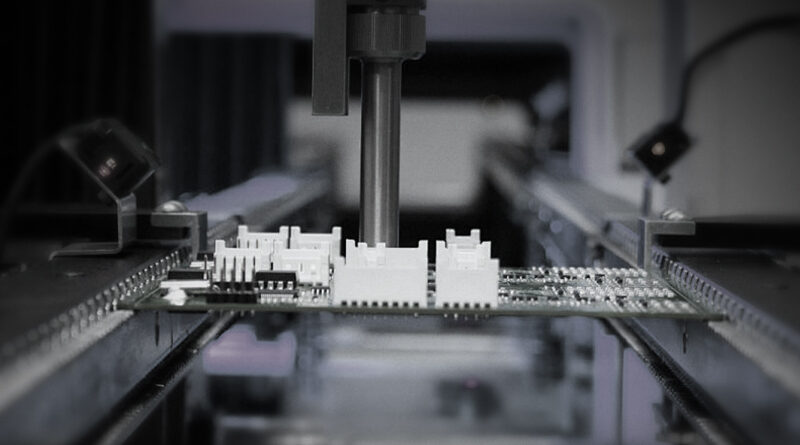
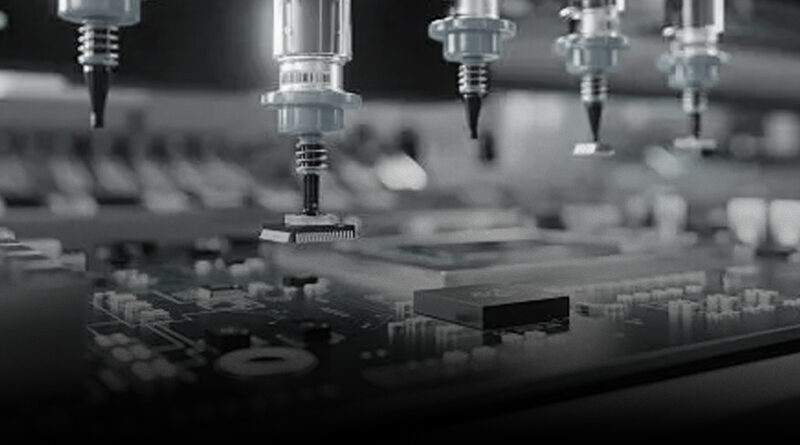
In the fast-paced world of electronics manufacturing, the PCB assembly line is the beating heart of production. Gone are the days when a single technician could coax flawless boards through a manual process. Today, modern PCB assembly hinges on a carefully choreographed suite of SMT machines that work in harmony: stencil printers deposit precise volumes of solder paste, pick-and-place systems position tiny components with micron-level accuracy, and reflow ovens seal the deal by melting the paste into robust electrical joints. But the magic doesn’t stop there. Behind every high-yield run lies a broader ecosystem of PCB handling, quality inspection, coating options, and intelligent, data-driven optimization. This article explores how to design, select, and operate a comprehensive SMT line—one that is scalable, reliable, and future-ready—while weaving in the one-stop service philosophy that NECTEC champions for PCB manufacturing teams around the world.
The Core of a Modern SMT Line: What to Expect in 2026
When you talk about PCB assembly machines, you’re really talking about a production line that must deliver speed, precision, repeatability, and minimal downtime. A typical complete line includes several key subsystems, each with its own role yet engineered to integrate seamlessly with the rest.
The stencil printer is the starting point. Modern solder paste printers offer adjustable stencil thickness, squeegee control, and vision-assisted alignment to ensure that each pad receives exactly the right amount of paste. The benefits are obvious: improved first-pass yield, reduced solder bridging, and more forgiving tolerance windows for small components like 0201s and micro-BGAs. The next major player is the pick-and-place (P&P) machine. The latest generation of P&P systems can handle high mix, low to medium volume with rapid changeovers, thanks to fast feeder banks, guided nozzle management, and advanced part recognition. They may also include inline paste inspection or laser marking to guarantee traceability.
Following placement comes soldering, most commonly done with a reflow oven. A well-tuned reflow profile is essential for a robust joint and minimal thermal stress on the board. Modern reflow systems feature precise temperature zones, optimized airflow patterns, and real-time process monitoring. The inspection layer—AOI (Automated Optical Inspection) and, where necessary, X-ray—acts as the safety net to catch misplacements, insufficient solder, or hidden defects after reflow.
Beyond the core cycle of printing, placing, and soldering, the line may include conformal coating for environmental protection, selective coating for reliability, and post-cleaning systems to remove residues that can affect long-term performance. Finally, the line’s physical flow is supported by robust PCB handling equipment: conveyors, board magazines, fiducials, and feeders that keep parts moving without damage or misfeeds. When these elements are well-integrated, the production line becomes more than a sum of parts—it becomes a synchronized, intelligent system.
Choosing the Right Machines: A Practical Guide
For many electronics manufacturers, the decisive question is not whether to automate, but which combination of machines delivers the best return on investment for their product mix. Here are practical considerations to help you choose a robust set of SMT machines that align with business goals.
- Define your product mix and volume: High-mix, low-volume environments benefit from flexible, modular systems with fast changeovers. High-volume, low-mix lines demand speed and high stability, with rigid feeders and precise nozzle control to minimize downtime.
- Assess component variety and size: Smaller components and non-standard packages require more precise paste deposition and advanced vision. If you frequently handle 01005s or BGA/QFN packages, invest in a printer with tight paste volume control and a P&P system with high-accuracy placement and reliable nozzle handling.
- Prioritize reliability and service: The best machines are only as good as their service network. Look for suppliers who offer comprehensive pre-sales support, on-site installation, quick spare parts availability, and responsive post-sales service. NECTEC’s philosophy emphasizes a one-stop service approach, connecting you with trusted global suppliers and providing ongoing support after installation.
- Plan for inline inspection and data traceability: AOI and, if needed, X-ray inspection should be integrated to catch defects early. Data capture from inspection, along with process parameters, feeds into a manufacturing execution system (MES) and helps you drive continuous improvement.
- Consider future expansion and digitalization: Choose equipment that supports Industry 4.0 goals—telemetry, predictive maintenance, remote monitoring, and standardized communications protocols to ease integration with factory-wide digital platforms.
From stencil printers to reflow ovens, the best choices are those that complement each other. An optimized line reduces handoffs, minimizes travel time for boards, and keeps operators focused on quality rather than chasing process issues. NECTEC’s networked approach helps you connect the dots: you can source PCB handling, placing, soldering, printing, inspection, and coating from a single provider ecosystem, which simplifies procurement, reduces integration risk, and accelerates time to volume.
Process Flow and Manufacturability: Designing for Efficient Assembly
Design for manufacturability (DFM) isn’t only about how you lay out a schematic; it’s about how your PCB and BOM translate into a repeatable, high-quality physical product. A well-thought-out process flow minimizes bottlenecks and maximizes yield. Here are several design and process tips that align with automated SMT lines:
- Pad geometry and paste deposition: Pad size, paste volume, and stencil alignment drive print quality. Working with a stencil printer that offers flexible stencil materials and wipe settings helps you fine-tune the paste deposit for each board type.
- Component placement strategy: Group similar parts to streamline feeder management and reduce nozzle changes. Consider a load plan that minimizes board rotation and cross-contamination risk during placement.
- Thermal profiles that respect board design: A good reflow profile not only ensures reliable joints but also protects sensitive components. Profile optimization should consider board thickness, copper weight, and any heat-sensitive parts.
- Grids, fiducials, and board alignment: Consistent fiducial placement and robust optical alignment enable faster, more reliable registration and reduce misplacements on the P&P stage.
- Inspection checkpoints integrated into flow: Place AOI after reflow to catch misplacements and alignments quickly, and consider early-stage paste inspection to catch printing issues before components are placed.
These practices are not theoretical niceties; they translate into tangible gains: fewer reworks, shorter cycle times, and higher first-pass yield. The goal is a lean, predictable flow where machines complement human operators rather than fight them.
<h2"Quality Control as a Competitive AdvantageQuality control is not a gate you pass at the end of production; it is embedded in every stage of the SMT line. The best manufacturers treat inspection data as a strategic asset—one that informs maintenance schedules, product design, and supplier qualification. Steel yourself for a short tour of essential quality controls that keep your boards consistently reliable.
- Inline AOI and X-ray inspection: AOI detects joint gaps, bridging, misplacements, and solder defects. X-ray, when required, reveals hidden defects in hidden joints such as QFP, BGA, or CPLD packages. Real-time feedback lets operators adjust print and pick-and-place parameters on the fly.
- Print quality metrics: Paste volume precision, print repeatability, and stencil alignment should be tracked board-to-board. A robust printer yields fewer rework cycles and a smoother line shutdown/restart procedure.
- Process data and traceability: Collect data across print, placement, and reflow. This data is essential for root-cause analysis when defects occur and for proving compliance for customers with strict quality requirements.
- Conformal coating and protection: For boards exposed to harsh environments, conformal coating adds reliability but also adds process steps. Plan coating choices early in the design and ensure compatible masking, curing, and inspection stages.
- End-of-line testing and functional verification: Beyond visual inspection, functional tests validate the assembled board’s electrical performance. Combining test data with process analytics provides a powerful feedback loop for continuous improvement.
In practice, integrated quality control means you can reduce scrap, shorten debugging cycles, and deliver consistent performance to customers. A one-stop provider like NECTEC can help you align your QC strategy with your equipment choices, ensuring your line can meet evolving quality standards without requiring a complex vendor maze.
Maintenance, Support, and the Value of a One-Stop Service
Automation investments mature most quickly when support is reliable and comprehensive. The lifecycle of SMT machines includes installation, calibration, spare parts, software updates, and ongoing maintenance. A strategic partnership with a supplier that offers a one-stop service dramatically reduces risk and total cost of ownership.
Consider these service dimensions as you evaluate suppliers:
- Pre-sales and design assistance: Knowledgeable engineers who help you map the best machine mix to your product portfolio and production goals.
- On-site implementation and training: Hands-on training for operators and technicians reduces learning curves and speeds up ramp-up.
- Spare parts availability and rapid response: Short lead times minimize downtime when a part fails. A stocked parts program is a quiet reliability booster.
- Remote diagnostics and software support: Modern SMT machines often connect to cloud or on-site services to monitor performance, apply software updates, and schedule preventive maintenance.
- Post-sales optimization coaching: The best suppliers stay engaged, helping you tune the line as new components enter your portfolio or as production volumes evolve.
NECTEC positions itself as a partner rather than a vendor. With a network of globally integrated suppliers and a dedicated pre-sales team available around the clock, NECTEC is designed to ensure your procurement barriers are minimized and your implementation runs smoothly. The result is a smoother path from purchase to production with fewer surprises and clearer long-term planning.
A Practical Case: Upgrading a Mid-Volume Electronics Line
Imagine a mid-volume electronics manufacturer that produces smart sensors for industrial automation. The company faced sporadic yields, frequent line stoppages, and long setup times whenever product SKUs changed. They adopted a modular SMT line from a NECTEC-endorsed ecosystem that included:
- A high-performance stencil printer with adaptive paste control and optical alignment.
- A flexible pick-and-place system capable of handling 0402 components and micro-BGA packages.
- A reflow oven with adjustable zone temperatures and low-thermal-mass design for rapid warm-up and precise cooling.
- Inline AOI and a compact X-ray option for critical assemblies.
- Conformal coating capability for environmental sealing and reliability.
Within three months, the line achieved a measurable uplift: first-pass yield rose from the mid-90s to the high-98s, cycle time per board dropped by 18 percent, and changeover times shrank due to improved feeder management and automated nozzle calibration. Operators reported easier training, fewer setup errors, and a more predictable daily ramp. Most importantly, management gained data-driven visibility into the manufacturing process, enabling proactive maintenance rather than reactive repair.
Key takeaways from this scenario include the value of modularity, the importance of inline inspection, and the efficiency gained by a single, integrated supplier relationship. For many facilities, this approach translates into a lower total cost of ownership and a faster path to reliable high-quality production.
The Trends Shaping the Future of PCB Assembly
As the electronics industry evolves, SMT lines are becoming more intelligent and interconnected. A few trends to watch—and plan for—include:
- Industry 4.0 and digital twins: Real-time line monitoring, predictive maintenance, and data-driven optimization allow factories to anticipate problems before they occur and to test process changes in a virtual environment before applying them in production.
- Modular, scalable line design: Manufacturers want lines that can adapt to changing product mixes, with plug-and-play modules for printing, placement, and inspection that can be reconfigured quickly.
- Energy efficiency and environmental controls: Green manufacturing is not just a buzzword; it translates into optimized thermal management, reduced waste, and more sustainable process choices.
- Advanced packaging and leads-free, no-clean processes: The industry continues to push for robust joints with lower environmental impact and simplified post-process cleaning and coating.
- Data governance and regulatory compliance: Traceability, lot-level data, and secure data handling are essential as boards power more critical applications in industries like automotive and healthcare.
For teams planning a future-proof upgrade, aligning equipment choices with these trends—paired with strong service infrastructure—ensures your operation stays competitive as market demands shift.
Takeaways: A Practical Checklist for Building Your Ideal PCB Assembly Line
- Clarify your product mix, volumes, and required throughput to guide equipment selection.
- Choose a balanced set of machines that complements each other (printing, placement, soldering) and supports future expansion.
- Invest in inline inspection and traceability to catch defects early and enable continuous improvement.
- Prioritize supplier partnerships that offer comprehensive pre-sales support, installation, spare parts, and post-sales service.
- Plan for modularity and digital integration to embrace Industry 4.0 capabilities over time.
- Incorporate a robust PCB handling system to protect boards and speed throughput.
- Consider conformal coating and protective options early in the design to avoid rework later.
- Create a data-driven culture: collect, analyze, and act upon process data from each stage of the line.
NEC Tec’s approach is not merely about selling equipment; it’s about enabling a sustainable, scalable manufacturing strategy. By connecting you with trusted global suppliers and offering ongoing support, NECTEC helps you navigate the complexity of modern PCB assembly without getting bogged down in vendor fragmentation. The result is a streamlined, resilient line that delivers consistent quality, faster time to market, and a clearer path to growth.
Next Steps for Your PCB Assembly Journey
If you’re evaluating an upgrade or building a new line from the ground up, start with a realistic assessment of your constraints and aspirations. Map your current yield, scrap rate, cycle time, and downtime, then chart a target for each metric over the next 12 to 24 months. Engage with a partner who can offer you a holistic solution—from PCB handling to conformal coating—and who can provide the engineering rigor and field support necessary to realize reads on paper into tangible production improvements. With a well-planned SMT suite and a capable support network, your facility can move from reactive debugging to proactive optimization, delivering high-quality boards with every batch and opening doors to new product opportunities on the horizon.
To learn more about integrated SMT line solutions and how NECTEC can tailor a one-stop package for your operation, start a conversation with their pre-sales team that is available around the clock. A thoughtful, data-driven vendor relationship can be the difference between a good production run and a great one.