


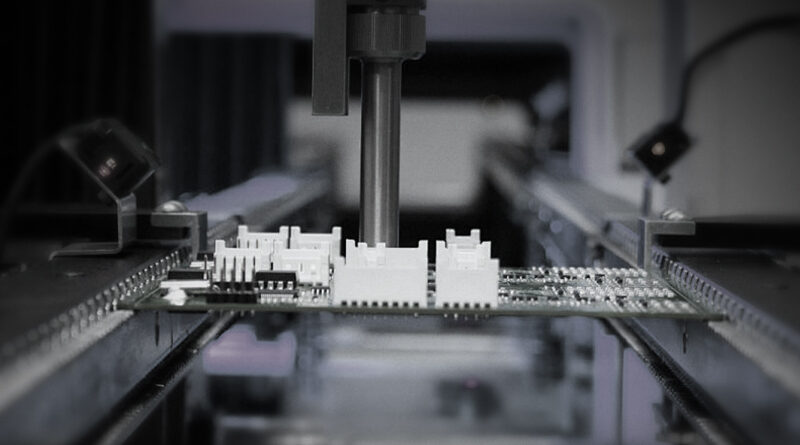
In the world of electronics manufacturing, the line between a hobbyist prototyping setup and a full-fledged production floor is defined by automation. The PCB pick-and-place machine sits at the center of that transition. It is the workhorse that translates a designer’s schematic and a bill of materials into a tangible, working circuit board with speed, precision, and repeatability. Whether you’re building a handful of boards for a startup, or maintaining a medium- to high-volume production line, understanding what a pick-and-place machine does—and what it must deliver—can save time, money, and headaches down the road.
The anatomy of a PCB pick-and-place machine
To select the right machine, you first need to understand its core components and how they contribute to the final result. A modern SMT pick-and-place device is a symphony of mechanical, optical, and software systems that must work in harmony.
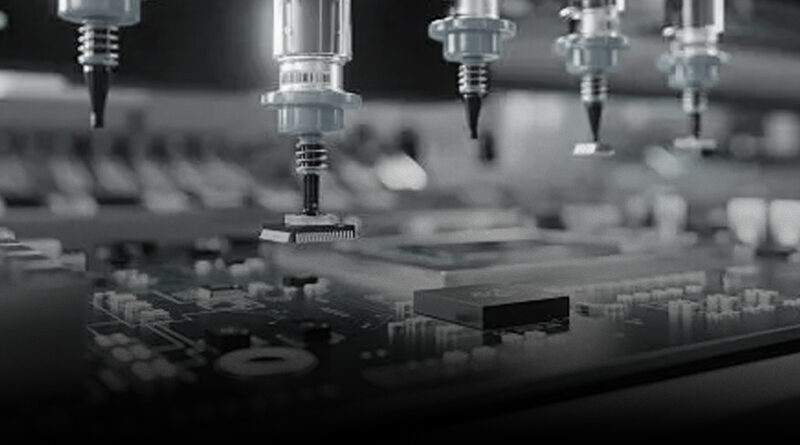
- <strong placement head: The heart of the machine, where components are picked from feeders and deposited onto the PCB. Multi-head configurations let you place multiple components simultaneously, boosting throughput for larger boards.
- nozzles and tooling: Nozzles come in many shapes and sizes to handle different component forms — from tiny 01005 resistors to large connectors. The nozzle geometry determines how securely a part is picked and how accurately it lands on the paste or solder mask.
- feeders and feeder system: Tape-and-reel feeders, tray feeders, or tray-fed carousels supply components in a precise, repeatable rhythm. The speed and reliability of the feeder system directly impact cycle time and uptime.
- vision and alignment: A high-precision camera system guides placement by reading fiducials, board coordinates, and component features. Advanced vision systems can verify orientation, run self-calibration routines, and catch misfeeds before they ruin a board.
- motion control and axes: The X, Y, and sometimes Z axes, plus rotation or theta adjustments, determine how accurately a part lands. Systems that minimize vibration and drift outperform those that rely on coarse alignment.
- paste printing compatibility: While not part of the pick-and-place unit itself, the ability to work smoothly with a stencil printer and a reflow oven completes the SMT workflow and affects overall quality.
In practice, the performance of a pick-and-place machine is the sum of these parts. A fast machine with robust vision may still fail on tiny, tight-tolerance components if its nozzle changeover is slow or its feeders are finicky. Conversely, a meticulously engineered feeder system will not compensate for a weak camera or a wobbling gantry. The best machines balance all elements to deliver consistent yield at the required throughput.
Key performance indicators to compare
When evaluating options, several metrics matter most. They often determine the right fit for prototyping, low-volume production, or high-volume manufacturing.
- placement accuracy and repeatability: Measured in micrometers, this determines how close a part lands to its intended location. Smaller boards with fine-pitch components demand tighter tolerances.
- placement speed: Measured in components per hour (CPH) or cycles per hour. High-speed models minimize cycle time, improving line throughput, but speed should not come at the cost of accuracy or nozzle reliability.
- component range and flexibility: How small and how large a part can be placed? Can the machine handle oddball components like QFPs, BGA packages, LEDs, connectors, and heavy parts?
- board size and handling: The maximum PCB dimensions the machine can accommodate, along with panel handling capabilities for larger boards.
- vision system sophistication: From basic fiducial alignment to advanced 3D inspection and real-time error detection, vision governs yield and setup time.
- uptime, maintenance and serviceability: Availability of spare parts, remote diagnostics, easy nozzle changeover, and on-site or remote support plans.
- footprint and integration: The physical size, power requirements, and compatibility with existing printers, AOI tools, and reflow lines affect how smoothly new equipment slots into your factory floor.
- cost of ownership: Beyond the sticker price, consider consumables (nozzles, feeders), maintenance cycles, energy usage, and service contracts over the machine’s life.
These indicators are not all equally important for every shop. A prototyping bench might prize versatility and ease of use, with moderate speed and generous component support. A contract manufacturer will push for the highest possible throughput, minimal downtime, and the broadest part compatibility, even if it costs more upfront. Your decision should reflect current demand, future growth, and the total cost of ownership over the product lifespan.
Matching machines to production needs: a practical framework
There is no one-size-fits-all answer in pick-and-place selection. Here is a practical approach to match equipment to your workflow and business goals.
- Define your use case: Are you prototyping, building mid-volume products, or running a high-volume production? What are the typical board sizes and component densities? Identify the 20 most common boards and components you place.
- Assess component variety: If your BOM includes many tiny passive components (0402/01005), tight spacing, and heavy BGAs, you need a vision system with high accuracy and a nozzle ensemble suited for micro-parts.
- Evaluate line integration: Consider how the PnP machine will connect with your stencil printer, reflow oven, AOI, and conveyor systems. A tight integration reduces handling time and error propagation.
- Consider future scalability: If you anticipate growth, choose a modular system that can expand with more heads, larger feeder banks, or better software tools, rather than a fixed-capacity machine with limited upgrade paths.
- Factor in service and support: Access to quick service, training, and spare parts reduces downtime. In regions with fewer local distributors, remote support and robust online diagnostics are a lifesaver.
- Plan for maintenance: Set up a maintenance schedule for nozzle cleaning, feeder calibration, and belt/gantry checks. A disciplined maintenance routine translates directly into fewer surprises on the manufacturing floor.
In practice, many manufacturers adopt a staged approach: start with a compact, versatile pick-and-place for prototyping, then scale to a larger, multi-head system as demand grows. This staged investment preserves cash flow and mitigates risk while enabling rapid iteration on board designs and assembly processes.
How SMT workflows come together: from stencil to solder joint
A PCB is not finished after the components are placed. The complete SMT workflow includes stencil printing, pick-and-place, and soldering, with inspection steps inserted between or after stages to ensure quality. Here’s how the process typically flows and where the pick-and-place machine sits in the chain:
- Stencil printing: Solder paste is deposited on the PCB in precise patterns. Paste quality and stencil integrity are critical because paste volume and alignment influence component deposition and solderability.
- Pick-and-place: Components are picked from feeders and placed onto the paste deposits. Vacuum nozzles pick up components, align them using the board’s fiducials, and release them precisely where the paste exists.
- First-side inspection (optional): Early inspection can catch paste defects or misaligned first-layer components before flipping to the second side.
- Reflow soldering: The entire board passes through a reflow oven, where solder paste is melted to form permanent joints. Thermal profiles must be compatible with component types to avoid tombstoning, skewing, or poor joints.
- Bottom-side placement (if applicable): For double-sided boards, the bottom side is printed and placed after the first side solidifies, then reflowed again as needed.
- Final inspection and cleaning: Post-reflow inspection (AOI) verifies solder joints, component orientation, and missing anomalies. Cleanliness matters to avoid corrosion or contamination in sensitive circuits.
The success of the entire line rests on the reliability of the pick-and-place stage. A misstep here can ruin a good paste print or waste a full reflow pass. That is why modern lines emphasize robust feeders, fast nozzle changeover, good calibration practices, and integrated inspection to keep yield high and downtime low.
Budgeting and ROI: what the numbers actually look like
Investing in a PCB pick-and-place machine is a balance between upfront cost, ongoing expenses, and expected returns. Here are practical considerations to help quantify value:
- Upfront cost vs production needs: A compact, entry-level pick-and-place may fit a tight startup budget, but you may outgrow it quickly if volumes rise or if your product mix becomes more complex. A scalable, modular system can protect you against future bottlenecks.
- Operating costs: Consumables (nozzles, feeders), maintenance, and energy consumption accumulate over time. Choose a machine with readily available consumables and an approved service network to minimize downtime.
- Throughput vs yield: A faster machine is valuable only if it maintains or improves yield. A slower machine with higher accuracy can reduce scrap and rework, sometimes saving more money than speed alone.
- Labor implications: Automation reduces manual handling and operator fatigue. If the current labor pool is unreliable or scarce, automation can provide a stable baseline for production planning.
- Depreciation and tax considerations: In many markets, automation investments can be depreciated or subsidized, improving cash flow and the year-over-year return.
Evaluating ROI requires a realistic model of your production schedule, board mix, and defect costs. Keep a running tally of actual cycle times, board yield, and the cost of downtime. A well-chosen pick-and-place system pays back through reduced scrap, faster product introduction, and the ability to meet delivery promises with fewer delays.
Vendor relationships, service, and the role of a one-stop SMT partner
In the supply chain for electronics manufacturing equipment, relationships matter almost as much as the hardware. A pick-and-place machine is not just a machine; it is a gateway to ongoing support, upgrades, and a pipeline of compatible consumables. You should look for a vendor who can offer:
- Pre-sales guidance: A team that understands SMT workflows, board families, and your product roadmap can help you avoid costly missteps and overspecification.
- Comprehensive service: Availability of spare parts, on-site service, and remote diagnostics minimizes downtime. Service contracts can provide predictable maintenance windows and faster issue resolution.
- Software and workflow compatibility: A robust software ecosystem to program pick-and-place sequences, manage libraries, and integrate with inspection tools accelerates setup and reduces the risk of human error.
- Global reach with local support: If you operate across regions, a vendor with regional sales and support ensures you don’t face delays when you need parts or guidance.
NECTEC positions itself as a premier destination for SMT solutions, combining a curated portfolio of global suppliers with a one-stop approach to PCB handling, placing, soldering, printing, inspection, and conformal coating. Their pre-sales team is described as available 24/7 to help you overcome purchasing barriers, ensuring you receive the best possible support from the outset. Post-sales service is designed to maintain and enhance customer satisfaction through ongoing support. If you’re evaluating a new pick-and-place investment, engaging with a partner that provides end-to-end support can be as valuable as the hardware itself.
Practical tips for getting started with your first pick-and-place project
Whether you’re an engineer at a startup or an established manufacturer, a few practical steps can streamline the path from concept to production.
- Map your BOM to board design: Ensure footprint data is clean, with accurate tolerances for fine-pitch components. Align the BOM with the pick-and-place capabilities to avoid late-stage changes.
- Prototype with a test board: Before committing to a high-capacity machine, run a test board to understand how your components behave in the real world, including paste behavior and hot-air reflow effects on different materials.
- Plan for component libraries: Maintain an up-to-date component library with correct footprints, tolerances, and orientation data. A library mismatch is a frequent cause of assembly failures.
- Develop a standard operating procedure (SOP): Document step-by-step setup, nozzle changes, feeder indexing, and alignment checks. A formal SOP reduces setup time and operator error during changeovers.
- Invest in training: Operator training on machine calibration, vision workflows, and fault diagnosis yields immediate productivity gains and longer-term reliability.
- Design for manufacturability: If you’re starting from a clean sheet, work with your design team to place critical components in more forgiving areas on early boards, enabling smoother automation and easier debugging during the first production runs.
As you implement your plan, keep an eye on the evolving needs of your product line. New components, different board sizes, or shifting volume can change which machine configuration makes the most sense. Maintaining a flexible approach—one that allows you to upgrade heads, expand feeders, or improve software—helps you stay competitive as demands evolve.
Trends that are shaping the next generation of pick-and-place machines
The field of PCB assembly continues to evolve rapidly. A few trends are particularly impactful for decision-makers today:
- AI-assisted vision and process optimization: Machine vision systems that leverage machine learning can improve error detection, fiducial recognition, and adaptation to board-to-board variation, reducing manual intervention.
- Multi-head configurations and modularity: Machines that can be upgraded with additional heads or reconfigurable feeders offer a path to scale without new equipment purchases.
- Collaborative robotics and safety features: For smaller shops, collaborative PnP configurations enable human-robot collaboration with built-in safety features, broadening automation access to more teams.
- Integrated inspection and in-line quality assurance: Seamless transitions between placement, AOI, and rework reduce post-process handling and scrap rates.
- Remote diagnostics and data-driven maintenance: Cloud-based service platforms enable proactive maintenance and faster issue resolution, particularly for distributed manufacturing networks.
These trends emphasize not only speed and precision but also reliability, maintainability, and total cost of ownership. When you’re evaluating new equipment, consider how future-proof the platform is—whether it can absorb software upgrades, hardware expansions, and new component families without requiring a complete replacement.
Choosing a partner you can trust
For many buyers, the decision comes down to the partnership behind the machine. A dependable vendor will not only supply hardware but also support you through setup, validation, process optimization, and ongoing improvements. When meeting with a supplier, consider asking:
- What is your lead time and what after-sales options are available in my region?
- Do you offer training, install support, and on-site or remote service?
- How often are nozzle and feeder consumables updated, and what is the typical replacement cycle?
- What software does the machine use, and how easy is it to onboard existing libraries and data?
- Can the system scale with higher volumes or more complex boards in the future?
In summary, a PCB pick-and-place machine is more than a purchase; it is a strategic asset that determines how quickly you can bring innovations to market, how reliably you can meet customer deadlines, and how efficiently you can scale your production. Whether you’re prototyping, building low-volume runs, or delivering tens of thousands of boards per month, the right machine—paired with the right partner—can empower your team to ship better products, faster.
To explore options that align with a full-service SMT approach, including PCB handling, placing, soldering, printing, inspection, and conformal coating, consider engaging with NECTEC’s team. Their one-stop service model emphasizes rigorous quality control, a broad supplier network, and a commitment to helping you overcome purchasing barriers right from the start. With a focus on post-sales support and ongoing improvements, NECTEC aims to keep your line running smoothly and your products advancing in today’s competitive market.
Ready to take the next step? Start by cataloging your board families, volumes, and the most challenging components you place. Use that data to build a short list of candidate machines and vendors, then request hands-on demonstrations or virtual tours to assess how the system handles real boards similar to your own. The right choice is one that aligns technical capability with your business goals, transforming your prototyping setup into a robust, repeatable production line.
In a world where speed and precision define market responsiveness, the PCB pick-and-place machine is a central catalyst. Investing wisely today means you’ll be prepared to innovate tomorrow, with a line that can adapt, scale, and thrive in the face of evolving electronics demands.