



In the fast-paced world of electronics manufacturing, the quality and throughput of a printed circuit board (PCB) depend largely on the efficiency of the SMT (surface mount technology) assembly line. A well-designed line reduces cycle times, minimizes defects, and delivers consistent results across batches. Yet choosing the right mix of equipment can be daunting: printers, pick-and-place machines, soldering systems, inspection, and post-processing units all have to work in harmony. The path from stencil printing to optical inspection is a complex workflow, but with a strategic approach you can assemble a line that scales with demand, maintains tight quality control, and integrates seamlessly with modern data-management practices. In this article, we explore the core concepts, highlight essential equipment, and outline practical decision criteria for building an SMT line that stands up to real-world production challenges.
Understanding the SMT Assembly Line: Flow, Value, and Flexibility
An SMT line is a sequence of specialized machines and processes designed to place and solder tiny components onto PCBs with precision. The typical workflow begins with stencil printing to deposit solder paste, followed by component placement, reflow soldering, and finally inspection and testing. Along the way, handling systems, cleaning, curing or conformal coating, and post-solder inspections ensure reliability. The real magic happens when each station communicates effectively with the next, enabling synchronized throughput and traceability. As you design or upgrade an assembly line, focus on three core goals: achieve high first-pass yield, minimize cycle time, and enable rapid changeovers for varying product mixes. A modern SMT line also benefits from data connectivity—collecting real-time metrics on placement accuracy, solder paste deposition, oven profiles, and inspection results to drive continuous improvement.
Core Equipment in an SMT Line: What to Invest In First
Understanding the role of each major machine helps you prioritize investments and plan for phased upgrades. Below is a practical overview of the main categories and what to look for in each.
Stencil printers: Precision and performance
Stencil printers define the amount and distribution of solder paste on each pad. A high-precision printer should offer adjustable squeegee force, auto-alignment for PCB fiducials, and repeatable paste deposition across large panel counts. Consider features like dual-laminate squeegee systems for different paste viscosities, robust PCB handling to minimize misalignment, and automated inspection after printing. The printer’s capability to handle fine-pitch components and wide board formats is increasingly important as devices shrink and pad density grows. In a mature line, a reliable stencil printer reduces the risk of solder shorts and tombstoning, delivering a clean starting point for the rest of the process.
Pick-and-place machines: Speed, accuracy, and component handling
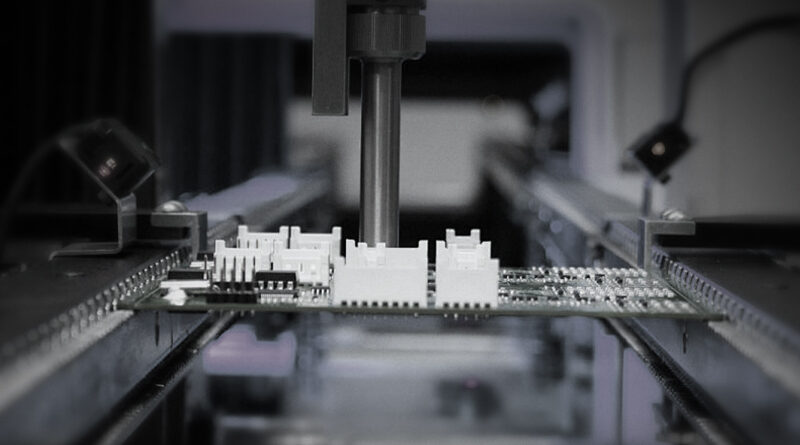
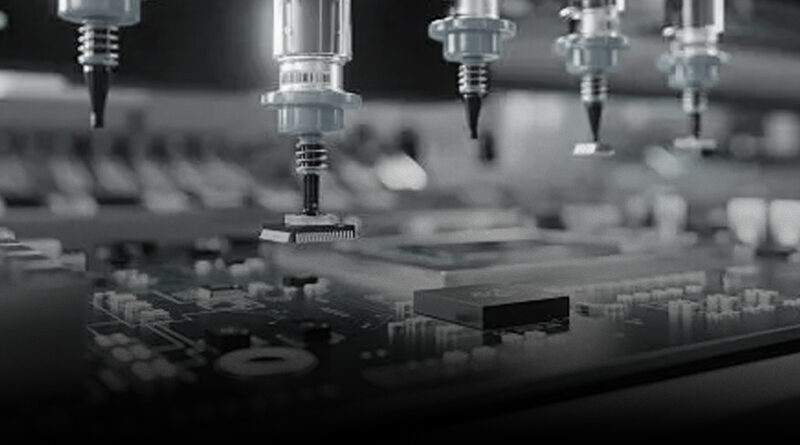
The pick-and-place (PnP) stage is the workhorse of most SMT lines. Modern PnP machines combine high throughput with sub-millimeter placement accuracy, handling a wide range of components—from large QFPs to tiny 0402/0201 passive parts, and fine-pitch BGA packages. When evaluating PnP systems, assess nozzle versatility, component feeders, vision alignment accuracy, and the ability to handle large PCB panels. Consider multi-robot configurations for increased throughput and redundancy, as well as software that optimizes part placement sequences to minimize travel time and avoid nozzle collisions. A well-matched PnP system reduces cycle times while maintaining placement quality across different product families.
Soldering systems: Reflow ovens and selective soldering
For most SMT lines, reflow soldering completes the process by melting solder paste at precisely controlled temperatures. A modern reflow oven offers programmable temperature profiles, uniform heat distribution, and energy-efficient insulation. Look for features such as multiple heating zones, accurate temperature controllers, and reliable conveyors that minimize misfeeds. For boards with through-hole components, high-reliability selective soldering may be added to handle leaded components or heat-sensitive areas that cannot be reflow-soldered. The choice between convection, infrared, or hybrid heating depends on board construction and paste chemistry. A well-tuned soldering subsystem ensures robust joint quality while preserving component integrity.
Inspection and testing: AOI, SPI, and X-ray
Quality assurance is the backbone of repeatable production. Automated Optical Inspection (AOI) flags component placement and soldering defects, while Solder Paste Inspection (SPI) verifies paste volume and deposition accuracy before placement. X-ray inspection is essential for complex boards with hidden joints, such as BGA, QFN, or CSP packages. A modern SMT line must provide integrated inspection modules that trigger feedback to upstream processes, enabling zero-defect production through closed-loop control. Inspectors should be able to correlate observations with process data, so operators can quickly adjust stencil height, paste viscosity, or reflow profiles as needed. The goal is to catch defects early, trace root causes, and maintain a stable yield across production runs.
Conformal coating, curing, and post-processing
Some assemblies require protection against moisture, chemicals, or environmental stress. Conformal coating systems apply precise layers and curing ovens ensure the coating reaches the proper hardness and adhesion. When selecting conformal coating equipment, consider multi-nozzle applicators for uniformity, temperature-controlled curing, and process compatibility with the chosen PCB materials. Post-processing solutions may also include selective marking, encapsulation, or encapsulated protection for automotive or aerospace applications. A thoughtful approach to post-processing helps extend product life and maintain performance in challenging environments.
PCB handling, conveyors, and peripherals
Efficient PCB handling minimizes board-to-board damage and reduces operator fatigue. Robust conveyor systems, robust feeder banks, and ergonomic workstations contribute to higher uptime. Peripheral equipment—such as solder-paste mixers, cleaning stations, and flux management tools—plays a supporting role in maintaining consistent process conditions. When evaluating a line, assess how well the handling system reduces cycle time, supports large boards, and integrates with the control software used across the line.
Material management and consumables
Paste, flux, nozzles, and solder wire are essential consumables that must be managed with care. A modern SMT line benefits from clear traceability of material lots, automated restocking alerts, and compatibility between materials to prevent contamination or chemical reactions that could degrade joints. Reliable supplier relationships, including access to a broad catalog of paste formulations and nozzle sizes, help ensure that process windows remain stable even as part mixes evolve.
Line Integration and Workflow Optimization
Equipment alone does not guarantee success. The real value emerges when hardware is integrated with software, data capture, and smart workflows. A well-integrated line supports synchronized cycle times, real-time monitoring, and rapid changeovers between products. Key strategies include:
- Centralized recipe management: Define each product’s stencil print, placement, and reflow profile in a single, version-controlled recipe. This reduces setup time and ensures repeatability across shifts.
- Machine-to-machine communication: Use standardized interfaces to transmit status, alerts, and process parameters between printers, pick-and-place machines, reflow ovens, and inspection systems. This enables closed-loop feedback and faster problem resolution.
- Electronic traceability: Record board-level data such as lot numbers, process temperatures, and inspection results to build a complete production history that supports quality audits and warranty claims.
- Changeover efficiency: Incorporate standardized tooling, universal feeders, and modular fixtures to shorten lineup changes, supporting a diverse product mix without sacrificing throughput.
- MES and data analytics: Connect the SMT line to a Manufacturing Execution System (MES) to monitor OEE (overall equipment effectiveness), track yield by class of defect, and identify bottlenecks for continuous improvement.
At NECTEC, the emphasis on a one-stop service means you can source not only core equipment but also the necessary peripheral systems and software integration. Our approach prioritizes a holistic solution—from PCB handling to final inspection—so you can deploy a production line that works as a single, coherent ecosystem. The goal is to minimize integration friction, shorten time-to-volume, and maximize uptime across the entire line.
Quality Control and Data Management: Turning Data into Action
Quality control is not a one-off check; it is a data-driven discipline. Modern SMT lines collect a broad spectrum of metrics: paste deposition quality, placement accuracy, soldering temperatures, dwell times, and inspection pass/fail rates. When data flows seamlessly from the printer to the AOI and beyond, you gain real-time visibility into the process window and early warning indicators of drifting parameters. The best practices include:
- Defining stable process windows: Establish target ranges for paste volume, placement accuracy, and reflow peak temperature. Use statistical process control (SPC) to monitor process drift.
- Closed-loop feedback: If AOI detects a misaligned component or insufficient solder, automatically adjust subsequent placements or reflow settings, with human review for exceptions.
- Traceability and recall readiness: Maintain precise records so that any component or batch can be traced back to its source and production conditions. This is invaluable for quality certifications and customer audits.
- Predictive maintenance: Use machine data to predict component or subsystem wear, scheduling maintenance before failures disrupt production.
NECTEC’s service model supports this data-centric approach by providing access to validated suppliers, robust integration options, and ongoing technical support. Our post-sales services are designed to sustain process stability, help with calibration and validation, and keep your line performing at peak efficiency.
Choosing Your SMT Line: Practical Criteria for a Smart Investment
Every factory has unique constraints: production volume, product mix, board complexity, available floor space, and budget. A structured decision framework can help you select equipment that delivers the best value over the life of the line:
- Production requirements: Estimate monthly demand, mix of boards, and expected ramp rates. A lean first line may be built around scalable, modular devices that can grow with demand.
- Board complexity and pitch: Consider the smallest component size, pitch, and the need for fine-pitch deposition and alignment accuracy. If you expect more small passive parts, you’ll want advanced SPI capabilities and a highly accurate AOI system.
- Throughput targets and uptime: Analyze required cycle times. Balance fast-loading PnP with high-precision printers and reliable ovens to maximize throughput without compromising quality.
- Footprint and layout: Plan for space to accommodate feeders, conveyors, and service access. A compact, modular line is easier to reconfigure for different products.
- Energy efficiency and operating costs: Evaluate energy consumption of ovens, printers, and feeders. Efficient cooling and insulation reduce power bills and thermal stress on components.
- Service, support, and supply chain: Prefer vendors with strong regional support networks and access to a broad range of consumables. A one-stop partner reduces procurement risk and ensures timely maintenance.
NECTEC’s value proposition aligns with these criteria by delivering a complete SMT line package from a global supplier network, paired with pre-sales guidance to navigate difficult choices and post-sales support to sustain performance. The goal is to minimize risk, speed up procurement, and ensure a reliable path from setup to high-volume production.
Vendor Selection and NECTEC’s Advantage: A One-Stop SMT Partner
In a market filled with equipment choices, choosing the right partner matters just as much as choosing the right machines. The following advantages often separate a good supplier from a great one:
- Comprehensive product portfolio: Access to printers, pick-and-place systems, curing or reflow solutions, cleaning and surface treatment, inspection, and coating lines from trusted manufacturers.
- Global supplier network: A robust ecosystem ensures you can source parts, spares, and upgrades with shorter lead times.
- One-stop service philosophy: From PCB handling through finishing, you receive a coordinated solution with consistent service quality across all stages of production.
- Pre-sales support that clears roadblocks: Guidance on equipment matching, line layout, and product-specific process windows helps you avoid costly missteps during procurement.
- Strong post-sales support: On-site service, remote diagnostics, calibration, and preventive maintenance programs to minimize downtime and extend equipment life.
- Quality control and process validation: Access to tools and methodologies that enable repeatable, compliant manufacturing, plus support for industry certifications where applicable.
For facilities evaluating a total SMT line package, NECTEC offers a curated selection of equipment and consumables, along with engineering support to integrate line components into a cohesive workflow. The result is a smoother procurement experience, faster deployment, and a production line that is easier to manage and optimize over time.
Case in Point: A Typical 1,000-Parts-Per-Hour SMT Line Simulation
While every factory has its unique constraints, a hypothetical 1,000 PPH line illustrates the practical benefits of the right equipment mix. Start with a high-precision stencil printer capable of coarse-to-fine deposition and strong repeatability across panel sizes. Next, deploy a multi-nozzle PnP system with a broad feeder library to handle BGA, QFP, QFN, and 0402 passive devices. Pair the line with a reflow oven that offers segmented heating zones for precise temperature control and uniform heat distribution. Add a robust AOI stage with on-the-fly defect classification, feeding data back to the printer and PnP system to correct alignment or paste deposition in subsequent cycles. A conformal coating module for moisture-prone boards completes the line, followed by a curing oven to ensure coating reliability. Finally, integrate MES-level visibility so supervisors can monitor yield, track defects by type, and trigger maintenance when trends show wear. In practice, this configuration can achieve high first-pass yield, minimize downtime, and support rapid product changes, all while maintaining a predictable cost of ownership.
In reality, a phased implementation is often prudent. Start with the core deposition and placement stations most critical to your product mix, then gradually upgrade functionality such as advanced AOI, X-ray inspection, and coating lines as demand grows. This approach reduces capital risk, enables early productivity gains, and provides a clear roadmap for line maturity. NECTEC’s team can tailor such a roadmap to your facility, aligning equipment selection with process validation, factory automation, and long-term service commitments.
Future Trends: What’s Next for SMT Assembly Lines
As electronics become more capable and compact, SMT lines are evolving to meet greater demands for quality, speed, and flexibility. Three trends to watch include:
- Intelligent automation and AI-assisted processes: Real-time optimization of placement sequences, paste deposition parameters, and reflow profiles based on historical data and current board characteristics.
- Predictive maintenance and condition monitoring: Sensors and analytics predict component wear, enabling preemptive maintenance that reduces unplanned downtime and extends equipment life.
- Modularity and scalability: Lines designed with plug-and-play modules and standardized interfaces enable rapid line reconfiguration for new products or tiered production strategies without large capital expenditures.
NECTEC keeps pace with these trends by curating an ecosystem of innovative suppliers, providing integration engineering, and offering ongoing support to help customers exploit data-driven improvements. The end result is a more resilient manufacturing footprint capable of adapting to evolving market needs while preserving product integrity and throughput.
Practical takeaways for building a robust SMT line
When planning or upgrading your SMT assembly line, keep these practical takeaways in mind:
- Map the entire process flow before purchasing equipment. Clear workflow assumptions prevent bottlenecks and misfits between stations.
- Prioritize reliability and maintainability. Choose equipment with proven uptime records, easy access for maintenance, and a steady supply of spares.
- Invest in measurement and feedback loops. A line that can measure, learn, and adapt yields better quality and faster optimization.
- Look for vendor partnerships that extend beyond installation. Ongoing training, calibration, and support help your team maximize the value of the investment.
- Plan for future product variety. A modular line with scalable feeders, adaptable nozzles, and flexible software can handle shifts in product mix without major overhauls.
In the NECTEC framework, you gain a partner that addresses both the technical and operational facets of line building. Our emphasis on quality control, global supplier access, and continuous service ensures customers can focus on producing high-quality boards while we handle the rest—from procurement to performance optimization.
Wrapping up: envisioning a successful SMT line journey
Ultimately, an SMT assembly line is not a collection of isolated machines but a synchronized system that delivers consistent quality, predictable throughput, and scalable capability. The equipment selection should be guided by workflow compatibility, control interfaces, and a clear plan for data management and continuous improvement. By aligning core equipment with a disciplined process, and by leveraging the right strategic partner to support both pre-sales clarity and post-sales performance, manufacturers can unlock the full potential of their SMT lines. The result is not just a faster production line, but a robust platform for innovation, quality, and competitive advantage in a rapidly evolving electronics landscape.
Whether you are building a line from the ground up or upgrading an existing floor, remember that the path to success is paved with careful planning, integrated systems, and sustained support. With NECTEC’s one-stop approach, you can navigate this journey with confidence, knowing you have access to global suppliers, rigorous quality control, and a commitment to keeping your production running smoothly—today, tomorrow, and well into the future.