


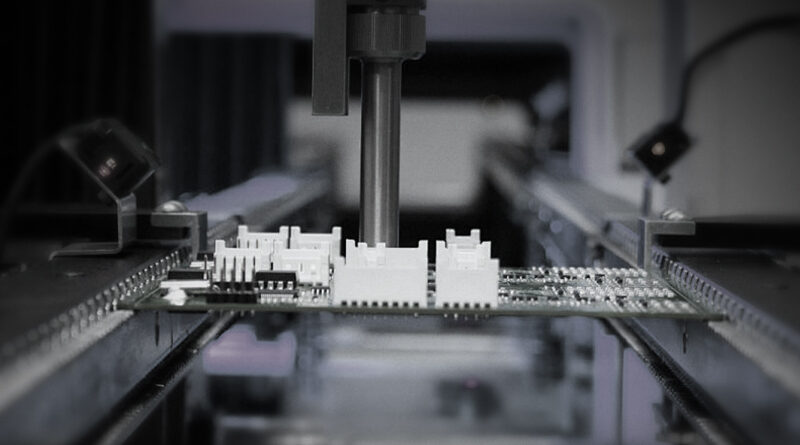
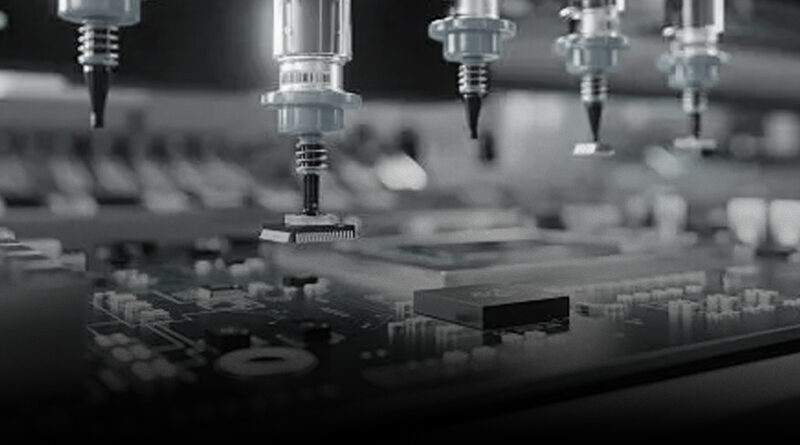
In the fast-evolving world of electronics manufacturing, the ability to move from concept to working prototype to a reliable small-batch production run without friction is a competitive advantage. A four-head surface mount technology (SMT) pick-and-place machine sits at a pivotal point on that journey. It blends multi-head parallelism with high-precision placement, offering a practical path to faster cycle times, higher yield, and better consistency for small to medium-scale projects. For engineers, contract manufacturers, and hobbyists who need reliability without breaking the bank, a four-head system can be the difference between a stalled schedule and a smooth, repeatable process. This guide explores why four heads matter, how these machines work, what to look for when buying, and how to integrate a four-head picker-and-placer into a comprehensive SMT workflow—especially when you are working with a partner like NECTEC, a one-stop destination for comprehensive SMT solutions.
To ground the discussion in real-world context, modern four-head SMT machines can be found in configurations reminiscent of popular models in the market. Neoden 4 (ND4) is noted for configurability and precision on prototype boards. The iTECH PPM-B350BT emphasizes high precision and high capacity with a surprisingly low total cost of ownership. The HCT-T100 presents a compact multi-head approach to LED and small-component placement. And for larger inline setups, machines like Manncorp’s MC388 highlight the potential for batch-mode efficiency with dozens of feeder ports and multiple heads. While each model brings its own strengths, the underlying value proposition of a four-head solution remains consistent: you can place multiple components in parallel, stabilize throughput across boards, and maintain tight tolerances without sacrificing flexibility.
NECTEC positions itself as a premier partner for SMT solutions, combining global supplier access with strict quality control and a robust post-sales support network. Whether you are sourcing a four-head pick-and-place machine or an end-to-end line that includes printing, soldering, inspection, conformal coating, and peripheral consumables, NECTEC’s one-stop service helps you navigate from initial inquiry to ongoing optimization. The combination of a four-head pick-and-place system with NECTEC’s turnkey approach can deliver a smoother production ramp, better first-pass yield, and clearer long-term value for teams that must balance cost, speed, and reliability.
Why a Four-Head Configuration Makes Sense
The fundamental benefit of a multi-head SMT pick-and-place machine is parallelism. With four heads working in tandem, you can divide the PCB between heads in ways that reduce the time spent reorienting boards, changing components, or stabilizing an unclear feed. In practice, a four-head machine often translates into several tangible improvements:
- Lower cycle times per board: By distributing the placement task across four heads, the machine can handle multiple components simultaneously, shaving seconds off each action that would otherwise be serialized on a single-head model.
- Increased throughput for high-mix boards: If your boards feature a mix of resistors, capacitors, LEDs, and small ICs, four heads can manage different components concurrently, streamlining the assembly sequence and reducing waiting times for the next component to be placed.
- Improved placement stability for tight tolerances: With multiple heads, the machine can average out minor variations across heads for critical components, often improving positional accuracy on challenging land patterns.
- Better fault tolerance in production runs: If one head goes down temporarily, the other heads can continue placing certain components, preserving productivity while maintenance is underway.
Of course, the exact benefits depend on the machine’s overall design, including feeder configuration, camera system, and software. A four-head system that is paired with a robust feeder strategy and a flexible placement algorithm can significantly outperform a single-head machine on typical prototyping jobs and many small to mid-volume runs.
How a Four-Head System Works: A Quick Technical Overview
Behind the headline performance of four heads lies a careful balance of mechanics, optics, and software. Here’s what typically matters in practice:
- Head arrangement and alignment: Four heads are positioned to optimize reach across the PCB area while minimizing interference with trays, boards, and other heads. The spacing is designed to maximize the number of components that can be picked up without collision or collision risk during placement.
- Feeders and component handling: A four-head machine relies on a large feeder pool—often 64, 128, or more feeder slots—so that you can continuously load components without frequent stops. Smart feeders, connected to a centralized control, let the machine fetch the right part for each head at the right moment.
- Vision and alignment: Modern systems use multiple cameras and sensors to verify component orientation, position, and polarity. Some configurations include six or more cameras to capture top-down and side views, providing robust feedback for tight placements and misalignment corrections.
- Placement algorithms and synchronization: The heart of the machine is the control software that orchestrates all four heads, feeders, and pick-and-place paths. Efficient algorithms minimize non-productive movements, coordinate Z-axis changes, and optimize the pick-and-place sequence to reduce cycle times.
- Nozzles and tip management: Different components require different nozzle geometries. A four-head machine often ships with a variety of nozzles that can be quickly swapped to handle tiny 01005 components or larger QFP leaded components, all while keeping nozzle change downtime minimal.
- Precision and repeatability: The combined mechanical stability and control software determine the achievable placement accuracy. Typical four-head systems aim for ±0.02 to ±0.05 mm in placement, depending on board size, component type, and calibration.
In short, a four-head machine leverages parallelism, intelligent feeder management, and precise vision to deliver more placements per minute with consistent accuracy. When integrated with a strong software platform and reliable hardware components, it becomes a powerful workhorse for prototyping and small-batch production.
Key Features to Look For in a Four-Head Pick-and-Place Machine
When evaluating four-head SMT pick-and-place machines, consider a standardized set of features that influence performance, reliability, and total cost of ownership. Here are the most important attributes to compare:
- Placement speed and throughput: Look for machines that list placement cycles per board or components per hour (CPH). Some models advertise efficient parallel placement across heads, but real-world performance depends on board size and component mix.
- Accuracy and repeatability: Check the spec sheet for placement accuracy in X, Y, and Z, as well as nozzle repeatability. For high-precision components, every hundredth of a millimeter matters.
- Feeder capacity and diversity: A larger pool of feeders reduces refill frequency, and a mix of feeder types (tape, tray, or bulk) can simplify component handling for different SKUs.
- Vision system: Multi-camera setups, alignment marks recognition, and part orientation checks help reduce misplacements and rework. Cameras should accommodate both fiducials on the PCB and component features on the leads or bodies.
- Payload and head configuration: Four heads should have independent or semi-independent control to allow simultaneous placement. Look for consistency in head speeds and synchronized coordinate systems.
- Software usability: Offline programming, real-time monitoring, recipe management, and automatic alignment calibration are critical. User-friendly interfaces save time during board changes and line changeovers.
- Maintenance and support: Availability of spare parts, the ease of head and nozzle changes, and a responsive service network are essential, especially in smaller operations where downtime directly hits output.
- Compatibility with pre- and post-process equipment: Solder paste printers, reflow ovens, inspection systems, and conformal coating lines should be accessible through an integrated workflow, ideally under a single vendor or vendor-network approach.
- Power and footprint: Ensure the machine fits your workshop layout and electrical supply. Four-head systems vary in size and power draw, so plan for future expansion if you anticipate growth.
In addition to these feature checks, consider the total cost of ownership. While a four-head machine may require a larger upfront investment than a single-head model, benefits such as reduced cycle time, lower rework, and improved yield can yield a favorable ROI, especially in startups or small-to-mid-sized contract manufacturing environments.
Choosing the Right Four-Head System for Your Needs
Not all four-head pick-and-place machines are created equal. The right choice depends on your specific production profile, component mix, and growth trajectory. Here are practical decision criteria to guide your selection:
- Production volume and component diversity: If your boards include a wide range of components—from tiny 0402s to mid-size QFPs—a four-head machine with a comprehensive nozzle kit and flexible feeders will be most beneficial.
- Prototype-to-production ramp: For teams that move quickly from prototype to small-batch production, a machine with easy reconfiguration, fast nozzle changes, and straightforward offline programming is critical.
- Accuracy requirements: For boards with high-density patterns or fine-pitched components, prioritize machines with advanced vision systems and tight alignment tolerances.
- Maintenance ecosystem: A vendor with strong support, rapid access to spare parts, and readily available training minimizes downtime and ensures a smoother ramp.
- Integration with existing workflow: If you already own a printing station, reflow oven, and inspection tools, ensure the four-head system can integrate with your existing software and data pipelines to maintain traceability and yield data.
- Total cost of ownership: Consider not only the initial purchase price but also consumables (nozzles, grippers, feeders), service contracts, energy consumption, and potential productivity gains over time.
NECTEC’s model of support—combining global supplier access with rigorous quality control, and a robust pre- and post-sales framework—means you can select a four-head machine with confidence that you will receive ongoing assistance as you scale. The NECTEC approach emphasizes problem-solving collaboration: your team has access to product specialists who understand SMT chemistry, process optimization, and the practical realities of line integration, from PCB handling to conformal coating and beyond. This holistic perspective is especially valuable when deploying a four-head system in a production environment that requires reliability and consistent results across multiple board revisions.
Real-World Scenarios: Where Four Heads Make a Difference
Let’s consider a few practical scenarios that illustrate how four-head machines can impact daily operations in prototyping and small-batch contexts. These vignettes mirror the kinds of projects that stakeholders commonly encounter in design houses, electronics startups, and small contract manufacturers:
- Prototype board with mixed small components: A typical prototype may include many 0402 resistors, 0603 capacitors, small LEDs, and a handful of ICs. With four heads, you can dedicate one head to LEDs, another to resistors, a third to capacitors, and the fourth to ICs. By aligning placement sequences with the board’s mandatory orientation markers and using a reliable camera system for orientation checks, you reduce rework and expedite iteration cycles.
- Low-to-mid-volume LED lighting modules: LED arrays often require precise XY placement and careful polarity checks. Four heads can place multiple LEDs in parallel, improving uniformity and reducing the risk of misoriented LEDs, while the vision system confirms polarity and alignment before the board is released to the soldering step.
- Analog and mixed-signal boards with tight tolerances: For boards featuring fine-pitched components, the four-head arrangement supports the parallel handling of multiple footprints with careful calibration. The combination of robust nozzle design and high-precision alignment can produce a stable first-pass yield, which is crucial when quick design iterations are common.
- Educational labs and startup garages: The ability to demonstrate concepts quickly with a four-head machine helps teams validate ideas faster. The speed of assembly, combined with the flexibility to switch components mid-run, means students and engineers can experiment with different layouts and configurations without excessive downtime.
In each case, the four-head approach shines when there is a need to balance speed with accuracy across a broad component mix. The best-performing configurations keep a steady supply of core components in the feeder pool, maintain clean nozzles through routine maintenance, and leverage software that can adapt the placement sequence for each board’s unique design.
Integrating a Four-Head Machine into a Complete SMT Line
A four-head pick-and-place machine does not operate in a vacuum. Its effectiveness depends on how well it is integrated with other SMT processes, including solder paste printing, reflow soldering, inspection, and, when applicable, conformal coating and automated handling. NECTEC’s one-stop approach makes this integration smoother by providing not just the machine but the entire workflow ecosystem. Here are practical tips for integration:
- Coordinate feedstock planning: Ensure your feeder pools are aligned with the typical parts used in your boards. A well-organized feeder strategy reduces changeover times and minimizes the chances of placing the wrong part.
- Plan board handling and loading/unloading: A four-head system accelerates placement, but you still need efficient board handling. Consider conveyors, trolleys, or robot-assisted loading where appropriate to minimize manual handling and to protect the placement area from contamination.
- Align with printing: The print quality on the PCB affects placement accuracy. Calibrate paste deposition consistently so that the printed pads align with the placed components. A misprint can lead to tombstoning or misalignment that undermines yields, regardless of placement speed.
- Quality control tie-ins: Pair the machine with inline inspection systems (AOI or AXI) to detect misses, offsets, or orientation errors early in the process. Real-time feedback helps you adjust before reflow and reduces waste.
- Documentation and traceability: Ensure that board-level data, component data, and process steps are captured and linked to your ERP or MES. This is particularly important for contracts and for maintaining consistent quality across batches.
- Post-processing integration: If conformal coating or selective coating is used, plan the handoff between placement and coating stages. Four-head builders benefit from a predictable, well-documented flow between PCB assembly and final finishing steps.
NECTEC’s capability as a one-stop source means you can align your line more smoothly. From the initial purchase to the configuration of feeders, cameras, and software, to the later service contracts and spare parts, a coordinated approach reduces the risk of institutional friction and supports faster ramp-up times for new products.
ROI, TCO, and Long-Term Value
Investing in a four-head pick-and-place machine is a strategic decision that should be evaluated through a clear lens of return on investment (ROI) and total cost of ownership (TCO). Here are the economic considerations that often shape the final decision:
- Capital expenditure versus operating expenditure: Four-head equipment commands a higher upfront price than single-head systems, but its higher throughput and lower rework rates can shift the cost curve in your favor over a typical product lifecycle.
- Throughput gains and labor reallocation: With more efficient placement, you can reduce cycle times, freeing labor for other tasks such as inspection, testing, or manual assembly tasks for parts the machine cannot handle. That reallocation often yields meaningful productivity improvements.
- First-pass yield and quality: Higher placement accuracy reduces the need for rework, which is a major driver of cost in SMT lines. A reliable four-head system with strong vision reduces misses and tombstoning, boosting overall throughput.
- Consumables and maintenance: Keep track of nozzle life, nozzle change time, feeder upkeep, and sensor or camera replacements. A vendor with reliable spare parts and predictable service reduces unexpected downtime and maintenance costs.
- Scalability and future-proofing: A four-head system should offer straightforward upgrades—additional heads, enhanced feeders, or expanded camera arrays—so you can adapt to changing product mixes without a complete hardware refresh.
For teams working with NECTEC, the ROI equation is enhanced by the support framework that helps ensure your line operates at peak efficiency. Pre-sales consultation can identify the best hardware and software package for your intended workloads, while post-sales support helps you optimize processes and sustain performance over time. Ultimately, a four-head system is not just about putting more parts on a board—it’s about creating a more predictable, flexible, and efficient path from design to finished product.
Practical Implementation Checklist
To help you move from planning to production, here is a concise checklist you can use when evaluating and implementing a four-head SMT pick-and-place solution:
- Define your board mix and production volumes, including the largest boards you’ll place and the most challenging components (tiny resistors, LEDs, fine-pitch ICs).
- Audit your current line for bottlenecks in printing, drying, reflow, and inspection to identify where a four-head solution will provide the most impact.
- Select a feeder strategy that minimizes refills and supports the required component variety. Ensure the machine can accommodate the diversity you expect in your SKU set.
- Choose a vision system and calibration routine that aligns with your quality expectations and tolerance requirements.
- Plan nozzle configurations and maintenance schedules to maintain placement accuracy and minimize downtime during changeovers.
- Coordinate with your software ecosystem for offline programming, recipe management, and traceability of every board processed.
- Establish a training and onboarding plan for operators and maintenance staff, with vendor-backed support and spare parts availability.
- Set up a pilot project to measure improvements in cycle time, first-pass yield, and rework rates before a full-scale rollout.
- Engage with a supplier that offers end-to-end support, including concrete post-sale service commitments and access to global parts and expertise.
In practice, the best way to unlock the full potential of a four-head SMT pick-and-place machine is to pair it with a robust, end-to-end partner. NECTEC’s suite of services stands to streamline not just the acquisition but the ongoing optimization of your PCB assembly line. By combining hardware, software, and post-sale support within a single ecosystem, you gain a clearer path from concept through to high-quality, repeatable production.
Whether you are prototyping a new product, iterating a design, or performing small-batch manufacturing for a limited run, a four-head SMT pick-and-place machine represents a compelling option. With the right configuration, careful integration, and a partner who understands the entire SMT workflow, you can achieve faster time-to-market, higher yields, and a more resilient line that adapts to evolving product requirements. The future-proof benefits of four heads—parallel placement, smarter feeding, and stronger alignment—remain a practical reality for modern PCB manufacturing, and NECTEC is positioned to help you realize them with confidence.
