


In the fast-paced world of LED electronics manufacturing, the precision and speed of a pick-and-place (P&P) machine can define your production efficiency, yield, and overall competitiveness. LED boards demand exact placement of tiny diodes, SMD LEDs, resistors, and other light-emitting components in tight tolerances. A purpose-built LED pick-and-place machine not only handles speed but also the delicate handling, high-accuracy sighting, and reliable feeder systems required for modern LED assemblies. This guide walks you through what makes a great LED P&P solution, which features matter most for LED boards, and how to align a purchase with your long-term production goals—not just the next line upgrade. We draw on the realities of working with SMT lines and the one-stop capabilities a trusted partner like NECTEC brings to a complete LED or PCB assembly line.
What is an LED pick-and-place machine, and why it matters for LED boards
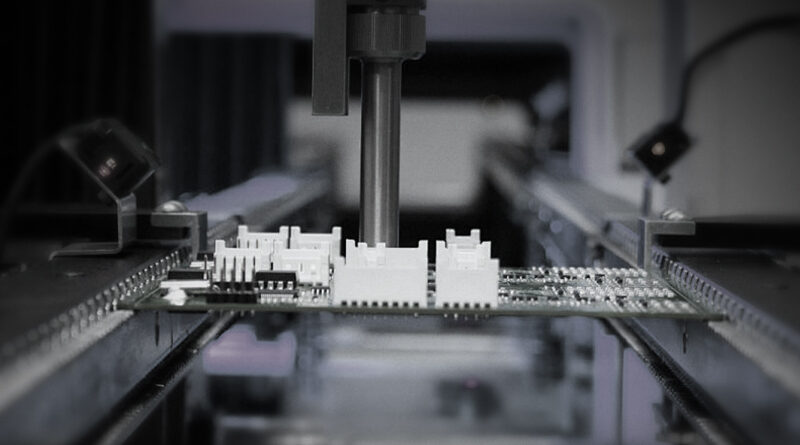
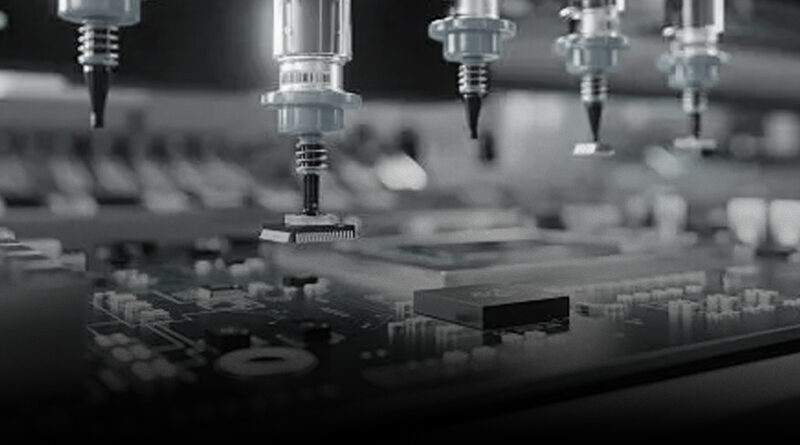
At its core, an LED pick-and-place machine automates the process of picking up components from feeders and placing them with precision onto a PCB during the assembly stage. While generic P&P systems can handle a wide range of components, LED boards introduce unique challenges: extremely small light-emitting diodes, tight spacing, varying package types (surface-mount LED packages, 0402, 0603, or even sub-assemblies), and the need for exact placement to ensure solder joints are reliable and luminous alignment is perfect. An LED-oriented P&P machine brings together several key capabilities: high-precision placement with minimal alignment error, fast multi-head performance for simultaneous or staggered placement, vision-assisted alignment to compensate for board flex and component shifts, and robust feeder and nozzle configurations tailored to LED components. In practice, LED boards benefit from multi-head configurations to place LEDs across large boards quickly, while maintaining the delicate touch required for tiny packages. A credible LED P&P system also offers tight process control with closed-loop feedback, enabling repeatable yield across shifts and operators.
Key features to look for in an LED pick-and-place system
When evaluating an LED P&P machine, you should assess several core features that directly impact throughput, yield, and reliability:
- Head count and placement speed: Higher head counts enable placing many LEDs in parallel, which dramatically raises throughput on high-volume lines. Look for machines that can reach tens of thousands of placements per hour (PPH) with multiple nozzles configured for LED packages. In LED lines, speed matters, but not at the cost of placement accuracy.
- Vision system and alignment: A robust vision system verifies the exact position and orientation of each component before pick-up and after placement. For LEDs, fiducial recognition, high-resolution cameras, and sub-mixel accuracy help reduce mis-placements caused by board warpage or misalignment on the solder paste layer.
- Nozzle and nozzle change strategy: LED components come in various sizes and shapes. A P&P with adjustable nozzles or quick-change nozzles for LEDs minimizes changeover time and avoids component damage during nozzle swaps.
- Feeder versatility and tape-and-reel handling: LED P&P systems should support a range of feeders (tape-and-reel, tray, and bulk feeders) to accommodate different LED packages and production schedules.
- Board size handling and precision: Check maximum board size, supported board thickness, and the ability to maintain placement accuracy across the entire board area. For larger LED arrays, a rigid mechanical design and precise linear motion are essential.
- Throughput versus accuracy balance: Many lines optimize for speed but still maintain accuracy through feedback loops. The best LED lines balance placement rate with repeatable precision for consistent yields.
- Software and recipe management: An intuitive software suite that stores component libraries, placement recipes, nozzle configurations, and machine calibration data reduces setup time and human error.
- Inline inspection integration: Vision-based or AOI systems integrated with the P&P help catch misplacements, coating issues, or missing components before soldering, improving overall yield and cutting rework costs.
How vision systems elevate LED placement quality
The accuracy of LED placement hinges on more than a fast spindle and precise mechanicals; it relies on sophisticated vision to locate components and verify board alignment. LED components are often tiny, and PCB boards themselves may experience subtle warping or flex during heating and cooling cycles. A state-of-the-art vision system uses cameras, lighting, and advanced algorithms to:
- Identify the exact center and orientation of each component before pick-up, ensuring the nozzle grabs the part cleanly.
- Detect fiducials and board landmarks to align the PCB coordinate system with the machine’s reference frame.
- Verify the printed paste stencil alignment to ensure the solder paste is in the right position, reducing the risk of tombstoning or misalignment for diodes and LEDs.
- Confirm the placement position is within a tight tolerance band (often in the micron range) before the soldering process, catching errors early.
Vision-driven placement is especially critical for LED arrays that demand uniform light output and pixel-level alignment. In practice, this means a P&P system with a proven camera module, high-resolution optics, and an efficient alignment workflow that keeps the line moving while maintaining exactitude.
Line configurations: inline vs modular, and how to scale for LEDs
LED assembly lines are not one-size-fits-all. Your configuration should reflect your target volumes, footprint, and future growth. Consider the following common approaches:
- Inline, single-pass lines: A compact arrangement where the pick-and-place station, inspection, and soldering are arranged end-to-end. Ideal for smaller footprints and tight spaces but can be limited in throughput when volumes rise.
- Modular, multi-station cells: A modular approach lets you add more P&P heads, feeder banks, or additional inspection in a scalable fashion. This is excellent for LED production with projected growth or for lines that must handle multiple LED variants.
- 2-stage or multi-pass setups: Larger boards or boards with dense LED arrays may benefit from staged placement (e.g., high-density LED clusters first, then peripheral LEDs), enabling better yield and reduced rework.
- Hybrid with dedicated Led-driven tooling: Some lines deploy a dedicated LED placement station within an SMT line to optimize specific LED packages, while the rest of the line handles ordinary SMT components.
When planning a line, map your current orders, mix of LED sizes, and future product families. A good partner will help you translate these inputs into a scalable layout, including recommended head counts, feeder capacity, and the fastest path to your desired throughput while preserving precision.
Integrating LED placement with a full SMT workflow
LED boards rarely exist in isolation; they are often part of an end-to-end SMT ecosystem. A complete LED assembly line typically includes:
- <strongPrinting/dispensing: Solder paste printers or epoxy droppers that lay the first critical layer on the PCB. For LED boards, paste deposition might be minimal on LEDs themselves, but precise paste on adjacent pads is essential.
- Pick-and-place: The LED P&P machine that places LEDs, diodes, resistors, and other small SMT parts with accuracy and speed.
- Reflow soldering: A reflow oven that provides uniform heat to form reliable solder joints without damaging LEDs or boards.
- Inspection and testing: Automated optical inspection (AOI) and functional testing to verify placements and electrical integrity.
- Coating and protection: Conformal coating or other protective steps for LED assemblies used in harsh or outdoor environments.
NECTEC positions itself as a one-stop SMT solutions partner, arming you with the entire spectrum of options—from board handling fixtures to high-precision LED placement modules, and continuous improvement services. The value of a cohesive line is not only in hardware but in the integration of hardware, software, and service into a reliable, repeatable process. The goal is to minimize changeovers, maximize uptime, and keep you in control of quality across every lot.
Addressing LED-specific challenges with the right P&P features
LED boards present several unique challenges that should inform your equipment choices:
- Post-placement inspection sensitivity: LEDs, especially in arrays, must be perfectly aligned to achieve uniform luminance. Use of inline inspection with high-resolution cameras helps detect mis-placements early and reduces downstream rework.
- Destructive handling risks: Tiny LED packages can be fragile. A P&P machine with smooth, programmable acceleration and careful nozzle design helps minimize component damage during pick-and-place cycles.
- Heat management during soldering: LED boards often have heat-sensitive components. A reflow profile that respects the thermal budget of LEDs is critical to maintain color consistency and performance.
- Variability in LED packaging: LEDs come in different footprints and heights. A flexible nozzle library and quick-change systems support diverse LED packages without lengthy downtime.
- Mask and paste alignment: The alignment of the stencil and paste can influence LED placement accuracy. Your line should include robust alignment checks to ensure solder paste matches the LED pads.
Maintenance, service, and total cost of ownership
In high-precision electronics manufacturing, uptime is king. A strong service program reduces unplanned downtime and helps you maintain yield across shifts. When evaluating a P&P machine, consider:
- Spare parts availability: Check the lead times and part availability for critical components like nozzles, feeders, and cameras. A well-supported platform reduces long outages.
- Preventive maintenance plans: Regular calibration, nozzle checks, and feed replenishment duties keep accuracy steady and reduce surprises in production.
- Software updates and recipe management: Ongoing software support ensures compatibility with component libraries, improved vision algorithms, and automation features that enhance throughput.
- Training and knowledge transfer: Manufacturer and partner-provided training accelerates your team’s ability to optimize the line and troubleshoot issues without external support.
- Total cost of ownership (TCO): Factor in capital cost, depreciation, energy consumption, maintenance, and consumables. The most expensive option isn’t always the best investment; the best choice balances upfront cost with long-term reliability and productivity gains.
Why NECTEC is your go-to partner for LED SMT solutions
NECTEC positions itself as a premier destination for comprehensive SMT solutions, including LED pick-and-place systems and full LED assembly lines. What differentiates NECTEC in a crowded market?
- One-stop service: From board handling and printing to placement, soldering, inspection, coating, and peripheral consumables, NECTEC consolidates the critical pieces of your production line under a single umbrella.
- Global supplier network: By integrating the most valuable suppliers, NECTEC offers access to a broad range of options and configurations that suit diverse LED applications and budget levels.
- Uncompromising quality control: A strong emphasis on quality at every stage helps ensure that your LED boards meet stringent performance standards in production and in the field.
- Responsive pre- and post-sales support: A dedicated team is available 24/14 to help overcome purchasing barriers and to maintain system performance after installation.
- Customized line design: NECTEC’s approach starts with your unique product mix, volumes, and facility layout, then designs a line that scales with your business needs.
Real-world deployment scenarios for LED lines
Manufacturers choose LED P&P solutions for different reasons, whether starting a new facility, upgrading an aging line, or expanding capacity. Here are several common scenarios and how the right machine configuration helps:
- Startup or pilot line: A smaller P&P headcount with flexible feeders and robust vision can quickly adapt to LED prototypes and a growing library of LED types. The focus is on speed-to-market, with easy changeover and scalable options for future growth.
- Mid-volume manufacturing: A modular line with multiple LED placement heads and integrated inspection supports consistent yield as you broaden your product mix. This setup handles both high mix and higher throughput requirements.
- High-volume LED production: High-speed, multi-head P&P systems with sophisticated vision, rapid nozzle replacement, and automated feeder replenishment minimize downtime and maximize throughput while preserving accuracy across long runs.
- LED modules in environmental or outdoor applications: Lines that incorporate conformal coating, sealing steps, and post-process inspection ensure that LED assemblies withstand harsh environments with reliable brightness.
Implementation roadmap: from assessment to first run
To turn a LED P&P investment into real value, approach the project with a structured plan. Here is a pragmatic roadmap that many successful facilities follow:
- Process assessment: Analyze current product families, BOM details, board sizes, and component variety. Identify bottlenecks, such as long changeovers or frequent misplacements, and quantify the potential productivity gains from automation.
- Line design and equipment selection: Choose a platform that aligns with your product mix, yields targets, and footprint. Ensure the design accommodates future additions, such as more LED packages or additional inspection stages.
- Factory fit and integration planning: Map the physical space, airflow, power, and network requirements. Plan for software integration with MES or ERP, data capture for quality, and traceability across batches.
- Installation and validation: Perform a controlled installation with calibration, nozzle setup, feeder priming, and board registration checks. Run a validation program that covers multiple products to verify stability and repeatability.
- Training and handover: Provide hands-on operator training, maintenance planning, and knowledge transfer so teams can troubleshoot and optimize recipes without external help.
- Initial production and optimization: Monitor throughput, yield, scrap rates, and rework. Use this data to tune vision thresholds, nozzle libraries, and feeder settings, while documenting lessons learned for future expansions.
Beyond placement: a holistic approach to LED manufacturing excellence
LED assembly success is not solely about placing the components. It requires a cohesive strategy across the entire production chain. Here are ways to maximize your investment:
- Documented processes and standard work: Clear, repeatable procedures reduce human error and facilitate continuous improvement across shifts.
- Quality-first automation mindset: Integrate inline inspection and traceability early to detect defects before they propagate, saving rework time and safeguarding customers.
- Improved changeover efficiency: A library of component recipes, nozzle configurations, and feeder setups minimizes downtime when switching LED variants.
- Collaboration with a trusted partner: A one-stop provider like NECTEC can streamline procurement, provide reliable support, and ensure that upgrades are compatible with your long-term roadmap.
Choosing the right LED pick-and-place machine is more than picking a high-speed head or a fancy camera. It’s about an integrated, scalable solution that aligns with your product roadmap, helps you reach your delivery commitments, and sustains quality across hundreds or thousands of boards. NECTEC’s approach to SMT is designed to deliver that kind of reliability, backed by a global supplier network and a commitment to quality throughout the entire production lifecycle.
As you evaluate options, invite a partner who can translate your technical requirements into a practical, efficient line that fits your budget and your strategic goals. Look for a provider who can demonstrate a track record with LED boards, offer a robust vision-enabled placement system, provide flexible feeders and nozzle configurations for LED packages, and stand behind the installation with strong after-sales service and training.
In the end, the value of a well-chosen LED P&P machine is measured not only in the number of LEDs placed per hour but in the reliability of every board that leaves your line. Consistency in brightness, lifetime performance, and end-user satisfaction begin with precision at the smallest scales—down to the exact alignment of a tiny LED on a complex board. With the right equipment, software, and support, you can transform your LED assembly into a scalable, profitable operation that meets today’s demands and is ready for tomorrow’s innovations. If you are ready to optimize your LED production with a partner that offers end-to-end SMT solutions and ongoing service, NECTEC can tailor a solution that matches your needs and grows with your business.
