


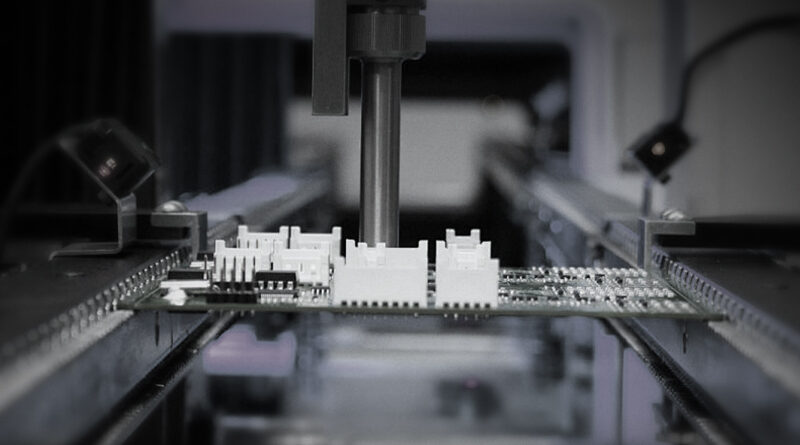
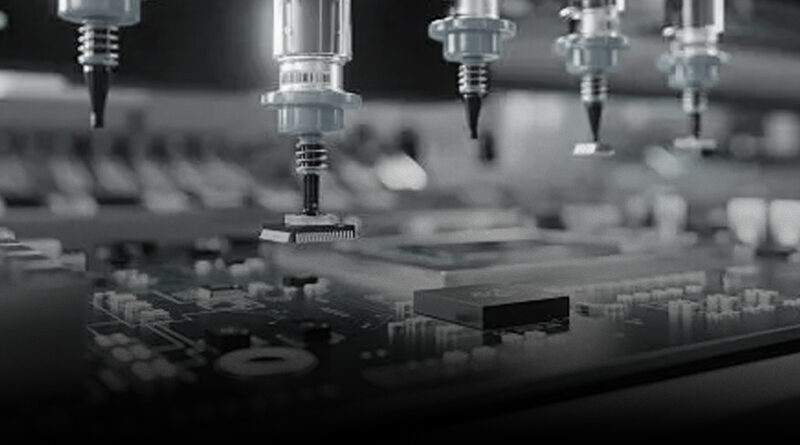
In the fast-evolving world of LED lighting and LED display technologies, the demand for reliable, high-speed, and precise pick and place (P&P) machines has never been higher. For manufacturers producing LED PCB assemblies, the right LED pick and place system is more than a gadget; it is a critical driver of yield, throughput, and overall production cost. This comprehensive guide from NECTEC SMT Solutions explores why specialized LED P&P machines matter, what features to look for, how to plan a line that maximizes throughput, and how NECTEC’s one-stop SMT solution ecosystem can help you achieve consistent quality at scale.
NECTEC positions itself as a premier destination for SMT solutions, integrating top-tier suppliers into a cohesive ecosystem. From PCB handling to placing, soldering, printing, inspection, conformal coating, and peripheral consumables, NECTEC offers a single point of contact that streamlines procurement, reduces risk, and accelerates implementation. This article draws on industry insights and NECTEC’s practical experience working with LED manufacturers to outline strategies for selecting, deploying, and maintaining LED P&P machines that deliver tangible business value.
1. Why LED-Specific Pick and Place Machines Matter
LED components, especially in lighting and signage applications, present unique challenges compared with standard SMT components. LED packages range from small 0402/0603 resistors to high-brightness LED emitters with varying optical characteristics, thermal requirements, and lead patterns. A general-purpose P&P machine may handle a wide variety of components, but LED assembly lines benefit from features tailored to LED payloads, such as:
- High-precision nozzle arrays and vacuum systems compatible with delicate LED packages and lens structures.
- Vision-assisted alignment that can compensate for substrate distortion and fiducial-based registration to achieve sub-50 micron placement accuracy.
- Flexible feeder configurations and quick-change heads to accommodate rapid product changeovers in lighting panels or signage runs.
- Payload-aware control software that optimizes placement sequences to minimize Bewegung (motion) and thermal impact on hot components like LED strips or large LED modules.
- Integrated inspection compatibility, including post-placement AOI, to verify correct orientation and color codes before soldering.
These capabilities translate into reduced mis-placements, fewer reworks, and higher first-pass yields—results that directly impact the bottom line in LED manufacturing environments where margins can be tight and production windows are critical.
2. Core Capabilities to Assess in an LED P&P System
When evaluating LED P&P machines, you should consider several core capabilities that determine suitability for your specific LED products and production volumes. The following attributes are central to performance and ROI:
- Placement accuracy and repeatability: Sub-micron precision is less common in P&P for LEDs, but you should aim for consistent sub-30 to sub-50 micron placement accuracy on typical boards, with robust compensation for board warp and flex.
- Speed and throughput: For LED lighting panels or light engines, higher speeds reduce cycle times. Look for machines with multiple placement heads or high-speed nozzle movement optimized for LED and SMD components.
- Component range and adaptability: The ability to place multiple LED sizes, optic lenses, resistors, flyback diodes, and drivers in a single setup without frequent head changes.
- Vision and alignment systems: Advanced cameras and pattern recognition that can align based on fiducials or feature-based recognition to handle boards with limited or no fiducials.
- Feeder capacity and changeover: Adequate feeder pockets and quick-change capabilities to minimize downtime between SKUs in mixed LED runs.
- Thermal management considerations: LED modules may be sensitive to heat; the P&P system should minimize peak board temperatures and friction during placement.
- Software workflow and offline programming: Intuitive programming that can import CAD data, manage reel and tray feeders, optimize routing, and simulate the placement sequence before live production.
- Maintenance and service model: Access to spare parts, remote diagnostics, and a responsive service network to keep the LED line running with minimal downtime.
In practice, a best-in-class LED line often features a P&P machine with multiple placement heads, integrated vision, streamlined changeovers, and a software suite designed for LED-specific tasks, such as precise X-Y alignment of small LED packages and handling of uniform light-emitting elements on larger panels.
3. The NECTEC Advantage: One-Stop SMT Solutions for LED Lines
NECTEC’s value proposition centers on a seamless, end-to-end experience for LED manufacturing teams. The company’s offering is not limited to, say, a single P&P unit; it’s a holistic partnership. Key elements include:
- Extensive supplier integration: NECTEC curates a broad portfolio of SMT equipment and consumables, ensuring compatibility and streamlined sourcing for LED boards, drivers, and optics.
- Unified project management: From discovery to installation, NECTEC coordinates the entire project, including engineering assessments, line design, and factory acceptance testing.
- Process control and quality assurance: A strong emphasis on quality control at every stage—from PCB handling and component feeding to placement, soldering, and inspection—helps mitigate defects early.
- Post-sales support and upgrades: NECTEC provides ongoing support, training, and access to the latest improvements in software and hardware to keep LED lines up-to-date with industry standards.
- Customized solutions: Regardless of LED product complexity—be it vintage-looking signage or modern LED engines—the team tailors P&P configurations, feeders, vision systems, and workflow to fit the product family.
To customers, this translates into reduced procurement friction, faster time-to-value, and a partner who understands the intricacies of LED assembly lines—from the delicate handling of tiny LED chips to the robust demands of large panel assemblies.
4. Practical Line Design: From Layout to Throughput
Designing an LED assembly line around a high-performance P&P machine requires careful planning. Here is a practical approach that aligns with best practices in LED production environments:
- Define product families and SKUs: Group LED products by similar package types, sizes, and assembly steps. This helps in selecting P&P heads, feeders, and the vision system that will support multiple products with minimal changeover.
- Map the process flow: Typical sequences include printing (paste printer), P&P, reflow soldering, inspection, coating, and final testing. Ensure that the P&P unit can integrate with neighboring equipment with adequate clearance and conveyor interfaces.
- Assess board complexity and size: LED boards can vary from compact star boards to long light bars. Check the machine’s board handling envelope, decoupled feeders, and nozzle travel range to accommodate the largest board you plan to produce.
- Plan for feeder strategy: A robust feeder architecture reduces downtime. Consider a mix of strip feeders for LEDs and bulk feeders for SMD resistors, capacitors, and drivers. Include future expansion slots for additional parts used in newer LED products.
- Buffer and flow optimization: Implement a small buffer area for partially assembled boards to absorb line fluctuations. The P&P machine should be integrated with a synchronized conveyor and buffer logic to keep components moving smoothly.
- Define inspection integration: Place AOI or X-ray inspection after placement for critical LED modules. The P&P should provide reliable data to the inspection system to verify orientation and presence of components before soldering.
At NECTEC, customers receive guidance on these steps as part of a collaborative assessment that includes an on-site or virtual evaluation. The goal is to design a line that minimizes non-value-added time while maximizing consistent yield for LED products.
5. Real-World Scenarios: How LED P&P Machines Deliver Value
Consider a mid-sized LED lighting manufacturer that runs multiple SKUs per month. The company needs a line that can handle a blend of small SMD LEDs, simple driver chips, and occasional larger LED modules. Here are practical outcomes you might expect from deploying a specialized LED P&P on this line:
- Improved first-pass yield: Vision-assisted placement reduces misalignment on tiny LEDs, resulting in fewer rework cycles.
- Faster changeovers: Quick-change heads and intelligent feeder management lower downtime between SKUs.
- Increased throughput: High-speed multi-head configurations enable simultaneous placement of multiple components per board.
- Better data-driven decisions: Integrated software tracks placement accuracy, defect rates, and cycle times to guide continuous improvement.
Another scenario involves a signage manufacturer producing large-format LED modules with uniform brightness requirements. In this case, line designers prioritize stability and large-board handling. A P&P system with extended X-Y travel, optimized vacuum heads for larger LED packages, and a robust fiducial-based alignment workflow ensures consistent placement across a wide area. NECTEC’s solution can pair such a P&P with a compatible printing, reflow, and inspection chain to deliver a complete, repeatable, and scalable production solution.
6. The Technical Deep Dive: Understanding the Mechanics
For engineers and shop-floor technicians, a deeper understanding of the hardware and software underpinnings helps in evaluating and maintaining LED P&P systems. Here are essential components and how they contribute to performance:
- Nozzle arrays and vacuum systems: The choice of nozzle sizes and vacuum strength affects the ability to pick up small LEDs with consistency. Some systems offer interchangeable nozzle modules to accommodate 0402, 0603, 1206, and tiny LED packages without cross-contamination or loss of suction.
- Head configuration: Multi-head P&P machines provide parallel placement, reducing cycle times. The ability to switch between different head types (e.g., fine-pitch vs. standard) expands product versatility.
- Vision alignment: High-resolution cameras, lighting, and feature-based recognition enable precise placement even when boards are warped or misaligned. Fiducial-based alignment is standard, but advanced systems can recognize board features directly for orientation in the absence of fiducials.
- Software and offline programming: CAM-like interfaces allow import of CAD data, generation of placement sequences, stochastic optimization of the path, and simulation of the placement before actual production. This reduces risk and accelerates setup for new LED SKUs.
- Diagnostics and preventive maintenance: Embedded sensors monitor vibration, nozzle wear, feeder status, and thermal profiles. Predictive alerts help prevent unexpected downtime.
These technical elements are essential for achieving high reliability in LED production environments where even small deviations in placement can affect light uniformity and product life.
7. Quality Control: From Placement to Performance
Quality in LED assemblies is multi-faceted. A good P&P machine contributes to quality in several ways:
- Dimensional accuracy ensures correct alignment for optical performance and electrical reliability.
- Correct orientation of LEDs is critical for consistent light output and color consistency.
- Proper adhesion and correct loading of components reduce the likelihood of solder joint defects.
- Compatibility with downstream processes like conformal coating helps protect the LEDs in harsh operating environments.
- Comprehensive data capture supports traceability, a key requirement for many lighting and signage applications.
NECtec emphasizes end-to-end quality control, integrating P&P with inspection stages and process analytics to maintain a stable, repeatable LED manufacturing workflow. The result is not only compliant boards but also a reliable supply line that can adapt to evolving product requirements.
8. Implementation Roadmap: From Evaluation to Production
Rolling out a new LED P&P system involves several stages. A practical roadmap might look like this:
- Needs assessment and product mapping: Define target LED packages, board sizes, and production volumes. Establish KPIs such as placement accuracy, cycle time, and defect rate.
- Feasibility study and line design: Use NECTEC’s design services to model the line, including P&P, printing, reflow, AOI, and coating. Confirm space, power, and air requirements.
- Equipment selection and procurement: Choose P&P heads, feeders, vision systems, and software configuration aligned with the current and anticipated SKUs.
- Factory acceptance testing (FAT): Validate machine performance with real boards and components. Fine-tune vision, nozzle selection, and feeders for optimal results.
- Installation and integration: Connect P&P with the printing and reflow systems, create data interfaces with quality control software, and train operators and engineers.
- Qualification and ramp-up: Run a pilot production, monitor metrics, and establish standard operating procedures (SOPs) for routine maintenance and changeovers.
NECTEC supports customers through every step of this process, enabling a smooth transition from pilot to mass production and ensuring that the LED line remains resilient over time.
9. Maintenance, Upgrades, and Long-Term Value
Maintaining peak performance in LED P&P systems requires proactive care and upgrades. Consider the following strategies to maximize long-term value:
- Regular preventive maintenance: Schedule nozzle replacements, belt checks, vacuum tests, and camera calibrations to maintain accuracy and throughput.
- Availability of spare parts: Ensure ready access to critical components to minimize downtime during replacements.
- Software updates: Stay current with the latest placement algorithms, vision enhancements, and data analytics features to improve efficiency and traceability.
- Modular expansion options: Plan for future SKUs by selectingP&P configurations that can be upgraded with additional heads, feeders, or enhanced vision without a full system replacement.
NECTEC’s post-sales service is designed to deliver these capabilities with structured maintenance plans, remote diagnostics, and on-site support when needed. This ongoing partnership helps manufacturers maintain consistent quality and respond quickly to changing demand.
10. Getting Started: Why NECTEC Is Your Ideal Partner for LED P&P
Choosing the right partner for LED P&P machinery is about more than selecting a single device. It’s about forming a reliable ecosystem that supports your entire LED production line, from head to tail. NECTEC offers:
- A one-stop strategy that consolidates all SMT needs, reducing vendor management complexity and ensuring compatibility across the line.
- Deep expertise in LED assembly challenges and best practices for high-precision placement, optical performance, and long-term reliability.
- Flexible engagement models, from equipment selection guidance to full turnkey line design and deployment.
- Comprehensive training and ongoing support to empower your team to operate efficiently and to implement improvement initiatives.
If you are planning to upgrade or expand an LED production line, consider a solution that can scale with your business without sacrificing quality. NECTEC’s approach emphasizes not only the hardware but also the people, processes, and data that convert equipment into measurable business value. By aligning technology with your product strategy, you can achieve faster time-to-market, higher yields, and better total cost of ownership.
11. A Final Note on LED P&P in the Modern Factory
As LED technology continues to permeate consumer electronics, automotive lighting, architectural lighting, and signage, the demand for reliable, precise, and fast LED placement will only increase. The most successful manufacturers will be those who invest in purpose-built LED P&P systems that integrate seamlessly with printing, soldering, inspection, and conformal coating. At the heart of this capability is not just the machine itself but the ecosystem that surrounds it—the NECTEC ecosystem that unites suppliers, service, and support into a single, predictable path to production excellence.
For organizations seeking to optimize their LED PCB assembly, the question is not merely “Which P&P machine should we buy?” but “Which partner will help us design, implement, and continuously improve an LED production line that remains competitive for years to come?” The answer, for many forward-looking manufacturers, is NECTEC SMT Solutions and its LED-focused P&P expertise, backed by real-world experience, rigorous quality control, and a commitment to long-term collaboration.
To explore how a tailored LED P&P solution can transform your LED production, contact NECTEC today for a no-pressure consultation, line assessment, and a concrete plan that aligns with your product portfolio and business goals. Your next generation LED line starts with a conversation that connects technology, process, and people—so you can manufacture with confidence and scale with clarity.