


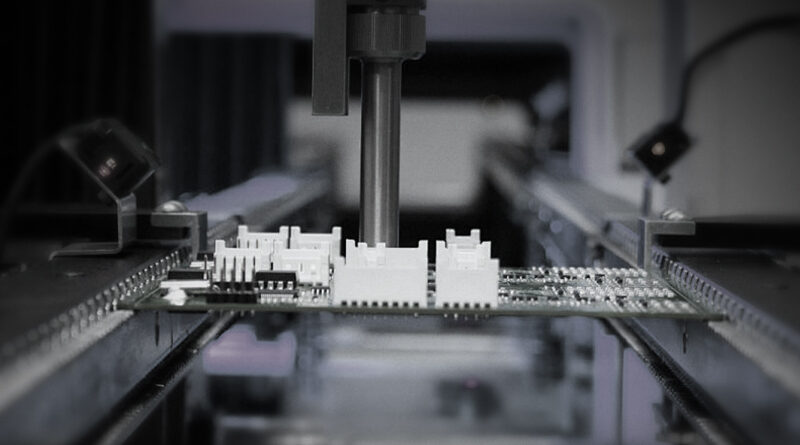


In the modern electronics ecosystem, efficiency, accuracy, and reliability are not just desirable—they are essential. Surface mount technology (SMT) has evolved from a clever simplification of assembly into a disciplined, data-driven process that powers everything from consumer gadgets to industrial control systems. The surface mount machine, or SMT machine, sits at the heart of this ecosystem. It performs the critical tasks that translate digital designs into tangible, functioning hardware: printing solder paste with precision, placing tiny components with micron-level accuracy, and reflowing the solder to form robust, reliable joints. Whether you are upgrading an existing line or setting up a brand-new production floor, choosing the right SMT equipment requires a clear view of your production profile, your quality standards, and your long-term goals. This guide is designed to help you navigate the landscape, align with best practices, and select the equipment suite that will yield the highest return on investment (ROI) for your specific needs.
Understanding the core of SMT: what an SMT machine actually does
To select the right equipment, it helps to break down SMT into its core processes and the machines that perform them. A typical SMT line comprises several integrated stations, each with specialized capabilities:
- Stencil printing or solder paste application: A stencil printer deposits solder paste through a stencil onto each land on the printed circuit board (PCB). The paste thickness and deposition accuracy influence solder joint quality and reflow outcomes. Modern printers offer fine-pitch capabilities, quick changeovers, and print quality inspection to minimize defects.
- Pick-and-place (PnP) placement: This is the workhorse of SMT. Pick-and-place machines pick components from feeders and place them onto the PCB with sub-millimeter and often sub-0.1 mm precision. High-speed models can handle hundreds of thousands of components per hour, while multi-head configurations increase parallelism and redundancy.
- Reflow soldering: After components are placed, boards pass through a reflow oven where solder paste is melted and re-solidifies to form electrical and mechanical joints. Reflow profiles, temperature control, and zone customization affect joint reliability and board quality.
- Inspection and process control: Inline inspection equipment—such as automated optical inspection (AOI) and solder paste inspection (SPI)—monitors paste deposition and solder joints to catch defects early. Advanced systems use 3D AOI, multi-view imaging, and spectroscopy to identify micro-level anomalies.
- Conformal coating, curing, and peripheral processes: Depending on the product, coating, curing, cleaning, and testing may be integrated into the line, often through additional modules and automation.
Each station has its own set of capabilities, tolerances, and maintenance needs. The magic happens when these stations operate in synchronized harmony, guided by software that orchestrates recipe control, traceability, and quality metrics across hundreds or thousands of boards per shift.
Key SMT equipment families and their roles in an efficient line
Though the exact configuration varies by product mix and production volume, certain equipment families are nearly universal in modern SMT lines. Understanding their roles helps you design a line that minimizes bottlenecks and maximizes uptime:
- Stencil printers: The precision backbone of paste deposition. Look for adjustable squeegee pressure, accurate alignment registers, and fast nozzles ozzle-free operation for large boards. For fine-pitch devices, you’ll want high-resolution alignment and good paste transfer reliability.
- Pick-and-place machines: Pay attention to placement accuracy (often measured as 20-50 microns for standard accelerometer-based heads), component handling range (0.3 mm to 74 mm or more), feeder capacity, vision-assisted orientation, and multi-nozzle capabilities for simultaneous placement.
- Reflow ovens: The lease-to-production curve is defined by thermal profiles, energy efficiency, and zone control. Infrared, convection, or hybrid ovens each have trade-offs for different component types and board sizes. A well-matched oven yields consistent joints and reduces heat-induced defects.
- AOI and SPI systems: These inline inspection tools detect missing components, bridging, tombstoning, and solder flaws. Stacked inspection in a tight feedback loop helps you trap defects early and refine your process.
- Inline testing and assembly peripherals: Functional testers, ICT (in-circuit testing), and conformal coating systems can be integrated to reduce post-assembly rework and improve first-pass yield.
In practice, most facilities adopt a balanced mix of automatic (or high-throughput) machines and selective manual stations for prototyping, rework, or low-volume runs. The ideal mix depends on your product mix, lead times, and capital availability.
How to choose SMT equipment for different production profiles
Every production scenario has unique demands. Here are common profiles and the corresponding considerations when selecting SMT equipment:
Prototyping and development lines
For rapid iteration, you want flexibility and fast changeovers. Features to prioritize include modular printers with quick stencil changeover, a semi-automatic or small-footprint PnP machine for prototypes, compact reflow ovens, and easy-to-use software for quick program generation. The goal is to reduce time-to-first-article and to experiment with design tweaks without incurring excessive downtime or cost.
Low-to-mid volume high-mix lines
This category benefits from versatility and diagnostic visibility. Look for multi-tasking PnP machines that can handle a wide variety of components (including gull-wing, QFPs, and BGA variants), automated feeders with broad component packages, and integrated SPI/AOI that can rapidly switch between different board families. Robotic arms or delta-robot configurations can speed up loading/unloading with minimal footprint, while robust process control software helps maintain consistent results across product families.
High-volume, high-throughput manufacturing
In high-volume environments, throughput and uptime are king. Choose SMT machines with the largest possible feeder capacity, high-precision placement with low nozzle replacement, energy-efficient reflow systems with tight thermal control, and robust data capture for traceability. Downtime is a KPI killer on these lines, so you’ll want redundant components, predictive maintenance capabilities, and vendor-provided optimization services that continuously squeeze more cycles per hour from your line.
OEMs and contract manufacturers (EMS)
EMS operations often run a large mix of products. The best approach is a scalable line architecture: a core SMT platform capable of expanding with more feeders, additional placement heads, and optional inline inspection and testing modules. The ROI hinges on throughput per dollar, total line uptime, and the ability to quickly onboard new customers with minimal engineering burdens. A strong vendor ecosystem—spare parts, service teams, and training programs—becomes a strategic asset for EMS players.
Performance metrics and ROI: measuring success of your SMT investment
Investing in SMT equipment is not just about acquiring machines; it is about achieving predictable, repeatable results that translate into better customer satisfaction and lower total cost of ownership. Key performance indicators (KPIs) to monitor include:
- Throughput (components per hour): PMI of placement speed versus board complexity. Tracking throughput per line gives you a clear view of bottlenecks and potential for line balancing.
- Placement accuracy and defect rate: PnP precision and post-reflow joint quality, including voids and bridging, determine long-term reliability and field performance.
- First-pass yield (FPY): The share of boards leaving the line without rework. A high FPY reduces downstream costs and improves lead times.
- Uptime and MTBF (mean time between failures): Mechanical wear, nozzle life, and software stability influence downtime. Proactive maintenance strategies are critical in high-volume environments.
- Energy consumption and footprint: Efficient ovens, low-heat nozzles, and compact line layouts reduce operating costs and factory footprint.
- Traceability and data integrity: End-to-end data capture for process parameters, recipe versions, and SPC (statistical process control) metrics supports continuous improvement and compliance requirements.
ROI calculations typically consider capital cost, installation and validation, training, maintenance, and expected annual savings from reduced defects and faster throughput. A well-chosen SMT line may show payback within one to three years for many mid-market manufacturers, and longer for very high-end, specialized applications. The key is to align the equipment’s capabilities with your actual production needs and your process maturity.
Automation, integration, and the future of SMT lines
The next wave of SMT efficiency comes from deeper integration with digital manufacturing ecosystems. The most impactful improvements come from:
- Data-driven process control: Centralized dashboards collect data from every station, enabling real-time optimization and trend analysis. Data can drive adaptive reflow profiles, nozzle maintenance schedules, and feeder replenishment patterns.
- Predictive maintenance: Sensors monitor temperatures, vibration, and performance metrics to forecast part failures before they cause downtime.
- Machine-to-machine (M2M) communication: IoT-enabled components share state information, enabling seamless line changeovers and smarter fault detection across stations.
- Quality-first automation: In-line 3D SPI, 3D AOI, and advanced defect analytics reduce false calls and improve yield reliability, especially for challenging components like BGAs and QFNs.
- Flexible, modular lines: As product life cycles shorten, the ability to upgrade or reconfigure lines without replacing entire systems becomes a critical strategic advantage.
In this landscape, partnering with a capable supplier matters as much as the hardware. NECTEC’s approach centers on being a one-stop solution provider: sourcing the best global equipment, ensuring tight integration across PCB handling, placing, soldering, printing, inspection, and coating, and offering ongoing post-sales support. The objective is to reduce the friction from procurement to production ramp, so customers can bring products to market faster while maintaining high quality and traceability. This holistic approach is particularly valuable for customers who require multi-vendor coordination, regulatory compliance, and a stable supply chain for spare parts and consumables.
Process design and implementation: turning theory into practice
Turning an SMT concept into a working production line involves several practical steps. Here is a pragmatic blueprint you can adapt to your situation:
- Define your product mix and volume: List SKUs, expected weekly volume, and mix percentage. This informs the number of feeders, nozzle types, and PnP head configurations needed.
- Map board complexity: Identify high-risk features such as tiny gull-wing corners, fine-pitch QFPs, BGAs, and large thermal mass components. Advanced inspection and precise placement strategies should be designed around these features.
- Specify board handling requirements: Consider board size range, rigid-flex capabilities, panelization, and jigging. A line that can adapt to panelized boards without sacrificing accuracy is cost-effective in the long run.
- Establish process windows: Define print paste thickness, reflow profiles, and inspection tolerances. Early calibration reduces downstream rework and scrap.
- Plan for changeovers and reconfiguration: Build in standard operating procedures (SOPs) for recipe changes, nozzle swapping, and feeder replenishment to minimize downtime.
- Institute a data-driven feedback loop: Ensure continuous monitoring with SPC charts, defect analysis, and corrective action logs. Data transparency across shifts reduces human error and accelerates improvement cycles.
- Invest in people and training: The most advanced SMT line is only as good as the operators who run it. Training programs that cover machine operation, maintenance, and quality practices are critical.
Through this disciplined approach, you can translate a theoretical line design into a robust, repeatable manufacturing platform. A well-executed implementation minimizes risk, reduces time-to-first-part, and sets a solid foundation for future upgrades as your product portfolio evolves.
What to look for when selecting an SMT supplier
Choosing the right supplier is as important as choosing the right machines. Consider the following questions as you evaluate candidates:
- Breadth of offering: Do they cover the entire SMT spectrum, including printers, pick-and-place, reflow, inspection, conformal coating, and curing? A one-stop provider simplifies integration and after-sales support.
- Global reach and service: Are spare parts readily available where you operate? Is field service accessible within a predictable time window?
- Reliability and uptime: What is the track record for MTBF and mean time to repair? Are there remote diagnostics and software updates to minimize downtime?
- Software and data capabilities: Does the vendor provide recipe management, traceability, and integration with your MES/ERP system? Is the software intuitive and secure?
- References and case studies: Can they demonstrate successful deployments in industries with similar requirements and product mixes?
- Training and onboarding: What training programs do they offer for operators, maintenance engineers, and process owners?
- Cost of ownership: Beyond initial price, what are ongoing costs for spares, upgrades, and consumables? Is there a clear path for line modernization?
NECTEC’s value proposition in the SMT ecosystem
NECTEC positions itself as a premier destination for comprehensive SMT solutions. The company emphasizes a holistic, one-stop service that streamlines procurement, installation, and ongoing support. By integrating top global suppliers and aligning them with strict quality control across every stage of production, NECTEC helps customers achieve reliable PCB assembly with predictable timelines. The pre-sales team is available around the clock to help you overcome purchasing barriers and find the best configuration for your needs, while post-sales service focuses on maintenance, performance optimization, and continuous improvement. For manufacturers who prize efficiency, traceability, and a smooth supplier experience, NECTEC offers an attractive blend of product breadth, service depth, and market knowledge. This approach resonates with customers who want to reduce risk, shorten ramp times, and gain access to a network that can support scale and innovation in the long run.
Key considerations for specific industries and applications
Different markets demand varied SMT capabilities. For consumer electronics, speed and component density are crucial, along with a clean reflow for compact footprints. Automotive electronics emphasize long-term reliability, robust solder joints, and tolerance to harsh environments, with stricter quality gates and traceability. Medical devices require rigid process validation, cleanroom compatibility (where applicable), and meticulous documentation. Industrial controls, IoT gateways, and aerospace components push the envelope on board sizes, varied materials, and high-mix requirements, making a modular, upgrade-friendly line highly desirable. No matter the sector, a supplier that can tailor the line to your regulatory and quality requirements while offering strong after-sales support is worth serious consideration. NECTEC’s emphasis on 24/7 pre-sales assistance and a robust post-sales service ecosystem aligns well with these industry needs, ensuring that customers can adapt to evolving standards without sacrificing uptime or product quality.
Practical tips for accelerating your SMT project timeline
If you’re racing to bring a product to market, a few pragmatic steps can shave weeks off your schedule while preserving quality:
- Consolidate your BOM and footprints: Early standardization reduces the number of unique components, easing feeder management and reducing changeover complexity.
- Demand-driven spare parts strategy: Keep a minimal but effective spare parts kit configured for your most common failure modes. This reduces downtime waiting for shipments.
- Pre-commissioning and factory acceptance testing (FAT): Conduct FAT with your chosen line configuration to verify performance before shipping to your site. This minimizes surprises during installation and reduces the risk of early-stage rework.
- Phased rollout: Start with a stable baseline line to gain FPY improvements, then gradually add features like advanced AOI or 3D inspection as you scale.
- Operator-led continuous improvement: Empower your floor teams to identify bottlenecks and implement small changes that compound into meaningful gains over time.
Emerging trends to watch in SMT technology
The SMT landscape is not static. Keeping an eye on emerging trends will help you future-proof your investment and maintain a competitive edge:
- AI-assisted inspection and defect analytics: Machine learning models can distinguish between real defects and false calls more accurately, reducing rework and improving yield.
- Adaptive reprofiling and process control: Real-time adaptation of printing, placement, and reflow profiles based on live data improves inline quality.
- Modular, scalable lines: Future-proof lines with plug-and-play modules can adapt to new package types and larger boards without a full rebuild.
- Robust traceability and compliance: End-to-end data capture supports audits, recalls, and regulatory compliance across industries.
- Energy-efficient thermal management: Innovative oven designs and heat recovery strategies reduce operating costs and environmental impact.
Final thoughts and next steps
Choosing the right SMT machine lineup is a strategic decision that blends technical requirements with business goals. It is not merely a purchase but a long-term partnership that shapes your manufacturing capabilities for years to come. Start by analyzing your current and projected product mix, identifying bottlenecks, and mapping your throughput targets. Then partner with a supplier who can provide a holistic solution—hardware, software, services, and training—that scales with your needs. NECTEC’s approach—integrating top suppliers, ensuring strict quality control, and offering comprehensive pre- and post-sales support—presents a compelling model for companies seeking reliability, transparency, and efficiency in their SMT journey. By aligning equipment choices with your process maturity and business objectives, you create a production floor that not only meets today’s demands but is also ready for tomorrow’s innovations. As you move forward, maintain a clear line of sight on performance metrics, stay engaged with your supplier, and view the SMT line as an evolving asset that delivers consistent value across your product portfolio. The path to higher yields, faster time-to-market, and improved customer satisfaction lies in thoughtful design, disciplined execution, and a partnership built on trust and shared goals.
Next steps involve defining your targets, assembling a cross-functional evaluation team, and conducting a structured supplier shortlist. Prepare a requirements document that covers capacity, footprint, energy usage, software capabilities, service levels, and total cost of ownership. Ask prospective partners to demonstrate their ability to integrate with your existing systems and to provide references from similar industries. When you have a short list, request FAT demonstrations that replicate your typical boards, component mix, and production scenarios. This practical, evidence-based approach will help you choose an SMT solution that not only meets your present needs but also positions you for sustainable growth and competitive differentiation in the years ahead.