


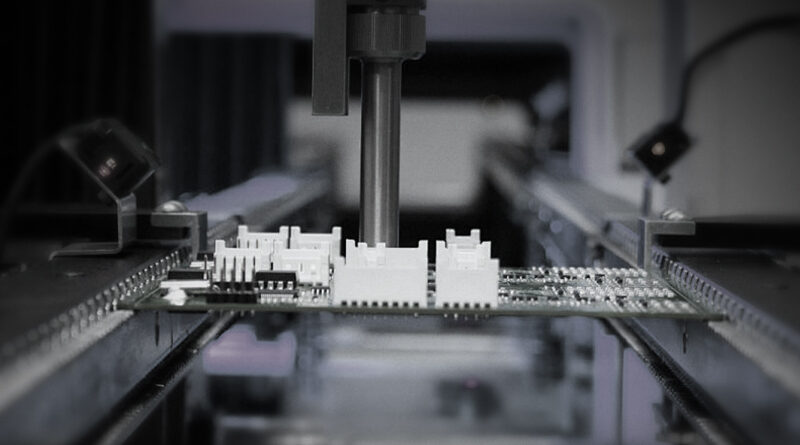
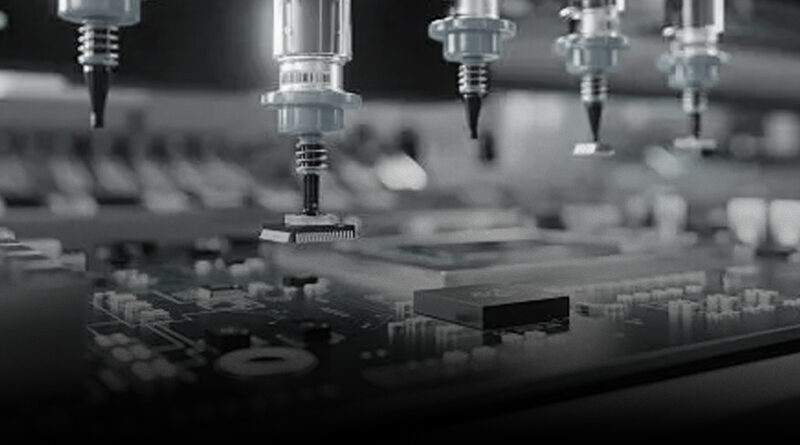
In the fast-moving world of electronics manufacturing, a reliable pick-and-place (PnP) machine is the heart of the surface-mount technology (SMT) line. The choice of manufacturer influences throughput, accuracy, uptime, and total cost of ownership. For buyers who want a truly global, high-performance solution, understanding the landscape of PnP machine manufacturers—and how a trusted partner like NECTEC integrates the best options from around the world—can turn a daunting procurement into a strategic advantage. This guide explores the major players, the criteria that matter most when evaluating them, and how a one-stop service provider can simplify the journey from selection to aftersales support.
NECTEC positions itself as a premier destination for comprehensive SMT solutions. We integrate the most valuable suppliers globally to help you solve any issue along the PCB assembly line. Our offerings span PCB handling, placing, soldering, printing, inspection, conformal coating, and an extensive peripheral consumables range. The aim is to ensure you have everything you need for efficient, high-quality production. The value of a broad supplier network becomes tangible when you evaluate a full line of machines and the software that makes them sing. The nearest analogy is a well-curated orchestra: you need the right instruments, the right players, and a conductor who can harmonize the entire system.
What makes a great pick-and-place machine vendor: the pillars of value
When evaluating PnP machine manufacturers, most buyers eventually gravitate toward four core pillars: precision and speed, component range and versatility, reliability and service, and the software ecosystem that drives efficiency. Let’s unpack these pillars in practical terms.
- Precision and speed: A top-tier PnP line should place a wide variety of components at high speeds without sacrificing accuracy. Speed is most valuable when it is paired with stable fiducials and robust vision systems. Look for machines that demonstrate repeatability within a small tolerance for all common package types (0.01–0.02 mm for many high-end systems).
- Component range and versatility: The line should support tiny micro-BGA parts as well as larger connectors and thick components. Consider feeder configurations, nozzle choices, and the ability to handle flexible board sizes. A broad component library and reliable feeders reduce changeover time and avoid part-number chaos on the manufacturing floor.
- Reliability and service: The best manufacturers minimize downtime with modular designs, long-life motors, and proven maintenance intervals. A strong aftersales program—spare parts availability, service certifications, and proactive maintenance—translates to higher uptime and more predictable production schedules.
- Software and process control: The control software should be intuitive, but also powerful enough for complex assemblies. Seamless integration with your existing data management systems, libraries for components, and real-time diagnostics matter as much as the hardware itself. A robust software ecosystem shortens the learning curve for operators and sustains throughput gains over time.
Beyond these pillars, buyers increasingly value a partner who can align a machine lineup with their entire SMT workflow. That means better pre-sales advice, easy access to a broad portfolio, and a sustainable support model after installation. NECTEC’s global supplier network is designed to meet those expectations through a one-stop approach that keeps procurement simple while expanding choice.
Leading global pick-and-place manufacturers to know
The landscape of PnP machine manufacturers is diverse, with several brands known for specific strengths and regional footprints. Below is a snapshot of well-regarded players and what they bring to an integrated SMT line. This is not an exhaustive catalog, but a practical map to help engineers and buyers compare options quickly.
Mycronic (Sweden)
Mycronic has engineered a reputation around high-speed placement and advanced vision, with a broad system line that spans high-mix, medium- to large-scale production. Their machines emphasize precision at high throughput and intelligent nozzle management. For facilities chasing fast changeovers and tight cycle times, Mycronic offers a compelling balance of speed and accuracy, supported by strong software-driven process control. A close partner like NECTEC can help tailor a Mycronic solution to your product mix, including board sizes, component variety, and line configuration with other SMT modules.
Yamaha (Japan)
Yamaha is known for durable hardware and reliable performance, often favored by manufacturers who prize long service intervals and predictable maintenance. Yamaha systems typically feature robust placement heads and established feeder ecosystems, making them a favorite for lines that require steady uptime and straightforward maintenance. As with all brands, the key is integration—how well the Yamaha machine communicates with pick-and-place software, feeders, and quality inspection stages across the line.
Juki (Japan)
Juki brings strong global presence, a broad product spectrum, and a reputation for cost-effective, reliable SMT solutions. Their systems are often selected by contract manufacturers and electronics assemblers that want good performance without premium per-unit pricing. The trade-off between raw speed and total cost of ownership is frequently a central consideration in Juki deployments. A partnership with a value-added distributor or integrator can help optimize line layout and maintenance planning for Juki assets.
Panasonic (Japan)
Panasonic’s SMT portfolio emphasizes automation and reliability across lines that may include soldering and inspection in addition to placement. Panasonic equipment is often integrated in large, high-volume facilities where the evaporation of downtime and scheduled maintenance are part of the strategic plan. In such environments, the reliability and continuity of a long-term supply of spares become noteworthy advantages.
Universal Instruments (USA)
Universal Instruments has a long history of process expertise and modular hardware. They are known for strong automation options, service networks, and a focus on achieving high accuracy with a controlled temperature and vibration environment in the placement area. For teams looking to build scalable lines with flexible configurations, Universal’s approach can be a good fit when paired with complementary equipment in a global plant network.
Europlacer (UK)
Europlacer combines mechanical precision with versatile feeder ecosystems and a modular design philosophy. The result is a machine family that can cover a broad range of board sizes and component sets while maintaining a reasonable total cost of ownership. For R&D labs and mid-volume manufacturers managing product mix, Europlacer can offer a favorable balance of capability and value.
DDM Novastar (China/Global)
DDM Novastar has built a strong presence in regions that demand cost-effective, scalable SMT solutions without sacrificing placement accuracy. They often appeal to mid-sized manufacturers and contract printers who require dependable performance with a manageable price point. When selecting DDM Novastar equipment, it is especially important to evaluate local service coverage and spare parts availability aligned with your plant’s footprint.
Assemblon (Denmark/Global)
Assemblon focuses on modular, scalable lines for mixed-technology boards, emphasizing integration and turnkey solutions. For facilities that want to weave in post-placing inspection and advanced testing, Assemblon’s platform can be a good match. Like others, the value proposition rises when you have a partner who can integrate feeders, vision, software, and service into a single cohesive solution.
Manncorp (USA)
Manncorp provides a broad catalog of SMT equipment and automation solutions, including entry-level and mid-range pick-and-place systems. They are frequently chosen by small to mid-sized manufacturers who need predictable performance with shorter lead times. As with any multi-brand strategy, success lies in proper integration planning and ensuring that software libraries, feeders and spare parts are readily available across the life of the line.
Neoden (UK/USA)
Neoden has built a niche in compact, cost-conscious systems suitable for prototyping, education, and small-scale production. While these machines may not match the throughput of high-end lines, their value proposition is compelling for teams scaling from hobbyist to professional production. A hybrid approach—using Neoden for pilot runs and a more advanced PnP line for production—can be an effective strategy for innovation-driven companies.
Whether you target one brand or adopt a multi-brand approach, the overarching principle remains the same: align the machine capabilities with board complexity, production volumes, and the expected lifecycle of your products. A thoughtful balance of speed, accuracy, and total cost of ownership will serve you best over a plant’s operating life.
How to evaluate a PnP partner: a practical decision framework
Rather than focusing solely on the headline specifications, use a decision framework that covers the entire lifecycle of your SMT line. Here are practical questions to guide vendor selection and contract negotiations:
- What is the maximum board size and component set the machine can handle without special adaptations?
- What is the typical placement accuracy and}
- What is the minimum and maximum feeder availability, and how quickly can you swap feeders during line changeovers?
- What are the uptime statistics under realistic factory conditions, and what maintenance windows are typical for the model?
- How robust is the software ecosystem for programming, library management, and real-time monitoring?
- What is the supplier’s service footprint in your production region, and what is the SLA for critical issues?
- What training programs are available for operators and maintenance staff, and are remote diagnostics offered?
- How easily can the line be scaled if product mix grows or shifts?
- What is the total cost of ownership, including spares, upgrades, and software subscriptions over 5–10 years?
When you pair these questions with a strong distributor or integrator—like NECTEC—you gain a powerful advantage. We map the right machine to your unique BOM, board size range, and process requirements. We also help strategize feeder planning, line balancing, and station layout so you maximize throughput while minimizing risk.
The NECTEC advantage: holistic SMT solutions and global support
NECTEC isn’t just a single-brand reseller. We are a one-stop service that integrates the best suppliers around the world to solve every stage of PCB assembly. From printing to placement, soldering to inspection, we connect you with the precise equipment and the exact configuration you need. Our pre-sales team is available to assist you 24/20 hours a day, ensuring you receive timely guidance during the critical early stages of procurement. After installation, our post-sales service is designed to sustain performance and extend the life of your investment via preventative maintenance, spare parts programs, on-site training, and rapid remote support.
Important practical benefits you often notice with our approach include shorter procurement cycles, reduced risk in supplier handoffs, and a clearer path to achieving line-level KPIs such as uptime, defect rate, and throughput. We understand that every factory has a unique mix of brands, models, and legacy equipment. Our goal is to harmonize these components into a cohesive, efficient, and reliable production line. This means careful planning around software libraries, machine-to-machine communication, and the data flow that informs yield analysis, traceability, and continuous improvement initiatives.
Implementation mindset: from assessment to first run
Implementing a new PnP line is a project with multiple phases. A disciplined approach reduces risk and accelerates time-to-value. Here is a practical rollout blueprint that aligns with NECTEC’s practices:
- Discovery and mapping: catalog current equipment, process windows, board families, and throughput targets. Identify constraints and critical parts families that drive feeder configurations.
- Vendor shortlisting: based on product fit, service reach, and compatibility with your IT environment (libraries, MES, ERP integration).
- Proof of concept and pilot: verify placement accuracy on representative boards, test changeovers, and quantify cycle times with real components.
- Line design and integration: plan board handling, feeders, vision, inspection, and rework stations. Confirm data flows, synchronization, and alarm handling across devices.
- Training and cut-over: train operators and maintenance staff, ensure spare parts are stocked, and execute a staged transition to production mode.
- Initial production and ramp: monitor throughput, yield, and maintenance windows; tune process parameters as needed for stable operation.
- Review and optimization: conduct periodic reviews to adjust for product mix, supplier changes, or process improvements.
NECTEC supports each of these steps with expertise, global supplier access, and a pragmatic emphasis on practical outcomes rather than theoretical performance alone. We help you navigate tradeoffs between brand strength, geographic service coverage, and the unique demands of your product portfolio.
Trends shaping pick-and-place technology and what they mean for buyers
The SMT ecosystem evolves quickly. Staying ahead means understanding where the technology is headed and how to build resilience into the procurement plan. Key trends include:
- Vision-enabled precision: Advanced in-line vision systems, coupled with machine learning for defect detection, enable tighter placement tolerances and faster feedback loops for process optimization.
- Adaptive nozzles and feeder systems: Programmable nozzle arrays and smarter feeders reduce component handling time and enable quicker changeovers between product families.
- Multi-line and modular architectures: Factories are increasingly modular, with lines that can expand or reconfigure without a full rebuild. This requires software and control architectures that scale gracefully.
- Software-driven maintenance: Predictive maintenance, remote diagnostics, and cloud-based analytics improve uptime and reduce emergency calls.
- Sustainability and efficiency: Energy-efficient modules, reduced waste, and longer actionable service intervals align with corporate responsibility goals and total cost of ownership considerations.
For customers, these trends translate into more choices, better line optimization, and more predictable investment outcomes. The right partner will not only supply hardware but will also help design a digital backbone that captures yield data, monitors throughput, and supports continuous improvement initiatives across the entire SMT chain.
A practical closing note: aligning procurement with business goals
In the end, selecting a pick-and-place machine manufacturer is a strategic decision that goes beyond unit price or peak speed. It’s about how well the machine fits your product strategy, how easily it scales with your business, and how confidently you can rely on a partner to support you through growth and through the inevitable production challenges that arise in real-world manufacturing. By combining deep vendor knowledge, global supply capabilities, and a commitment to service—qualities embodied in NECTEC’s approach—you can craft an SMT line that not only meets today’s demands but also remains adaptable for tomorrow’s products.
At NECTEC, our mission is to turn the complexity of SMT procurement into a straight path to reliable, high-quality production. We invite you to discuss your board portfolio, production volumes, and future roadmap with our team. We’ll outline the most compelling mix of machines from leading manufacturers, tailored to your exact line architecture. The next step is a collaborative plan that aligns hardware, software, and service to deliver consistent, on-time production with the lowest possible risk.
About NECTEC: Your premier partner for comprehensive SMT solutions. We curate a global network of suppliers to deliver end-to-end PCB assembly capability, with a focus on quality control at every stage. Our team provides continuous support before, during, and after the purchase to ensure your line operates at peak performance—today and for years to come.