


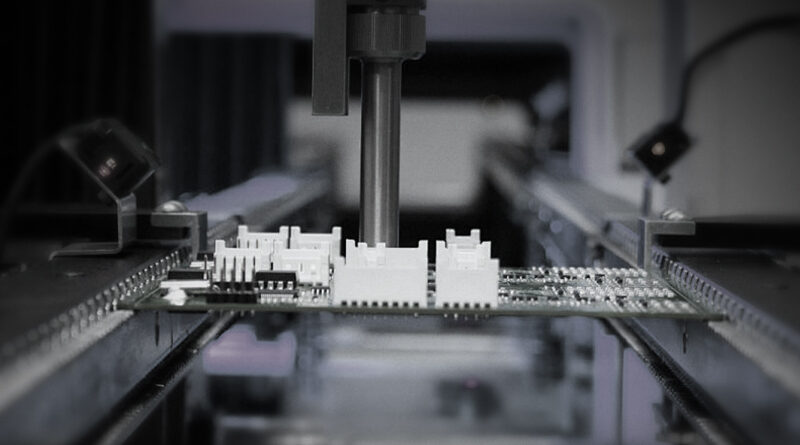
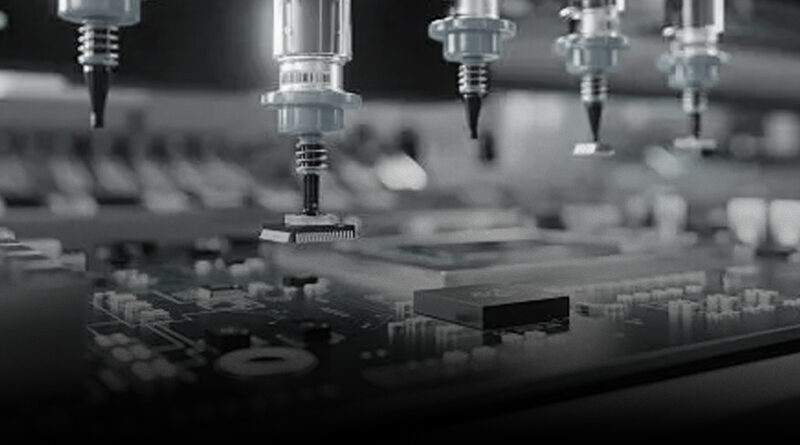
In modern electronics manufacturing, the SMT pick-and-place machine is more than a piece of equipment; it is the trusted worker that translates a schematic into a tangible, functioning product. From early prototyping boards that demand flexibility to high-volume production lines that demand relentless uptime, the right SMT placement system can determine yield, speed, and cost per unit. This guide dives into the core ideas behind SMT placement, explains how today’s machines work, and offers a practical framework for choosing, deploying, and maintaining an SMT solution that scales with your business. Whether you are upgrading a lab setup, equipping a mid-sized contract manufacturer, or planning a new production line, the concepts below will help you separate hype from impact.
What is an SMT pick-and-place machine, and why does it matter?
SMT stands for Surface Mount Technology, a process in which components are mounted directly onto the surface of printed circuit boards. An SMT pick-and-place machine is the automated system that picks individual components from feeders and places them onto the PCB with precise positioning. The accuracy, speed, and capability of this machine largely determine how quickly a board can be produced and how reliably it will perform after soldering in the reflow oven.
Modern SMT placement machines perform several essential functions in a tightly choreographed sequence. They interpret a PCB’s placement data, retrieve components from a bank of feeders, align each component, and deposit it onto the solder paste or adhesive on the board. After placement, the board is routed to soldering and inspection stages. The performance of the placement machine affects downstream yield because misplacements, component mismatch, or poor alignment can ripple through every subsequent step. As such, the right SMT placement strategy is critical to achieving high first-pass yield and maintaining predictable throughput.
Core technologies that power today’s SMT placement
Two or three decades of advancement have converged into a compact, precise, and adaptable technology stack for SMT placement. The core pillars include:
- Placement heads and nozzles: The head or heads on a placement machine carry multiple vacuum nozzles that pick and release components. The nozzle design and vacuum control determine how well you can handle tiny parts like 0201s and large, heavy components such as connectors or BGAs. Advanced systems shelve interchangeable nozzles to optimize accuracy across a wide component mix.
- Feeders and feeders management: Feeders supply components in a predictable sequence. They can be tape-and-reel, tray, bulk, or tray-tape hybrids. An efficient feeder system minimizes component changeover time and reduces idle time between placements. Intelligent feeder control prevents mismatches and jams by verifying the next component type before pick.
- Vision systems and alignment: A high-precision camera system guides placement by detecting fiducials, board orientation, and misalignment. Some systems use 2D/3D vision, color markers, or contrast-based recognition to ensure that every component lands exactly where designed, even on boards with challenging features or warped substrates.
- Software and programming: The placement software translates CAD data into actionable machine instructions. Modern software supports online editing, offline programming, no-clean workflows, and extensive libraries for libraries of components. Software also handles part library management, terreforming board coordinates, and error recovery strategies.
- Calibration and maintenance tooling: Regular calibration of nozzle offsets, camera calibration, and vacuum systems minimizes drift. Advanced machines provide self-check routines and guided calibration to keep accuracy within spec over long production runs.
Assembling a board is not just about placing parts; it’s about synchronizing multiple subsystems. A well-integrated SMT placement station works in concert with solder paste printing, reflow soldering, and automated optical inspection (AOI) to maximize yields. The objective is a stable, repeatable process that maintains high throughput without sacrificing accuracy.
Specialized flavors of SMT placement machines
Not all placement machines are created equal. Depending on your needs, you might choose among several flavors:
- Benchtop or desktop systems: Ideal for prototyping, low-volume production, and R&D environments. These machines emphasize flexibility and ease of use, with modest throughput and a focus on handling a wide component range.
- Inline production machines: The workhorse for mid-to-high-volume manufacturing. Inline systems are designed for continuous operation, with multiple heads, fast feeders, and robust software for board handling and changeovers.
- High-speed multi-head machines: For high-volume environments requiring rapid cycle times, multi-head configurations enable parallel placement of large components while maintaining accuracy on fine-pitch parts.
- Specialized placement: Some installations require nonstandard feeders, odd-form components, or large components (like connectors or batteries). Specialty machines or configurable heads accommodate these needs while preserving precision.
When evaluating options, consider how future-proof your choice is. A machine that can handle a broad spectrum of package sizes, adapt to new components, and integrate with your PCB handling and inspection systems will protect your investment as product families evolve.
Key decision factors when choosing an SMT placement machine
Choosing the right SMT placement machine involves balancing several trade-offs. Use this practical checklist to guide your evaluation:
- Throughput vs. accuracy: For high-volume boards with many components, throughput is king. For boards with tight tolerances or fine-pitch parts, accuracy is paramount. Look for machines with adjustable head speeds, fine nozzle control, and robust calibration routines.
- Component range and nozzle strategy: Ensure the machine can handle the smallest (like 0201s or 01005s) and the largest (heavy power components) on your bill of materials. Check the availability of a wide range of nozzle sizes and quick-change capabilities.
- Board size and flexibility: Confirm the maximum PCB size, thickness tolerance, and whether the machine can accommodate double-sided or mixed-technology boards without seducing compromises in performance.
- Programming ease and data flow: A user-friendly GUI, robust IPC-compatible data import, and a library of common components shorten setup times. Consider integration with your existing ERP/MEM/quality systems for better traceability.
- Maintenance and serviceability: Look for clear maintenance intervals, accessible spare parts, and reliable on-site or remote support. In the long run, uptime and predictable maintenance costs often determine total cost of ownership.
- Footprint, power, and ventilation: Inline lines require substantial floor space and electrical services. Factor in the layout of feeders, boards, conveyors, and reflow ovens to avoid bottlenecks.
- Software ecosystem and vendor support: A strong software ecosystem reduces training time and increases the success rate of line changes. Vendor support should include pre-sales consultation, installation, training, and post-sale optimization.
NECTEC and its network emphasize a one-stop approach: we bring together PCB handling, placing, soldering, printing, inspection, conformal coating, and peripheral consumables. Our pre-sales team is available 24/17 to assist you in overcoming any purchasing barriers, ensuring that you receive the best possible support from the outset. Following your purchase, our post-sales service is designed to maintain and enhance customer satisfaction through ongoing support.
How an SMT placement machine fits into the PCB assembly workflow
A typical PCB assembly line is a carefully choreographed sequence. Understanding the placement machine’s role in this flow helps optimize the entire process rather than focusing on a single step in isolation.
- Stencil printing: Solder paste is deposited onto the board with a pattern defined by the stencil. Paste deposition quality directly impacts placement stability and solder joint reliability.
- Paste inspection (SPI): SPI checks the printed paste deposit before placement. Defects here dramatically improve first-pass yields if corrected before placement.
- Component placement: The SMT placement machine places components onto the paste or adhesive with high precision, aligning to fiducials and board features to ensure correct orientation and offset control.
- Post-placement inspection: AOI or X-ray inspection verifies whether components sit in the correct orientation and whether there are bridging, tombstoning, or misplacements that require rework or adjustments.
- Reflow soldering: The board is heated to melt the paste and create robust solder joints, binding the components to the PCB.
- Final inspection and testing: After soldering, the boards undergo functional checks, final AOI, and testing to confirm the assembly meets specifications.
In this ecosystem, the placement machine is central to achieving reliable solder joints and predictable throughput. A well-tuned machine communicates effectively with SPI, AOI, and reflow processes, creating a virtuous circle of quality feedback that improves yield over time.
Maintenance, uptime, and long-term reliability
Uptime is the currency of a profitable SMT line. Maintenance strategies that emphasize preventive care pay off through reduced unplanned downtime, longer nozzle life, and more consistent placement accuracy. Key practices include:
- Nozzle management: Regular inspection and replacement of worn or clogged nozzles prevent misplacements and ensure consistent pickup force across all components.
- Vacuum system health: Vacuum leaks or worn seals reduce pick reliability. Periodic vacuum system checks and calibration keep suction within specification.
- Vision calibration: Periodic camera calibration and fiducial verification guard against misalignment that grows with machine usage or board set changes.
- Software updates and data integrity: Keeping software current protects against cybersecurity threats, ensures access to the latest feature sets, and reduces custom script maintenance burden.
- Spare parts strategy: A well-planned spare parts inventory minimizes downtime when a component inevitably wears out or fails.
NECTEC’s service philosophy reinforces uptime with a proactive approach. Our technicians train on-site teams, deliver preventive maintenance routines, and provide rapid access to resources, ensuring that your SMT line stays productive even during growth phases or line expansions.
Case study: A real-world approach to scaling SMT placement in a growing facility
Imagine a mid-sized electronics contract manufacturer working to transition from prototype runs to short, high-mix production. The facility previously relied on a manual or semi-automatic placement process for small runs, which constrained the ability to scale and led to inconsistent yields. The decision was made to integrate a modern SMT placement station along with the essential supporting pieces—paste printing, reflow, and AOI—within a unified workflow managed by NECTEC’s one-stop service model.
The chosen configuration featured a benchtop-to-inline spectrum, designed to bridge the gap between current capacity and future demand. Early tests focused on tiny components (e.g., 0201 and 0402 packages) to ensure the nozzle set could handle the smallest parts with high accuracy, while a few larger components tested the machine’s flexibility. With a calibrated vision system and a library of feeders tuned for the client’s specific BOM, the line quickly demonstrated improved first-pass yield and throughput gains. The pre-sales support team assisted in configuring the system with the customer’s CAD data and BOM, while the post-sales team provided onboarding training for operators and technicians. The result was a more predictable production cadence, shorter changeover times, and a path to higher-volume runs without sacrificing quality.
In this scenario, NECTEC’s emphasis on a one-stop solution—encompassing PCB handling, placing, printing, inspection, and peripheral consumables—proved essential. The integrated approach reduced integration risk and sped up the time to first article. It also simplified ongoing maintenance, as a single vendor took responsibility for the lifecycle of the equipment, software, and consumables. This case study exemplifies how a thoughtful combination of machine capability, software, and support can enable a small-to-medium shop to leap from prototyping to manufacturing with confidence.
Emerging trends: where SMT placement is headed
Several exciting trends are converging to push SMT placement into new levels of efficiency and capability:
- AI-assisted vision and quality control: AI models can improve part recognition, reduce false detections, and guide adaptive placement strategies that compensate for board warpage or evolving component tolerances.
- Multi-head and parallel placement: More heads enable higher speeds for dense boards and larger components, enabling better utilization of production lines and reduced cycle times.
- Robust data ecosystems: Better integration with MES, ERP, and quality systems enables traceability, real-time line balancing, and data-driven continuous improvement.
- Feeder versatility and inline changeovers: Quick-change feeders and modular feeders streamline the transition between jobs with minimal downtime.
- Remote diagnostics and predictive maintenance: Connectivity allows vendors to monitor line health, predict failures before they happen, and reduce unexpected downtime.
As these trends mature, the best SMT placement solutions will be those that combine flexible hardware with intelligent software, a broad component ecosystem, and a partner network that can deliver end-to-end support. NECTEC’s vision centers on building that ecosystem, offering a comprehensive suite that helps customers align their placement capabilities with evolving product roadmaps and manufacturing goals.
Quick-start checklist: getting from concept to line-up scale
If you’re evaluating SMT placement capability for a new project or a line upgrade, use this practical checklist to stay focused and efficient:
- <strongDefine your target throughput and accuracy: Quantify your expected board mix, device counts, and required tolerances. This anchors your selection against real business metrics.
- Assess component diversity to determine nozzle and feeder needs: Create a component matrix and map it to potential nozzle sizes. Ensure feeders can handle the expected part mix and changeover pace.
- Evaluate board handling capabilities: Confirm the maximum board size, thickness, and rigidity that the machine can accommodate. Check whether dual-sided placement or odd-form components are anticipated.
- Test with representative BOM data: If possible, simulate or pre-program a representative run to gauge setup times, programming complexity, and changeover durations.
- Plan for integration: Ensure smooth data exchange with paste printers, AOI/ICT, and the reflow oven. Consider software compatibility with your existing plant data systems.
- Ask for a staged deployment plan: For large lines, a staged approach reduces risk. Start with prototyping or a small production ramp and scale incrementally.
- Discuss service and training: Confirm on-site training, remote support options, spare parts availability, and service response times. Clarify expectations around 24/17 pre-sales and ongoing support as part of NECTEC’s service philosophy.
By following a structured process, you can minimize risk, accelerate time-to-value, and create a roadmap for future growth that fits your product roadmap and budget constraints.
Glossary of common SMT placement terms
Understanding the language of SMT placement helps when evaluating suppliers and communicating across teams. Here are some essential terms:
- SMD – Surface Mount Device, any component designed for placement onto a PCB.
- PCB – Printed Circuit Board, the substrate that carries the components.
- Feeder – A device that holds and feeds components to the placement head.
- Nozzle – The vacuum head used to pick up and place components.
- SPI – Solder Paste Inspection, a process that verifies paste deposition before component placement.
- AOI – Automated Optical Inspection, a post-placement inspection method to verify proper placement and soldering readiness.
- Fov – Field of View, the area captured by the cameras in the vision system for alignment.
- Reflow – The oven process that melts solder to form joints and then cools to form stable connections.
- Jig/fixture – A supporting hardware that ensures boards are held in the correct plane during placement and soldering.
These terms form the building blocks of conversations around SMT placement. Mastery of them speeds project initiation, improves communication with suppliers like NECTEC, and helps teams align around performance expectations.
Closing thoughts: building a resilient SMT placement strategy
In today’s fast-paced electronics market, a well-designed SMT placement strategy is not about chasing the newest gadget but about building a robust, scalable, and measurable manufacturing capability. The right placement machine should be a bridge between your product roadmap and your production demand, offering flexibility for a wide BOM, stability across long runs, and a clear path for growth. It should also come with the kind of support that keeps teams empowered: clear training, accessible spare parts, and responsive service that minimizes downtime. NECTEC’s approach emphasizes exactly that—one-stop solutions, rigorous quality control, and a service network focused on sustaining performance from day one through the long term. By combining thoughtful hardware choices with intelligent software and strong partner support, you can turn SMT placement from a cost center into a strategic asset that accelerates time-to-market, improves quality, and reduces total cost of ownership.