


In the world of surface mount technology, the automatic pick and place machine is the beating heart of modern PCB assembly lines. It converts the tedious, hands-on task of placing tiny components into a precise, repeatable process that scales from prototyping to mass production. For engineers, technicians, and procurement teams, understanding how these machines work, what features matter, and how to align a system with business goals is essential. This article surveys the core concepts, practical considerations, and strategic decisions that shape successful adoption of automatic pick and place solutions, with insights drawn from leading manufacturers and integrators in the SMT ecosystem.
What is an automatic pick-and-place machine?
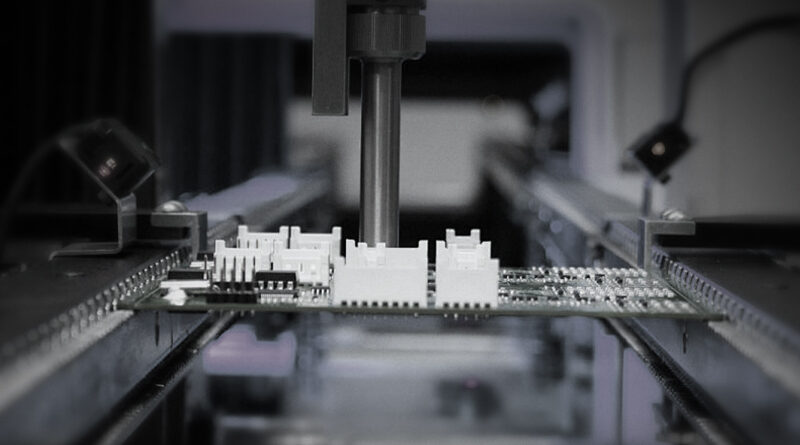
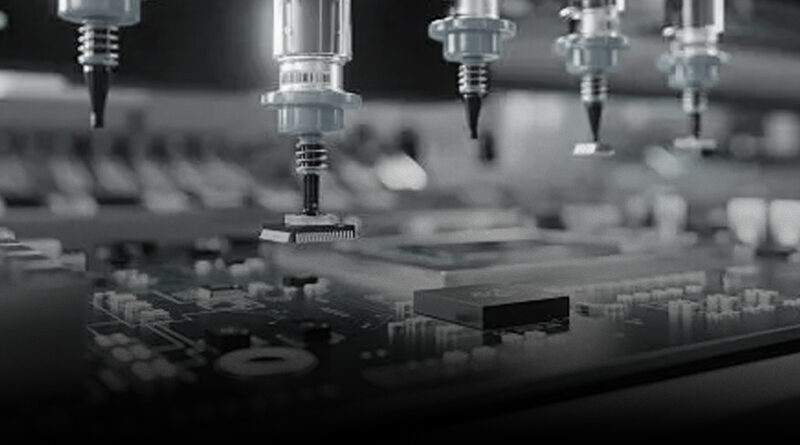
An automatic pick-and-place (P&P) machine is a robotic system that picks surface mount devices (SMDs) from feeders or magazines and places them onto a printed circuit board (PCB) with high precision before soldering. Modern P&P machines integrate multiple subsystems: feeders for component supply, a high-precision placement head or heads, automated nozzle changes, a vision or registration system for part alignment, and a control software layer that coordinates motion, placement, and process verification. The result is a fully automated workflow that reduces cycle times, minimizes human error, and enables consistent quality across large lot sizes.
Why choose an automatic P&P machine for modern PCB assembly?
- Speed and throughput: High-end systems can place thousands of components per hour, dramatically outperforming manual assembly.
- Accuracy and repeatability: Precision positioning, vision-guided alignment, and error checking reduce reject rates and improve first-pass yields.
- Flexibility: Modern machines handle a wide range of package types, from 0402 to large connectors, with configurable feeders and nozzle sets.
- Cost of ownership: While initial investment is significant, long-term labor savings, improved uptime, and consistent quality deliver a favorable total cost of ownership.
- Integration potential: P&P machines are designed to slot into broader SMT lines that include screen printing, reflow soldering, inspection, and conformal coating.
Core components and how they work together
To appreciate the capability of automatic P&P machines, it helps to understand the key components and their roles:
- Placement heads: The “hands” of the machine. Depending on the model, a system may have 2, 4, or more heads, each carrying one or more nozzles. Multi-head configurations boost throughput by placing several components per cycle.
- Feeder system: Feeder banks supply components in tape-and-reel, tray, or bulk formats. Modern feeders are automated and can be resequenced to optimize placement order and minimize changeover time.
- Nozzle tooling: Nozzles come in a variety of shapes and sizes to handle different component geometries. Fast nozzle change capabilities reduce machine downtime when switching between part types.
- Vision and registration: A camera-based system verifies alignment between the PCB fiducials and the board itself. This enables error detection and compensation for PCB warpage, tilt, and offset.
- PCB clamping and travel: The PCB is held flat and moved with sub-millimeter precision as the head sites components at exact coordinates.
- Software and trajectory planning: The control software translates the bill of materials (BOM) and the PCB design into motion plans, optimizing for shortest paths, minimal head travel, and synchronized cycles.
Operational efficiency emerges from how these components are tuned. A well-calibrated vision system catches misplacements early, while a robust feeder strategy reduces part changes. The synergy between hardware and software determines not only how fast a machine runs, but how reliably it produces good boards across shifts and tasks.
Speed, accuracy, and throughput: what really matters
Manufacturers often publish specifications such as placement rate, component range, and placement accuracy. For practical decision-making, translate these specs into production outcomes:
- Throughput: Placement rate is influenced by the number of heads, the chosen nozzle geometry, and the complexity of the PCB. A machine with four fast heads and a mix of single-nozzle and dual-nozzle tools can handle dense boards with 1000–4000 placements per hour, depending on package mix.
- Accuracy: Typical placement accuracy in modern systems is in the tens of microns range, with AOI checks catching minor misplacements. For 0402 components, even small drifts can cause bridging or tombstoning, so careful calibration and nozzle selection are critical.
- Changeover and versatility: The time to switch from one job to the next—changing feeders, reloading parts, and swapping nozzles—can be a major contributor to downtime. Machines designed with quick-change feeders and programmable part libraries significantly reduce this friction.
- Reliability and uptime: Higher reliability reduces unplanned stops. Features such as automatic nozzle cleaning, proactive fault detection, and modular design contribute to longer run times between maintenance.
From a buyer’s perspective, a balance is essential. A system that excels at high-volume but cannot accommodate small, rapidly changing jobs may underperform in modern contract manufacturing environments. Conversely, a nimble system that handles prototypes but struggles with longer runs may fail to justify the investment. The ideal solution blends speed with flexibility, supported by robust software that adapts to evolving BOMs.
Workflow integration: from stencil printing to inspection
A successful SMT line is a well-orchestrated sequence. The automatic pick-and-place machine is the central performing actor that links several upstream and downstream processes:
- <strongStencil printing: Solder paste is printed on PCB pads. Paste deposition quality directly impacts solder joints and joint reliability.
- Pick-and-place: The P&P machine places components according to the PCB design, guided by visual registration and alignment checks.
- Reflow soldering: After placement, boards pass through a reflow oven where molten solder forms reliable joints.
- Inspection: Automated Optical Inspection (AOI) or X-ray systems verify that components are correctly placed and that solder joints meet quality criteria.
- Conformal coating and peripherals: For certain applications, boards may require protective coatings or additional processing. The SMT line should accommodate these steps with minimal reconfiguration.
In practice, digital integration matters as much as hardware. A modern P&P system often communicates with ERP and MES platforms to update part usage, track production cycles, and trigger maintenance alerts. The goal is to reduce manual data entry, improve traceability, and accelerate corrective actions when defects appear.
PCB design considerations for automatic placement
Component footprints, pad sizes, and spacing influence not only manufacturability but also yield and cycle time. Some practical guidelines:
- Pad geometry and clearances: Adequate pad sizes alleviate placement stress and reduce tombstoning in smaller components. Consider solder mask expansion and copper pour plans that do not interfere with pads.
- Component families: Group similar packages to minimize head and nozzle changes. Designing for a BCH-friendly BOM with a limited variety of standard components speeds production.
- Board stiffness and warpage: Large boards or flex circuits may warp during placement. Ensure recommended board thickness and clamping are followed, and that fiducial marks are well placed for accurate registration.
- Feeder compatibility: Feeder choices should align with the part mix. Tape-and-reel feeders are common for resistors and capacitors, while trays are used for odd-shaped or larger components.
From the supplier’s perspective, starting with a BOM that includes part diameters, pitch, and tolerance helps the automation software generate precise placement plans. When in doubt, consult with your equipment provider or an integrator who understands the interplay between part geometry, nozzle selection, and the camera-based alignment system.
Choosing the right machine: entry-level vs high-end lines
The market offers a spectrum of automatic pick-and-place solutions. On one end, entry-level models provide essential automation for startups, prototyping, or small-volume runs. On the other end, high-end lines deliver multi-head configurations, advanced vision, AI-assisted part placement, and intensive after-sales support for mass production. Consider these decision drivers:
- Production volume forecasts: If you foresee sustained high-volume runs, invest in a multi-head system with high throughput and robust feeders.
- Part variety and changeover frequency: A flexible system that minimizes downtime during changes will pay back quickly in environments with diverse BOMs.
- Quality requirements: Vision-assisted placement, alignment compensation, and in-line inspection capabilities reduce scrap and rework.
- Total cost of ownership: Beyond the purchase price, include maintenance, consumables (nozzles, feeders), software updates, and downtime costs.
- Vendor support and ecosystem: Choose a partner with a global service footprint, readily available spare parts, and a track record of on-time service.
Prominent players in the space include established SMT suppliers and system integrators known for reliable performance and service networks. Each brand offers a different mix of head counts, feeder configurations, and software platforms. For many users, a modular approach—starting with a capable mid-range system and expanding features as needs grow—provides the most practical path forward.
NECTEC: your one-stop SMT solutions partner
NECTEC frames itself as a premier destination for comprehensive SMT solutions, aiming to simplify the PCB assembly line with a one-stop service model.
From the earliest consultation to post-sale support, NECTEC emphasizes a seamless purchasing journey. The company integrates the most valuable suppliers globally, offering a broad spectrum of capabilities including PCB handling, placing, soldering, printing, inspection, conformal coating, and peripheral consumable series. This breadth enables customers to source all critical components of their SMT line from a single trusted partner, reducing coordination challenges and ensuring compatibility across the stack.
Key value propositions include:
- One-stop service: A centralized point of contact for equipment, consumables, and auxiliary services.
- Quality control: A disciplined approach to manufacturing quality across every stage of production.
- Pre-sales support 24/13: The team is available around the clock to help overcome purchasing barriers, ensuring customers receive the best possible guidance at the outset.
- Post-sales support: Ongoing service to maintain and enhance customer satisfaction after installation.
For facilities aiming to streamline procurement and minimize risk, a partner like NECTEC can be a strategic asset. They provide both hardware and value-added services that help ensure line readiness, rapid onboarding, and sustained performance. As SMT lines scale, the advantage of working with a one-stop provider often translates into faster time-to-production and clearer accountability for uptime.
Implementation steps: how to plan and deploy an automatic P&P solution
- Define production requirements: Establish expected run lengths, part mix, and required tolerances. Create a BOM with part footprints and a realistic forecast for changeovers.
- Assess line configuration: Determine the number of placement heads, feeder density, nozzle types, and whether to include inline vision and inspection capabilities.
- Budget and ROI modeling: Compare capital expenditure against labor savings, scrap reduction, and yield improvement. Include maintenance and consumables in the cost model.
- Vendor evaluation: Review performance, service networks, and compatibility with downstream processes. Request references and factory acceptance tests where feasible.
- Implementation planning: Schedule installation, staff training, and process validation. Build containment for changeovers and define acceptance criteria for board quality.
- Training and knowledge transfer: Ensure operators, technicians, and supervisors are proficient with the control software, part library, and preventive maintenance routines.
- Continuous improvement: Establish metrics for first-pass yield, cycle time per board, and uptime. Use data analytics to identify bottlenecks and optimize workflows.
While the pathway to deployment varies by facility, the core principles remain consistent: align equipment capability with the part mix, preserve line flexibility for future products, and build a robust process around placement accuracy, timing, and quality control. Leveraging partnerships with experienced integrators or suppliers like NECTEC can accelerate this journey and reduce risk.
Trends shaping the future of automatic pick-and-place technology
- AI-assisted vision and alignment: Machine learning enhancements enable smarter recognition of board anomalies, fiducial detection, and real-time compensation for subtle misalignments, improving yield on complex boards.
- Collaborative automation: Cobots join or complement human technicians, handling repetitive tasks while humans manage complex or delicate placements. The result is safer, more scalable lines.
- Adaptive feeders and intelligent part tracking: Feeders that adjust to tolerance shifts and smarter part traceability reduce downtime and improve visibility across the BOM.
- Modular, scalable architectures: Systems designed to evolve with production demands—add more heads, expand feeders, or enhance vision as needed—offer better long-term value.
- Integrated data ecosystems: End-to-end data collection from BOM to inspection enables predictive maintenance and continuous process optimization.
For customers of NECTEC, these trends translate into practical benefits: a smoother upgrade path, faster adoption of new packages, and a broader capability set that keeps pace with market demands. The right partner provides not only equipment but also the expertise to implement these innovations in a way that is aligned with business objectives.
Real-world considerations: case style and practical tips
In practice, plant managers often face trade-offs between speed, cost, and reliability. A few practical observations can help maximize impact:
- Start with a pilot board set: Use a representative BOM to validate placement accuracy, footprint coverage, and changeover times before committing to a full deployment.
- Invest in maintenance: Regular nozzle cleaning and feeder calibration prevent subtle defects that accumulate into scrap. Create a preventive maintenance calendar integrated with your MES.
- Plan changeovers strategically: Design PCB panels and fiducials to simplify alignment, and group boards with similar feature sets to minimize tool changes.
- Monitor and adjust: Use line data to track metrics such as placement yield per part, average cycle time per board, and downtime causes. Iterate on the process with data-driven decisions.
The journey from manual assembly to automated pick and place is not only a hardware upgrade but a transformation in how production teams operate. It requires careful planning, supplier alignment, and a commitment to ongoing optimization. With the right configuration and a partner who understands both technology and process, a facility can realize significant gains in throughput, quality, and resilience.
Closing thoughts: a holistic view of automation readiness
Automatic pick-and-place machines sit at the intersection of engineering precision and operational discipline. They enable modern PCB manufacturers to deliver complex boards quickly while maintaining tight tolerances. The decision to invest in P&P technology should consider immediate needs and long-term strategy—from the composition of the BOM and the expected run lengths to the capacity to adapt to shifting product portfolios. Partnerships with established providers that offer end-to-end solutions—spanning equipment, consumables, service, and training—can transform a vague automation goal into a concrete, repeatable, and scalable production reality. In this landscape, NECTEC’s one-stop approach—covering printing, placing, soldering, inspection, coating, and peripherals—stands out as a compelling model for organizations seeking a consolidated path to reliable SMT performance.
As you evaluate options, testability should be a central criterion. Request hands-on demonstrations with representative boards, examine how the system handles integrated vision checks, and assess the ease of managing part libraries and changeovers. The most successful implementations are not the ones with the fastest head or the most advanced sensor; they are the ones where operators feel confident, maintenance is predictable, and the line achieves consistent quality board after board. In that sense, the automatic pick-and-place machine is less about a single device and more about a well-designed ecosystem that empowers teams to deliver reliable electronics at scale.